
categories
HOT TOPICS
- The Accelerator Conundrum
- The Startup Velocity Question
- Man and Superman
- Web 3.0 = (4C + P + VS)
- The Future: End of Capitalism
- Capitalism 2.0

From Solo Developer to Venture Scale Entrepreneur: Jordan Boesch, CEO of 7shifts (Part 2)
Sramana Mitra: Beyond your dad, how did other customers find you?
Jordan Boesch: We had it online and people were finding us because they were just looking for scheduling software. They would google us and they’d sign up. I didn’t think anything about how to expand and get more. It was really just a fun project for me where folks could sign up and I could talk to them and learn about their needs. That’s how people found us.
Sramana Mitra: How much were they paying?
>>>Featured Videos
582nd Roundtable for Entrepreneurs Starting NOW: Live Tweeting by @1Mby1M
Today’s 582nd FREE online 1Mby1M Roundtable For Entrepreneurs is starting NOW, on Thursday, July 7, at 8 a.m. PDT/11 a.m. EDT/5 p.m. CEST/8:30 p.m. India IST. CLICK HERE to join. PASSWORD: startup All are welcome!
Bootstrap First, Raise Money Later and Build a World-Class AI Startup from India: Raghu Ravinutala, CEO of Yellow.ai (Part 3)
Sramana Mitra: What are the numbers on Series B and Series C?
Raghu Ravinutala: In series B, we raised about $20 million. In Series C, we raised about $79 million.
Sramana Mitra: That’s a lot of money that you’ve raised. You’d have to build a huge company to return that investment. One of the things I’m hearing from a lot of enterprise startups that sell to the enterprises is that it has become easier to sell to the international market because buyers have become used to evaluating and buying online. Are you experiencing that as well?
>>>Video FAQs
Can 1M/1M Help Me Raise Money?
How Does 1M/1M Democratize Entrepreneurship Education?
How Does 1M/1M Democratize Management Consulting?
When Is The Right Time To Join 1M/1M?
Can 1M/1M Help Me With Business Development?
Can 1M/1M Help Me With Market Sizing?
Can 1M/1M Help Me Validate My Product?
Will I Have Private 1-on-1 Sessions In 1M/1M?
How Does 1M/1M Help Entrepreneurs Connect With Silicon Valley?
Mentoring or Consulting?
Why Does 1M/1M Charge $1000 a Year?
Why Does 1M/1M Partner With Local Organizations?
Why Don\’t Mentoring Networks Work?
Why Is It Important To Study With 1M/1M Now?
Dan Stewart Story
Vikrant Mathur Story
Best of Bootstrapping: Bootstrapping a Virtual Company to Over $5M
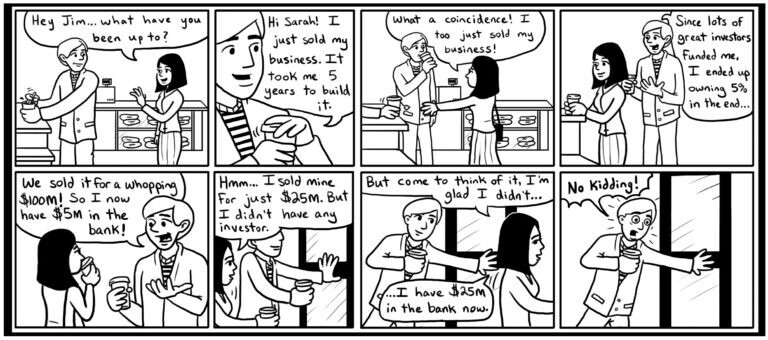
If you haven’t already, please study our Bootstrapping Course and Investor Introductions page.
Can you bootstrap a virtual company to over $5 million? Renaissance Periodization CEO Nick Shaw has done just that. He has built a very interesting e-learning company and addressed scalability with nifty strategic choices. You’ll learn a lot from our conversation from 2018.
Sramana Mitra: Let’s start at the very beginning of your journey. Where are you from? Where were you born, raised, and in what kind of background?
Nick Shaw: I was born and raised in the state of Michigan. I grew up with the goal of wanting to go to the University of Michigan. It’s a top-level school. I was lucky enough to be accepted there. I started in the Sports Management program. I originally wanted to be an athletic director.
From Solo Developer to Venture Scale Entrepreneur: Jordan Boesch, CEO of 7Shifts (Part 1)

Jordan started as a solo entrepreneur in a small province of Canada, Saskatchewan, and has built a heavily funded, high-growth SaaS business. Fascinating journey!
Sramana Mitra: Let’s start at the very beginning of your journey. Where are you from? Where were you born, and raised, and in what kind of background?
Jordan Boesch: I’m from Saskatchewan, a province in Canada. I’m the CEO at 7Shifts which is a team management platform. Before 7Shifts, I was a software developer for many years. I ended up working for my dad who ran some Quiznos locations.
>>>Bootstrap First, Raise Money Later and Build a World-Class AI Startup from India: Raghu Ravinutala, CEO of Yellow.ai (Part 2)
Sramana Mitra: You got to a million ARR on the strength of those first 10 customers?
Raghu Ravinutala: No, once we got the 10, we got more. When we were at $1 million, we had 35 to 40 customers.
Sramana Mitra: You didn’t have to raise money until that point?
Raghu Ravinutala: Correct.
Sramana Mitra: How many people were you then?
>>>Thursday, July 7 – 582nd 1Mby1M Mentoring Roundtable for Entrepreneurs

Entrepreneurs are invited to the 582nd FREE online 1Mby1M Mentoring Roundtable on Thursday, July 7, 2022, at 8 a.m. PDT/11 a.m. EDT/5 p.m. CEST/8:30 p.m. India IST.
If you are a serious entrepreneur, register to “pitch” and sell your business idea. You’ll receive straightforward feedback, advice on next steps, and answers to any of your questions. Others can register to “attend” to watch, learn, and interact through the online chat.
You can learn more here and REGISTER TO PITCH OR ATTEND HERE. Register and you will receive the recording by email, even if you are unable to attend. Please share with any entrepreneurs in your circle who may be interested. All are welcome!
Bootstrap First, Raise Money Later and Build a World-Class AI Startup from India: Raghu Ravinutala, CEO of Yellow.ai (Part 1)
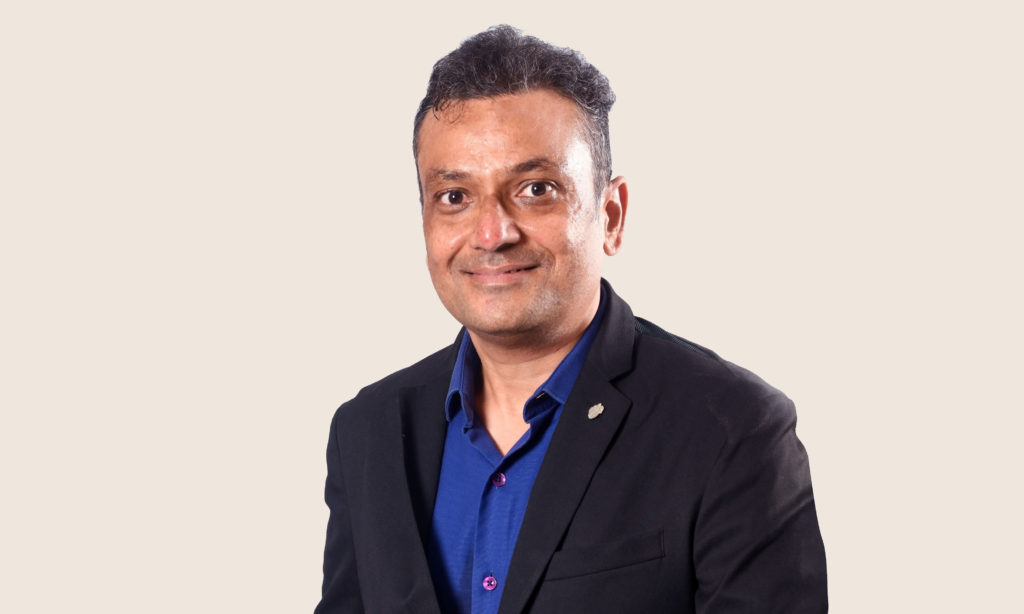
Raghu has built an incredible AI startup from India with a global base of enterprise clients. Fabulous story!
Sramana Mitra: Let’s start by introducing our audience to yourself as well as the genesis of Yellow.ai.
Raghu Ravinutala: I’m the Co-Founder and CEO of Yellow.ai. Yellow.ai enables enterprises to drive automation on their customer experiences and employee experience by integrating a whole set of enterprise data and delivering phenomenal experiences that the companies can leverage for sales, marketing, HR, and IT automation.
>>>