
categories
HOT TOPICS
- The Accelerator Conundrum
- The Startup Velocity Question
- Platform as a Service
- Man and Superman
- Web 3.0 = (4C + P + VS)
- The Future: End of Capitalism
- Capitalism 2.0

Venture Capital
1Mby1M Virtual Accelerator Investor Forum: With Mohanjit Jolly, Partner at Iron Pillar (Part 3)
Sramana Mitra: Why did you make the decision of focusing on India-for-the-world?
Mohanjit Jolly: One of the reasons is I’m sitting in Palo Alto. I don’t have my finger on the pulse of what’s going on in India. Having said that, I have colleagues who are in India and the Middle East. They do have their fingers on the pulse. Here are the three reasons why we went down this path for fund two.
>>>1Mby1M Virtual Accelerator Investor Forum: With Mohanjit Jolly, Partner at Iron Pillar (Part 2)
Sramana Mitra: You said you invested in eight companies from the first fund and then continued to invest in those eight. Let’s talk about some of them. I want to get a flavor of the kinds of companies that drew your attention.
Mohanjit Jolly: We have a concentrated portfolio strategy. Most of the folks who you may have as guests on the show may do 20 to 40 investments per fund. In our case, the numbers are closer to 8 to 10. There is a method to that madness. To your question, the first fund was eight companies. Three of them were India-for-India. These are companies like Bluestone which is an omnichannel jewelry company.
>>>1Mby1M Virtual Accelerator Investor Forum: With Mohanjit Jolly, Partner at Iron Pillar (Part 1)

Mohanjit Jolly, Partner at Iron Pillar, and a long-time player in the Indian startup ecosystem discusses Exit options for Indian startups and other topics.
Sramana Mitra: I know you’ve been in the industry for a very long time and have been following the evolution of the Indian venture capital ecosystem for a long time. Let’s start diving into a bit of your background. Then let’s introduce Iron Pillar.
>>>1Mby1M Virtual Accelerator Investor Forum: With Pawel Maj, Investment Director at Warsaw Equity Group (Part 4)
Sramana Mitra: We are big fans of capital-efficient businesses that are not necessarily chasing unicorns. Partly, the problem I have with this unicorn chasing is flushing these companies with too much capital. Then the exit bar is so high that companies end up in this twilight zone where they’re burning too much cash, can’t raise more money, and can’t find an exit because the valuation requirements are too high to have a profitable exit.
I’m pleased to hear that you are acknowledging that there are other ways of building businesses. Now there is a question though. How much exit capacity exists in the region? If there are 5,000 to 10,000 startups, how do you think this is going to play out?
>>>1Mby1M Virtual Accelerator Investor Forum: With Pawel Maj, Investment Director at Warsaw Equity Group (Part 3)
Sramana Mitra: Sometimes when you’re in a fundraising cycle, you may not be quite ready for the investor to write the check, but you build the relationships and show traction. At some point, it will converge potentially if you know what your target is. Pawel is explaining that the target is $50,000 MRR.
If you start the relationship when you’re at the $10,000 point, you have to inch your way up to $50,000 MRR before the investment is going to happen. Investor relationship management is important. If the market is of interest and the team is of interest, sometimes investors just take a little bit of time to see how you’re performing. That is the notion of investor-entrepreneur fit.
>>>1Mby1M Virtual Accelerator Investor Forum: With Pawel Maj, Investment Director at Warsaw Equity Group (Part 2)
Pawel Maj: We would like to have about 10 to 15 companies in our portfolio at any given moment. We like to get hands-on since our history comes from the private equity market. For pre-seed or seed, we invest smaller tickets but much in larger number of projects to spread the risk. In our case, we don’t have a large enough team to have a large operation to be able to provide hands-on experience for 50 companies. This is why we prefer to invest at a later stage after the product-market fit.
Sramana Mitra: The reason I’m probing this point is, there are a bunch of things that happen between pre-seed, seed, pre-Series A, and Series A. You have to achieve product-market fit, which means you have to get some customers to say that they’re willing to write a check for this product.
>>>1Mby1M Virtual Accelerator Investor Forum: With Pawel Maj, Investment Director at Warsaw Equity Group (Part 1)
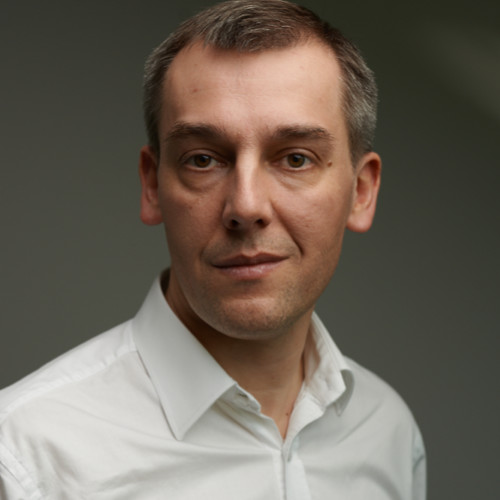
Pawel Maj, Investment Director, Warsaw Equity Group, discusses post-seed and pre-series A funding in Eastern and Central Europe in the context of his firm’s investment thesis.
Sramana Mitra: Tell us about what’s up in Poland. You are in a semi-warzone. What’s happening with the startup ecosystem?
Pawel Maj: The war is in another country, but we had a huge wave of immigrants coming from Ukraine. We already admitted almost five million immigrants. These are difficult times. It’s great to see the Polish population come together to help the neighbors.
>>>1Mby1M Virtual Accelerator Investor Forum: With Anup Jain, Managing Partner of Orios Venture Partners (Part 6)
Sramana Mitra: You mentioned earlier that the Indian startup boom has happened in two cities – Bangalore and Delhi NCR. We’ve had a lot of success in Chennai as well. Some of the bigger successes came out of Chennai. What are you seeing in other places?
We are seeing companies coming out of Chandigarh and many other places. That’s part of the vision of One Million by One Million – to enable not only all corners of India but all corners of the world. We have companies from Tanzania. We have companies from Chandigarh. I’m from Calcutta, so I’ve always had a soft corner for Calcutta. It is a different India. It is a different world. How is that impacting the startup ecosystem?
>>>