
categories
HOT TOPICS
- The Accelerator Conundrum
- The Startup Velocity Question
- Platform as a Service
- Man and Superman
- Web 3.0 = (4C + P + VS)
- The Future: End of Capitalism
- Capitalism 2.0

Venture Capital
1Mby1M Virtual Accelerator Investor Forum: With Yanev Suissa, Managing Partner and Founder at SineWave Ventures (Part 2)
Sramana Mitra: When something fits your investment thesis, what do you want to see in the company when you’re doing a seed investment? What is the earliest stage check that you’re comfortable writing and what do you want to see? Do you want to see paying customers or a certain MRR?
Yanev Suissa: A lot of these firms have, what I would call, nonsensical rules. Some of that is indicative of how a startup is performing, but I don’t think it should be a barrier. Our seed deals are not pure tech risk in that a product is already developed. It may not have all the features and it may not be in scale, but it’s deployed in some way so you can test it and play with it.
>>>1Mby1M Virtual Accelerator Investor Forum: With Yanev Suissa, Managing Partner and Founder at SineWave Ventures (Part 1)
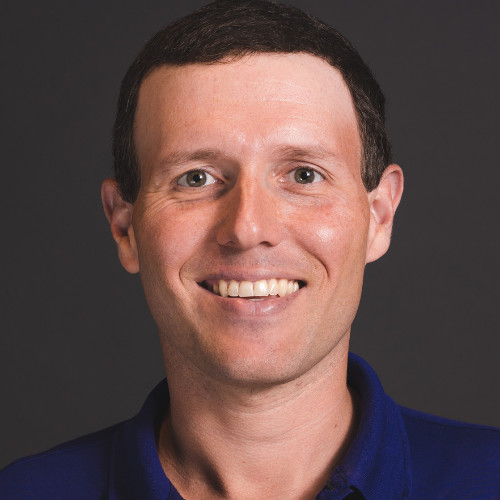
Yanev Suissa, Managing Partner and Founder at SineWave Ventures, discusses his firm’s successes as well as its investment thesis. Vertical Cloud is one of the key ones with an emphasis on Enterprise Data Platforms.
Sramana Mitra: You have big news. Let’s catch up.
Yanev Suissa: We did big closings on our third fund. Our performance has been top 5 percentile in the industry. We’ve been doing a great job. Things have been chugging along at SineWave.
>>>1Mby1M Virtual Accelerator Investor Forum: With Tea Hea Nahm, Managing Director and Co-Founder of Storm Ventures (Part 4)
Sramana Mitra: What trends are you seeing in SaaS companies finding growth strategies? What are the primary customer acquisition channels that are producing really well?
Tea Hea Nahm: Whether you’re using product-led, outbound, or inbound, we just want to have one that we feel is really going to work for them.
Sramana Mitra: Are you seeing any of them coming up repeatedly? At one point, Google search was a big one. Now Google search has become very expensive. I’m hearing less of the Google search growth. I do hear a lot of inbound content marketing and capturing organic traffic.
>>>1Mby1M Virtual Accelerator Investor Forum: With Tea Hea Nahm, Managing Director and Co-Founder of Storm Ventures (Part 3)
Sramana Mitra: How do you read the open source trend? The commercial open source trend has also been going gangbusters. A lot of interesting companies have come up with that trend. What are you seeing in your deal flow?
Tea Hea Nahm: Open source is great. You’ve got Databricks and others. Customers like open source. You want to go with what customers like. The challenge is, if it’s open source, how do you compete with your competitors especially if a big platform decides to adopt the open source? That’s what we look at. We like open source as long as we believe that the company could still have a differentiated position that will generate meaningful business for them.
>>>1Mby1M Virtual Accelerator Investor Forum: With Tea Hea Nahm, Managing Director and Co-Founder of Storm Ventures (Part 2)
Sramana Mitra: You are comfortable investing in the nuances of SaaS, AI, AI for X. How about two trends that have come on my radar? PaaS for instance. There is a vertical SaaS trend that is going gangbusters right now. You find industry verticals where you have opportunities to do cloud and AI. You have interesting workflow automation and data-based solutions.
You touched upon horizontal AI not being as big of an interesting area for you. If you remember, Salesforce started off with a very niche solution although in a big market. Then they also opened up their platform. They have spawned a lot of companies including some large players like the Veeva’s of the world. These are unicorns that are built on top of Salesforce.
>>>1Mby1M Virtual Accelerator Investor Forum: With Tea Hea Nahm, Managing Director and Co-Founder of Storm Ventures (Part 1)

Tae Hea Nahm, Managing Director and Co-Founder of Storm Ventures, emphasizes and articulates his firm’s specific interest in investing in vertical cloud startups.
Sramana Mitra: Let’s start by introducing our audience to yourself a little bit and then we’ll come to Storm Ventures. What path did you follow to founding Storm Ventures?
Tea Hea Nahm: I was born in Korea. We immigrated when I was five years old. I started my career in Silicon Valley as a corporate lawyer working with 200 startups. In 2000, I left law and co-founded Storm Ventures and have been a partner at Storm for the last 22 years.
>>>1Mby1M Virtual Accelerator Investor Forum: With Mohanjit Jolly, Partner at Iron Pillar (Part 5)
Sramana Mitra: How long do you think it will take for India to catch up?
Mohanjit Jolly: The next year will be a challenging one. When the next bull run starts, India is going to be playing a pretty big role in the outcomes. I’m less interested in the term unicorn; I’m more interested in the underlying value that these companies are providing.
>>>1Mby1M Virtual Accelerator Investor Forum: With Mohanjit Jolly, Partner at Iron Pillar (Part 4)
Sramana Mitra: One of my observations on Now Float is that selling to SMBs in India is hard.
Mohanjit Jolly: That’s right. The dichotomy in India is – Indians love to be pampered as customers.
Sramana Mitra: High-touch, low-value sales.
Mohanjit Jolly: Exactly. They want the high touch but the unit economics don’t work. That was a conundrum. The interesting thing is that we had a strategic term sheet on the table. It was one of the financial institutions in India.
>>>