
categories
HOT TOPICS
- The Accelerator Conundrum
- The Startup Velocity Question
- Platform as a Service
- Man and Superman
- Web 3.0 = (4C + P + VS)
- The Future: End of Capitalism
- Capitalism 2.0

Venture Capital
1Mby1M Virtual Accelerator Investor Forum: With Anirudh Damani, Managing Partner at Artha Venture Fund (Part 5)
Sramana Mitra: Those examples that you gave of a B2C venture out of India that is doing global business, how common is that across your portfolio?
Anirudh Damani: One out of five businesses on the B2C side is either looking overseas or getting inbound interest from overseas.
Sramana Mitra: Is that primarily in EdTech? Is there a category trend?
>>>1Mby1M Virtual Accelerator Investor Forum: With Anirudh Damani, Managing Partner at Artha Venture Fund (Part 4)
Sramana Mitra: You have made 27 investments. Let’s talk about some of the Artha case studies.
Anirudh Damani: We could look at HobSpace. All 27 deals we have done were referred to us. We’re getting so much deal flow these days that it’s very difficult for my team to keep up even with the best ERPs and systems we are using. We’ve added a filter where for every investment we do, we only take a look at a deck if it’s referred by somebody on our network.
>>>1Mby1M Virtual Accelerator Investor Forum: With Anirudh Damani, Managing Partner at Artha Venture Fund (Part 3)
Anirudh Damani: I used to be on the road for probably 25 days a month. I’ve lived in a lot of Motel 6’s across the US. I understand the value and effort it took to standardize that experience across the board. When I was looking at the deal, I could understand what he was doing. Much of my staff was having tough experiences, especially females. We would get them a business hotel, but it would be right next to a shady area. A similar hotel in Bangalore with a similar price point would be a fantastic hotel.
>>>1Mby1M Virtual Accelerator Investor Forum: With Anirudh Damani, Managing Partner at Artha Venture Fund (Part 2)
Sramana Mitra: Is your portfolio all India-born companies?
Anirudh Damani: Out of the 27 we’ve done from the fund, 26 are domiciled in India. One is domiciled in the US but it’s primarily an Indian business selling to the world. In terms of sales, 25% of our portfolio sales happen outside the country, but most of the companies are based in India.
Sramana Mitra: I assume the B2B SaaS strategy is global SaaS companies.
>>>1Mby1M Virtual Accelerator Investor Forum: With Anirudh Damani, Managing Partner at Artha Venture Fund (Part 1)
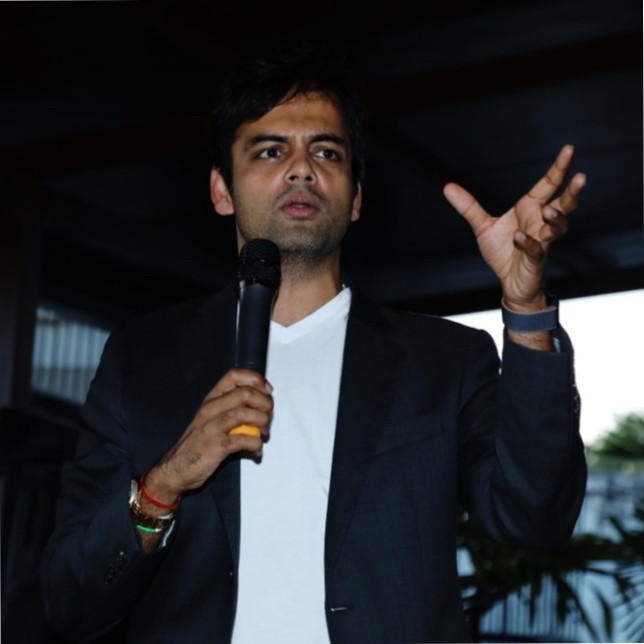
Anirudh Damani is the Managing Partner at Artha Venture Fund. We have a terrific discussion on the Indian Startup Ecosystem and its trends.
Sramana Mitra: Let’s get you acquainted with the audience. Tell us a bit about Artha and your background.
Anirudh Damani: I have had a very interesting journey to becoming a venture capitalist. I started out as a door-to-door salesman in Texas. During my first seven months at the job, I knocked on a hundred doors a day. I was responsible for selling long-term energy power contracts to homeowners in West Texas.
>>>1Mby1M Virtual Accelerator Investor Forum: With Yanev Suissa, Managing Partner and Founder at SineWave Ventures (Part 5)
Sramana Mitra: Where are you looking right now? What verticals are underserved where you think such large opportunities exist? What kinds of verticals are you looking at?
Yanev Suissa: We have a bet in the AgTech space. We’ve done a few in the health insurance space and the HealthTech space. We are increasingly looking at the manufacturing and industrial spaces. We think that cyber-physical systems is an interesting place.
Sramana Mitra: IoT kind of stuff.
>>>1Mby1M Virtual Accelerator Investor Forum: With Yanev Suissa, Managing Partner and Founder at SineWave Ventures (Part 4)
Yanev Suissa: We are also very comfortable going deep on the vertical side of things rather than just horizontally. You could build multi-billion dollar businesses in verticals that aren’t as familiar to the Valley sometimes like agriculture. Climate tech is one of those verticals that has emerged. Insurance is one a lot of people talk about. Manufacturing is another one. Those are areas where the Valley is not as well plugged in or connected.
Cloud Agronomics, for example, is a vertical company up and down the AgTech stack. They can help you analyze soil and agriculture over billions of acres in real-time. They can help you understand the carbon sequestration in your particular land. They are able to do a lot of things in one particular vertical well.
>>>1Mby1M Virtual Accelerator Investor Forum: With Yanev Suissa, Managing Partner and Founder at SineWave Ventures (Part 3)
Sramana Mitra: India has been incredibly productive. Europe has started producing interesting companies. They want global customers and they want to set up shop in the US. European firms often prefer the East Coast. Is that a model that you are okay with?
Yanev Suissa: Oh yes. We’ve never been a five-minute-away firm. I grew up at NEA as a VC. We were always bi-coastal. It is the reality of the VC world. I do think you’re right about seeing the development teams being built elsewhere and more of the business and sales teams being in the US. I’ve seen that quite a bit.
>>>