
categories
HOT TOPICS
- The Accelerator Conundrum
- The Startup Velocity Question
- Man and Superman
- Web 3.0 = (4C + P + VS)
- The Future: End of Capitalism
- Capitalism 2.0

The Conundrum in Virginia Startup Accelerator Ecosystem

Virginia, with its combination of federal agencies, defense contractors, and a growing technology sector, presents a distinctive environment for IT and IT-enabled services entrepreneurship. The state’s ecosystem is diverse, spanning Northern Virginia’s tech corridors, Richmond’s innovation initiatives, and emerging hubs across the state. Virginia is uniquely positioned to support solo founders who adopt the 1Mby1M Bootstrap First, Raise Money Later philosophy, emphasizing revenue, profitability, and disciplined growth over premature fundraising.
>>>Featured Videos
South Carolina Startup Accelerator Landscape and the Case for 1Mby1M

South Carolina’s entrepreneurial landscape is evolving, but it’s doing so unevenly. Pockets of innovation in Charleston, Greenville, and Columbia are gaining traction, yet much of the state remains underserved by capital, mentorship, and scaling infrastructure. Unlike North Carolina, which has a mature research and venture ecosystem, South Carolina startup accelerator ecosystem is still forming — defined by local accelerator initiatives, university-backed programs, and a growing but fragile startup culture.
>>>North Carolina Startup Accelerator Ecosystem: Asheville and the Case for 1Mby1M

While Charlotte, Raleigh-Durham, and Wilmington dominate North Carolina’s startup narrative, the state’s entrepreneurial heartbeat extends well beyond these metros. In fact, the smaller cities — Asheville, Greensboro, Winston-Salem, and the broader Piedmont region — reveal both the promise and pitfalls of the state’s current accelerator ecosystem.
>>>Video FAQs
Can 1M/1M Help Me Raise Money?
How Does 1M/1M Democratize Entrepreneurship Education?
How Does 1M/1M Democratize Management Consulting?
When Is The Right Time To Join 1M/1M?
Can 1M/1M Help Me With Business Development?
Can 1M/1M Help Me With Market Sizing?
Can 1M/1M Help Me Validate My Product?
Will I Have Private 1-on-1 Sessions In 1M/1M?
How Does 1M/1M Help Entrepreneurs Connect With Silicon Valley?
Mentoring or Consulting?
Why Does 1M/1M Charge $1000 a Year?
Why Does 1M/1M Partner With Local Organizations?
Why Don\’t Mentoring Networks Work?
Why Is It Important To Study With 1M/1M Now?
Dan Stewart Story
Vikrant Mathur Story
North Carolina Startup Accelerator Ecosystem: Charlotte where Fintech Ambition Meets Bootstrapped Pragmatism
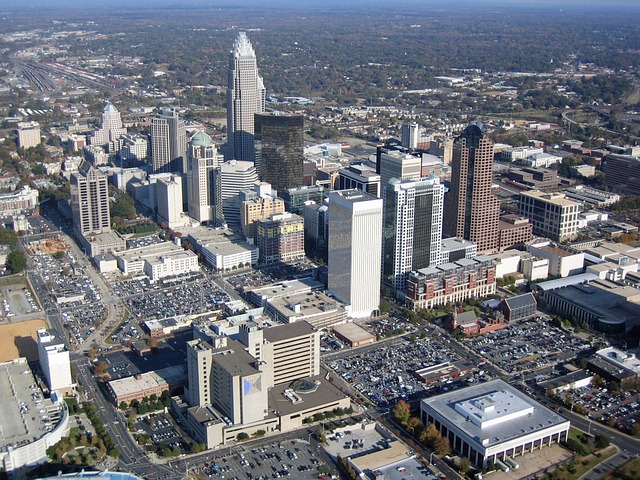
Charlotte is one of America’s great financial centers—home to Bank of America, Truist, and a cluster of financial institutions that anchor a powerful fintech ecosystem. The city has long been a magnet for finance and insurance professionals. Today, it’s also cultivating a new generation of tech entrepreneurs who are applying digital innovation to one of the oldest industries in the world.
>>>North Carolina Startup Accelerator Ecosystem: The Research Triangle Innovation Engine

The Research Triangle—anchored by Raleigh, Durham, and Chapel Hill—is the beating heart of North Carolina’s innovation economy. With three world-class universities, a deep technical talent pool, and an increasingly sophisticated support ecosystem, it’s no surprise that the region has become a magnet for startups.
>>>North Carolina Startup Accelerator Ecosystem: The Myth of Venture Scale in the Research Triangle

North Carolina has emerged as one of America’s most dynamic startup regions, with Raleigh, Durham, and Chapel Hill forming the backbone of what many call the “Southern Silicon Valley.” The Research Triangle hosts world-class universities—Duke, UNC, and NC State—and a thriving ecosystem of incubators, investors, and accelerators. It is home to innovation across life sciences, enterprise software, IoT, and more.
>>>Top Virtual Accelerators in Chennai
This article summarizes the top virtual accelerators in Chennai, and compares them to 1Mby1M across key dimensions.
By Guest Authors Kaushank Nalin Khandwala and Snigdha Rani Sahoo | Reviewed by Sramana Mitra

This article delves into the virtual accelerator landscape available to founders in Chennai, India. We analyze the programs through a founder-first lens, focusing on practical benefits, equity considerations, and support for solo founders. Our goal is to provide a neutral, data-driven overview to help Chennai’s entrepreneurs make informed decisions about which accelerators best align with their needs and stage of development.
>>>Top Accelerators for the Marathon, not a 3-month Sprint, in Hyderabad
This article summarizes the top startup accelerators for the Marathon, not a 3-month sprint, in Hyderabad, and compares them to 1Mby1M across key dimensions.
By Guest Authors Kaushank Khandwala and Snigdha Rani Sahoo | Reviewed by Sramana Mitra
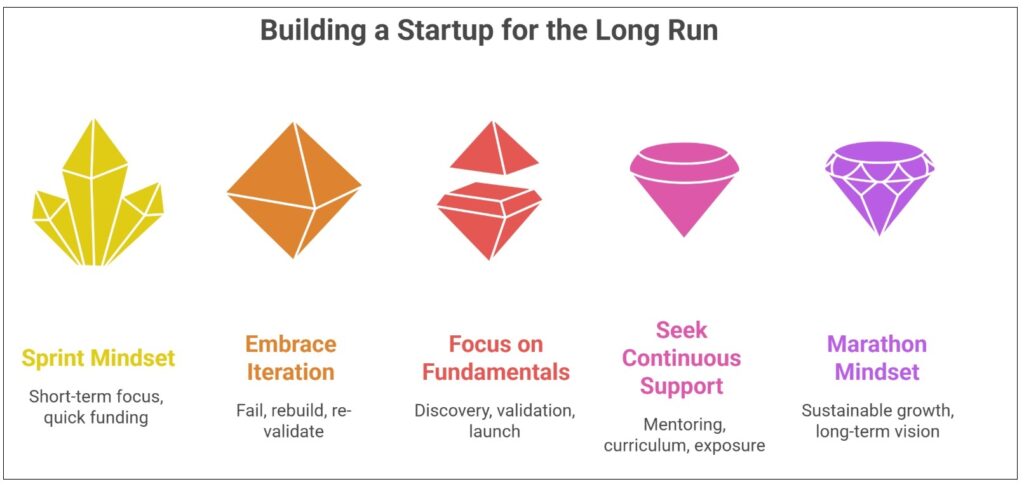
This article identifies programs that offer long-term, sustainable support for founders, emphasizing validation-first approaches and founder-friendly terms. The analysis contrasts these “marathon” accelerators with the more prevalent short-term, Demo Day-driven models, providing founders with insights to make informed decisions about which programs best suit their long-term goals.
>>>