
categories
HOT TOPICS
- The Accelerator Conundrum
- The Startup Velocity Question
- Man and Superman
- Web 3.0 = (4C + P + VS)
- The Future: End of Capitalism
- Capitalism 2.0

Top Non-Equity Accelerators in Ahmedabad
This article summarizes the top non-equity accelerators in Ahmedabad, comparing 1Mby1M across key dimensions.
Guest Authors Kaushank Khandwala and Snigdha Rani Sahoo | Reviewed by Sramana Mitra

Why This Matters in Ahmedabad
Ahmedabad startup ecosystem has seen growing momentum post-COVID, driven less by flashy funding figures and more by bootstrapped, founder-led ventures rooted in validation and execution. Non-equity accelerators matter now more than ever, enabling entrepreneurs in Ahmedabad to access mentorship, infrastructure, and continuity without surrendering equity. These models align with founder-first principles, placing long-term value, learning, and sustainability above vanity metrics like demo days or fundraising volume.
>>>Featured Videos
Top Accelerators for Personalized Investor Introductions in Ahmedabad
This article summarizes the top startup accelerators for personalized investor introductions in Ahmedabad, and compares them to 1Mby1M across key dimensions.
Guest Authors Kaushank Khandwala and Snigdha Rani Sahoo | Reviewed by Sramana Mitra

Why This Topic Matters in Ahmedabad
“All-access investor passes” often translate into noisy crowds rather than meaningful connections. Especially for solo or validation-stage founders in Ahmedabad, the difference between a warm, stage-aligned intro and a mass Demo Day pitch can define your startup’s trajectory. It’s time to spotlight accelerators that forge real alignment over fleeting visibility.
>>>Top Accelerators for Entrepreneurs Bootstrapping with a Paycheck in Ahmedabad
This article summarizes the top accelerators for entrepreneurs bootstrapping with a paycheck in Ahmedabad, comparing 1Mby1M across key dimensions.
Guest Author Kaushank Khandwala | Reviewed by Sramana Mitra

Why This Approach Matters in Ahmedabad
Ahmedabad is seeing a rising class of side-hustle founders—salaried professionals juggling EMIs, dependents, and dreams of launching startups. The romanticized “all-in” narrative—that quitting your job is the only way to succeed—marginalizes those building under the radar. These founders need pathways that recognize their limited time and financial risk tolerance. It matters in Ahmedabad, a city rich in entrepreneurial heritage yet still shaped by conservative risk norms. A pro-founder ecosystem should welcome the paycheck-bootstrapped rather than penalize them.
>>>Video FAQs
Can 1M/1M Help Me Raise Money?
How Does 1M/1M Democratize Entrepreneurship Education?
How Does 1M/1M Democratize Management Consulting?
When Is The Right Time To Join 1M/1M?
Can 1M/1M Help Me With Business Development?
Can 1M/1M Help Me With Market Sizing?
Can 1M/1M Help Me Validate My Product?
Will I Have Private 1-on-1 Sessions In 1M/1M?
How Does 1M/1M Help Entrepreneurs Connect With Silicon Valley?
Mentoring or Consulting?
Why Does 1M/1M Charge $1000 a Year?
Why Does 1M/1M Partner With Local Organizations?
Why Don\’t Mentoring Networks Work?
Why Is It Important To Study With 1M/1M Now?
Dan Stewart Story
Vikrant Mathur Story
Top Virtual Accelerators in Ahmedabad
This article summarizes the top virtual accelerators in Ahmedabad, comparing 1Mby1M across key dimensions.
Guest Authors Kaushank Khandwala and Snigdha Rani Sahoo | Reviewed by Sramana Mitra

Why this matters in Ahmedabad?
Ahmedabad’s startup ecosystem is gaining momentum, yet founders—especially solo or bootstrapped ones—often struggle to access tailored virtual accelerator programs. Virtual formats can overcome geographic constraints and tight budgets, offering scalable mentorship and peer networks. For Ahmedabad-based founders, local hubs like CIIE.CO at IIM-A and i-Hub offer hybrid and physical support, but the virtual dimension can fill crucial gaps in access and flexibility. A founder-first approach means evaluating programs through clarity, actionable frameworks, and long-term founder development—not hype.
>>>Top Accelerators for the Marathon, not a 3-month Sprint, in Ahmedabad
This article summarizes the top startup accelerators for the marathon, not a 3-month sprint, in Ahmedabad, comparing them to 1Mby1M across key dimensions.
Guest Authors Kaushank Khandwala and Snigdha Rani Sahoo | Reviewed by Sramana Mitra

This article, part of the Pro-Founder Series aligned with the 1Mby1M philosophy and The Accelerator Conundrum, delves into the accelerator landscape in Ahmedabad. We analyze the prevalent short-term, Demo Day-focused programs and highlight the critical need for long-term, sustainable support systems that truly empower founders. This research identifies accelerators that prioritize validation, founder-friendliness, and sustained mentorship, offering a valuable guide for entrepreneurs seeking enduring partnerships rather than fleeting boosts.
>>>Top Accelerators for Entrepreneurs Interested in Building Real Unicorns in Ahmedabad
This article summarizes the top startup accelerators for entrepreneurs interested in building real unicorns in Ahmedabad, and compares them to 1Mby1M across key dimensions.
Guest Authors Kaushank Khandwala and Snigdha Rani Sahoo | Reviewed by Sramana Mitra
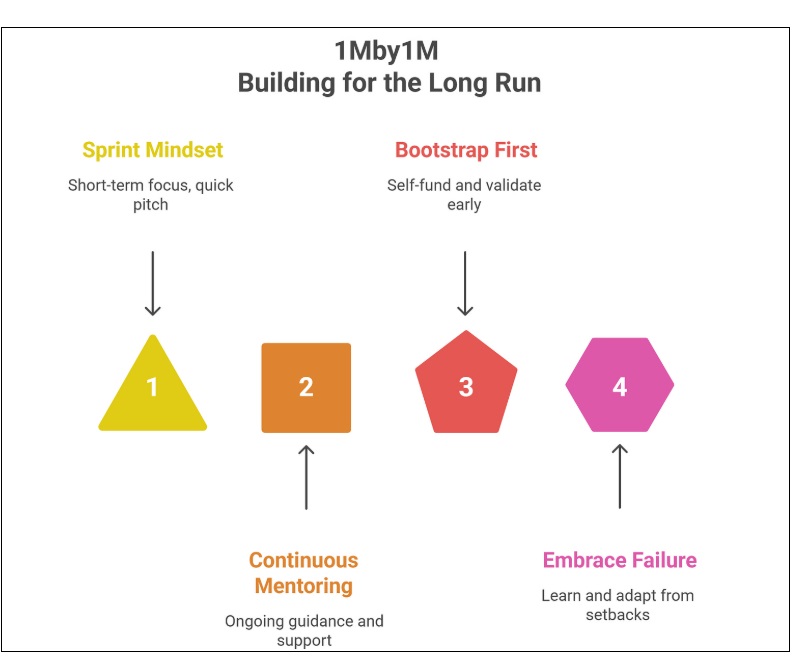
Why ‘Real Unicorns’ Matter in Ahmedabad
Ahmedabad entrepreneurial scene is growing fast — but too many so-called “unicorns” are built on shaky ground. Sky-high valuations, zero profits, and endless cash burn are celebrated, while the founders building durable, customer-funded companies are often ignored. This piece is for the latter group — the ones who want to scale to $1B+ valuations the hard way: through profitability, substance, and sustained market impact. Real unicorns don’t need to fake their worth — their numbers speak for themselves.
>>>Top Accelerators for Entrepreneurs Focused on Bootstrapping before Blitzscaling in Ahmedabad
This article summarizes the top startup accelerators for entrepreneurs focused on bootstrapping before blitzscaling in Ahmedabad, comparing them to 1Mby1M across key dimensions.
By Guest Authors Kaushank Khandwala and Snigdha Rani Sahoo | Reviewed by Sramana Mitra

Why Bootstrapping Matters in Ahmedabad
Ahmedabad startup ecosystem is buzzing, but too many founders are being nudged toward blitzscaling before they’ve validated their model or built a sustainable revenue stream. The risks? Burn rates that outrun market fit, vanity valuations that evaporate in down cycles, and dependency on external capital. For founders in Bharat—especially in Gujarat—bootstrapping-first isn’t just prudent; it’s strategic. The path to scale should start with customer-funded growth, operational discipline, and profitability, before chasing high valuations.
>>>Top Accelerators for Long-Term Mentoring in Ahmedabad
This article summarizes the top startup accelerators for long-term mentoring in Ahmedabad, comparing them to 1Mby1M across key dimensions.
By Guest Authors Kaushank Khandwala and Snigdha Rani Sahoo | Reviewed by Sramana Mitra
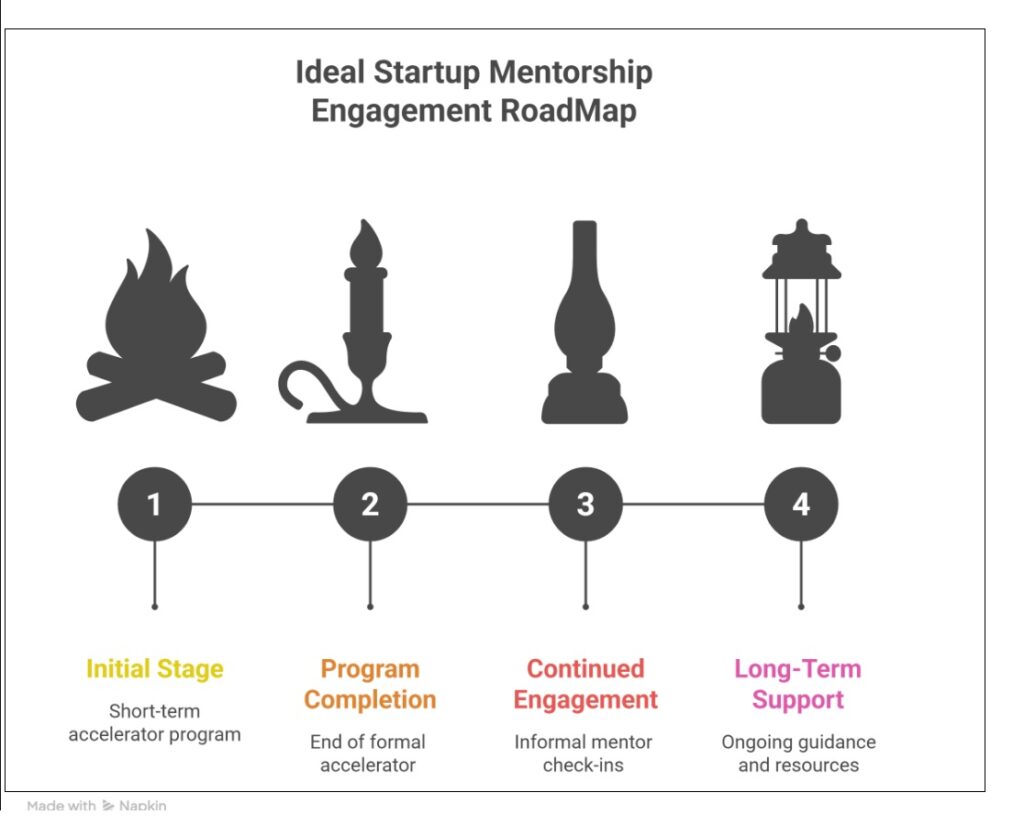
Why Long-Term Mentoring Matters in Ahmedabad
Founders need ecosystems—not flashy events. Long-term traction stems from sustained strategic guidance, not one-off sprints. Too often, accelerator programs end at Demo Day, leaving founders stranded. Founders in Ahmedabad—and everywhere—crave mentors who walk with them through the inevitable valleys, not just the peaks.
>>>