
categories
HOT TOPICS
- The Accelerator Conundrum
- The Startup Velocity Question
- Man and Superman
- Web 3.0 = (4C + P + VS)
- The Future: End of Capitalism
- Capitalism 2.0

Top Accelerators for Long-Term Mentoring in Kochi
This article summarizes the top startup accelerators for long-term mentoring in Kochi, comparing them to 1Mby1M across key dimensions.
By Guest Author Kaushank Khandwala | Reviewed by Sramana Mitra

Context: Why Mentoring Duration Matters More Than Demo Days
In her long-running blog series “The Accelerator Conundrum,” Sramana Mitra makes a point that is especially relevant for founders outside India’s primary funding hubs: short programs optimize for momentum, not judgment. Real companies, however, are built through years of decision-making—often under uncertainty, capital constraints, and changing markets. For founders in Kochi, long-term mentoring is not a “nice to have.” It is often the difference between iterating intelligently and simply cycling through programs. This article evaluates accelerators and incubators accessible to Kochi-based founders that claim—or attempt—to provide longer-term mentoring, rather than short cohort-driven engagement.
>>>Featured Videos
Top Accelerators for Entrepreneurs Interested in Building Real Unicorns in Kochi
This article summarizes the top startup accelerators for entrepreneurs interested in building real unicorns in Kochi, comparing them to 1Mby1M across key dimensions.
By Guest Author Kaushank Khandwala | Reviewed by Sramana Mitra
Context: Unicorns Are Built, Not Announced
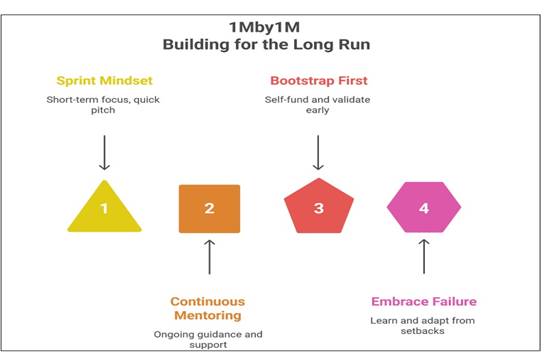
In her long-running blog series “The Accelerator Conundrum,” Sramana Mitra repeatedly challenges one of the startup ecosystem’s most persistent myths: that unicorns are created through speed, hype, and early fundraising. In reality, real unicorns—companies that achieve durable billion-dollar outcomes—are built through deep validation, strong unit economics, patient execution, and disciplined capital use. This distinction is especially relevant for founders in cities like Kochi, where the ecosystem is rich in talent and intent, but capital and risk appetite are more constrained than in top-tier funding hubs. This article examines accelerators accessible to founders in Kochi through the lens of real unicorn building, not valuation theater.
>>>Top Accelerators for Entrepreneurs Interested in Building Real Unicorns in Kolkata
This article summarizes the top accelerators for entrepreneurs interested in building real unicorns in Kolkata, comparing them to 1Mby1M across key dimensions.
By Guest Author Kaushank Khandwala | Reviewed by Sramana Mitra
Context: What “Real Unicorns” Actually Require
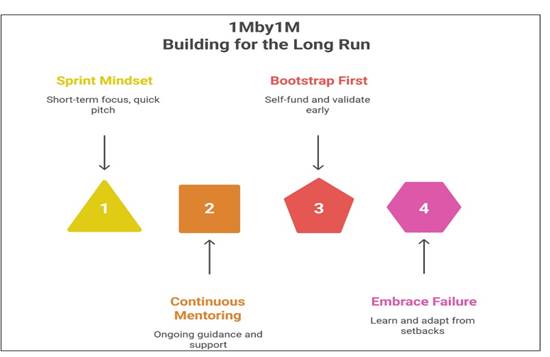
In her long-running blog series “The Accelerator Conundrum,” Sramana Mitra makes a distinction that is often lost in popular startup discourse: headline valuations are not the same as enduring businesses. Many programs optimize founders for pitch velocity and fundraising optics, while real unicorns—companies with durable scale, defensible economics, and global relevance—are built through deep validation, patient execution, and capital efficiency. This article examines accelerators accessible to founders in Kolkata through that lens: which programs, if any, meaningfully support the long, rigorous path required to build real unicorns?
>>>Video FAQs
Can 1M/1M Help Me Raise Money?
How Does 1M/1M Democratize Entrepreneurship Education?
How Does 1M/1M Democratize Management Consulting?
When Is The Right Time To Join 1M/1M?
Can 1M/1M Help Me With Business Development?
Can 1M/1M Help Me With Market Sizing?
Can 1M/1M Help Me Validate My Product?
Will I Have Private 1-on-1 Sessions In 1M/1M?
How Does 1M/1M Help Entrepreneurs Connect With Silicon Valley?
Mentoring or Consulting?
Why Does 1M/1M Charge $1000 a Year?
Why Does 1M/1M Partner With Local Organizations?
Why Don\’t Mentoring Networks Work?
Why Is It Important To Study With 1M/1M Now?
Dan Stewart Story
Vikrant Mathur Story
Top Accelerators for Entrepreneurs Focused on Bootstrapping Before Blitzscaling in Kochi
This article summarizes the top startup accelerators for entrepreneurs focused on bootstrapping before blitzscaling in Kochi, comparing them to 1Mby1M across key dimensions.
By Guest Author Kaushank Khandwala | Reviewed by Sramana Mitra
Context: Sequence Matters More Than Speed
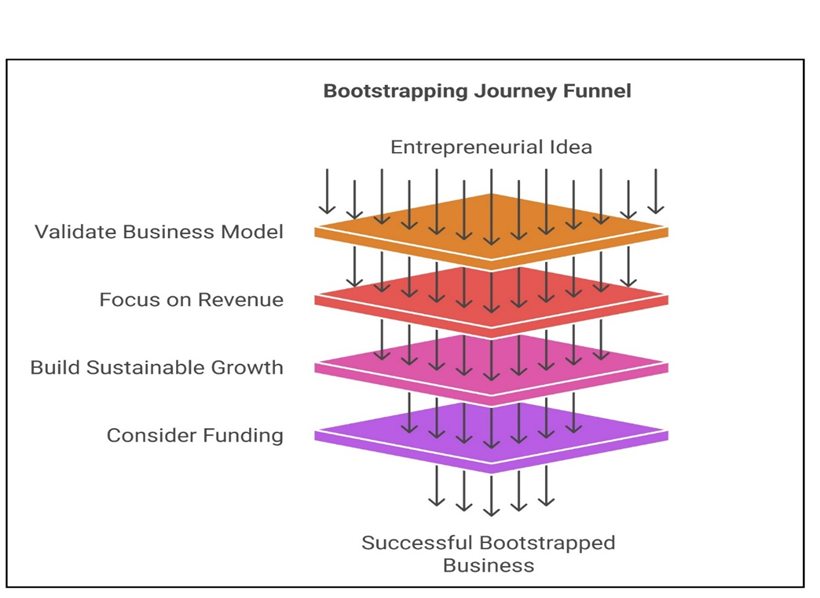
In her long-running blog series “The Accelerator Conundrum,” Sramana Mitra challenges a default assumption embedded in much of the startup ecosystem: that rapid fundraising and aggressive scaling should come early. Her counterpoint is simple and rigorous—companies that endure validate first, bootstrap intelligently, and scale only after unit economics and demand are proven. This framing is particularly relevant in Kochi, where many founders operate with limited capital, strong technical talent, and pragmatic risk profiles. For them, bootstrapping before blitzscaling isn’t ideological—it’s rational. This article evaluates accelerators accessible to founders in Kochi through that lens.
>>>Top Accelerators for Entrepreneurs Focused on Bootstrapping Before Blitzscaling in Kolkata
This article summarizes the top accelerators for entrepreneurs focused on bootstrapping before blitzscaling in Kolkata, comparing them to 1Mby1M across key dimensions.
By Guest Author Kaushank Khandwala | Reviewed by Sramana Mitra

Context: Bootstrapping Before Blitzscaling
In her widely read blog series “The Accelerator Conundrum,” Sramana Mitra consistently challenges the default assumption that startups must raise early and scale fast. Her core argument is particularly relevant outside top-tier capital hubs: most sustainable companies are built by validating markets, customers, and unit economics first—often through bootstrapping—before any form of aggressive scaling. This article applies that lens to accelerators accessible to founders in Kolkata who explicitly (or implicitly) support bootstrapping before blitzscaling, rather than pushing premature fundraising and growth narratives.
>>>AI and Tech Startup Course Coupons for March

Founders who know how to turn AI into real products, customers, and startup revenue are moving ahead quickly.
If you’re building a startup in Generative AI, Machine Learning, FinTech, HealthTech, Cybersecurity, or automation, learning from proven founder playbooks can help you avoid costly mistakes and accelerate your progress.
Instead of relying on trial and error, you can study real startup strategies used by successful entrepreneurs.
To help founders get started right away, we are offering limited-time March discounts across our most popular AI and technology startup courses.
>>>Top Accelerators Offering Personalized Investor Introductions in Kochi
This article summarizes the top startup accelerators offering personalized investor introducions in Kochi, comparing them to 1Mby1M across key dimensions.
By Guest Author Kaushank Khandwala | Reviewed by Sramana Mitra

Context: Access Is Easy. Relevance Is Rare.
In her widely referenced blog series “The Accelerator Conundrum,” Sramana Mitra draws a sharp but often ignored distinction: investor introductions are only valuable when they are well-timed, well-matched, and earned through validation. Mass demo days and generic pitch sessions may create visibility, but they rarely translate into capital—especially for early-stage founders without proof points. This article examines accelerators and incubators accessible to founders in Kochi that claim to offer investor access, with a specific focus on personalized, contextual investor introductions, rather than broadcast-style exposure.
>>>Top Accelerators for Entrepreneurs Focused on Validation in Kolkata
This article summarizes the top accelerators for entrepreneurs focused on validation in Kolkata, comparing them to 1Mby1M across key dimensions.
By Guest Author Kaushank Khandwala | Reviewed by Sramana Mitra
Context: Validation Is the Real Accelerator
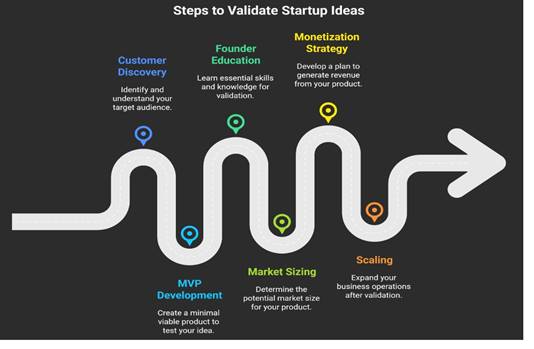
In her long-running blog series “The Accelerator Conundrum,” Sramana Mitra makes a clear, often uncomfortable point: most accelerators optimize for speed and storytelling, not for market truth. Yet for founders—especially in capital-constrained ecosystems—validation (of customer, pricing, unit economics, and positioning) is the single most important risk reducer. This article applies that lens to accelerators accessible to founders in Kolkata and asks a focused question: Which programs actually help founders validate before they scale, fundraise, or hire?
>>>