
categories
HOT TOPICS
- The Accelerator Conundrum
- The Startup Velocity Question
- Man and Superman
- Web 3.0 = (4C + P + VS)
- The Future: End of Capitalism
- Capitalism 2.0

Online Education
Featured Videos
AI Investor Forum: Gus Tai on AI in Education (Part 5)
Sramana Mitra: This is interesting. It’s a little bit of a diversion, but I recently had an experience with a very close friend of mine who very readily condemned Joe Biden for pardoning his son. I don’t feel so strongly about that pardon because this is a father who has lost two children and a wife, and this is his only surviving son. Given that power, he is bound to make that choice. In my opinion, I don’t know any parent who would not make that choice. If I do the theory of mind experiment, I don’t see any father or any parent making any other choice given that power. The real question is, should a president have that kind of pardoning power?
>>>AI Investor Forum: Gus Tai on AI in Education (Part 4)
Sramana Mitra: Now, the equation starts to change as we get to higher education, right? There’s the big experiment that came out of MIT and Harvard edX, which started putting all the lectures online. It was the beginning of these massive online open courses (MOOCs). Today’s technology can go much further with all this personalization and Generative AI stuff. However, the same model of children being able to learn more with that personalized, infinitely patient teacher or professor in college still holds.
>>>AI Investor Forum: Gus Tai on AI in Education (Part 3)
Sramana Mitra: There is one other vector we need to consider in this – the human centric element. The history of education is that the human provides all the content. For a rural India teacher to teach English as a second language, he or she has to know English as a second language from that particular vernacular in the region first. But in this model, we are eliminating that requirement. Or are we eliminating that requirement? Does the teacher need to not know, know? What is the role of the teacher in this?
>>>AI Investor Forum: Gus Tai on AI in Education (Part 2)
Sramana Mitra: I want to double click on English as a second language. In March last year, we were in India, and my father took us to see a school in rural West Bengal, quite far from Calcutta, which is the main metropolis in that region. These rural Indian towns and villages are not places where fluent English as a second language is that common. We were blown away by these ninth grade kids who were giving us tours of their labs and their learning process, and they were so enthusiastic, and the whole thing was in fluent English.
>>>AI Investor Forum: Gus Tai on AI in Education (Part 1)

Gus Tai, Investor, Board Member and Retired General Partner at Trinity Ventures, discusses ideas and opportunities in Education with an AI-augmented framework.
>>>665th 1Mby1M Entrepreneurship Podcast with Investor Gus Tai (Part 2, 2024)
Gus Tai, Investor, Board Member and Retired General Partner at Trinity Ventures, discusses ideas and opportunities in Education with an AI-augmented framework.
Podcast: Play in new window | Download
Subscribe: Apple Podcasts | TuneIn | RSS
Bootstrap Your Startup Dreams and Keep Your Day Job + Course Coupons

If you work in tech and are seeing your entrepreneurial friends build their own businesses, you might be wondering if it’s possible for you to do the same without giving up your full-time job. The answer is YES – it’s not only possible, but it’s also a major trend in today’s entrepreneurial landscape.
The truth is, you don’t have to take the plunge into full-time entrepreneurship immediately. In fact, many successful founders, like Girish Navani of eClinicalWorks, built thriving businesses while keeping their day job. The key is to validate your business idea – talk to customers, ensure they’re buying, and confirm that your idea has traction.
Our Bootstrapping a Startup with a Paycheck course is designed for people just like you: tech workers with big ideas but also financial obligations. Entrepreneurs today are navigating the risky, cash-strapped early stages of their startups by leveraging their steady paycheck, or sometimes, their spouse’s income, to stay afloat. Learn directly from entrepreneurs who have successfully walked this path and gain insights on how to validate your idea, manage risk, and decide when to make the leap.
For the month of October, we are offering you up to 85% off this course and all of those listed below.
All of the discount coupons will expire on October 31, 2024, so enroll today!
Bootstrapping:
Bootstrapping a Startup with a Paycheck with Sramana Mitra: TRY1MBY1MOCT2024PAY
Bootstrap First, Raise Money Later with Sramana Mitra: TRY1MBY1MOCT2024BTS
Bootstrapping a Startup with Services with Sramana Mitra: TRY1MBY1MOCT2024SVC
New Course – How VC Investors Think About AI Startups + Coupons
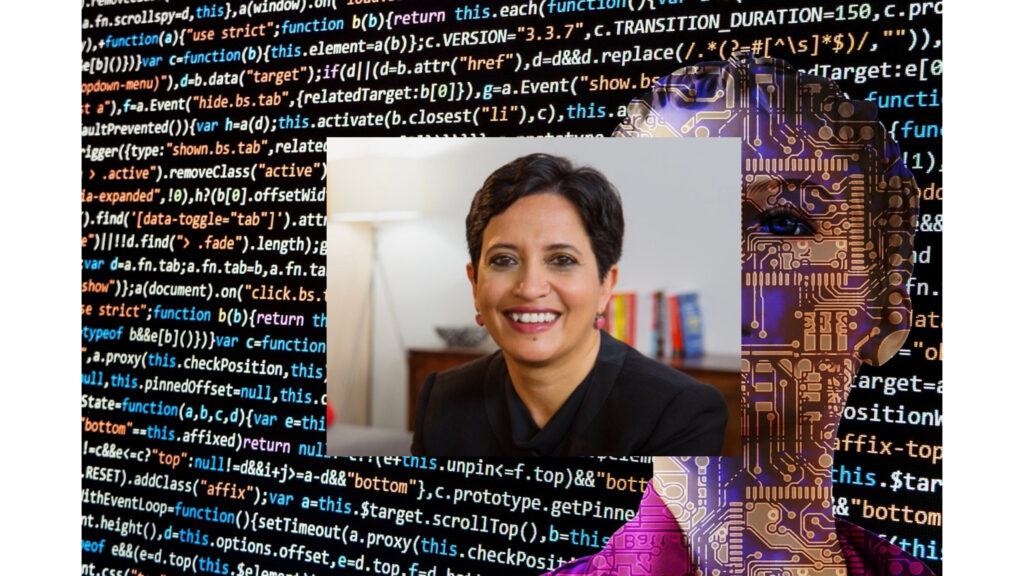
Our new course, How VC Investors Think About AI Startups, cuts through the hype surrounding AI to offer entrepreneurs real insights into what drives investor decision-making in this space. It shares the perspectives of venture capitalists who are actively investing in AI startups, with a focus on how machine learning is influencing their strategies. Through in-depth conversations, you’ll explore how investors evaluate enterprise AI adoption, the potential of general AI versus specialized applications, and the infrastructure needed to scale artificial intelligence. The course also tackles key challenges like AI hallucination and the evolving role of superintelligence in shaping the future of the industry. By the end, you’ll gain a deeper understanding of what VCs look for in AI startups, along with examples from their portfolios that highlight these strategies in action.
For the month of September, we are offering you up to 85% off this course and all of those listed below.
All of the discount coupons will expire on September 30, 2024, so enroll today!
Artificial Intelligence:
How VC Investors Think About AI Startups with Sramana Mitra: TRY1MBY1MSEP2024AIVC
How To Build AI Startups with Sramana Mitra: TRY1MBY1MSEP2024AI
Generative AI Startup Strategy Case Studies: TRY1MBY1MSEP2024GAI
