
categories
HOT TOPICS
- The Accelerator Conundrum
- The Startup Velocity Question
- Platform as a Service
- Man and Superman
- Web 3.0 = (4C + P + VS)
- The Future: End of Capitalism
- Capitalism 2.0

Funding for a Business
1Mby1M Virtual Accelerator Investor Forum: With Dr. Aniruddha Malpani, Founder of Malpani Ventures (Part 2)
Sramana Mitra: One of the observations I have about the global startup ecosystem is this position of looking for paying customers is not at all unusual. I would say the vast majority of investors are looking for paying customers at this point. It has become so much easier to bootstrap companies. There’s a lot of methodology and knowledge about how to bootstrap a company.
The point that you’re making of wanting to see validated companies that already have product-market fit and customers does not come to anybody as a surprise at this stage of the game.
>>>1Mby1M Virtual Accelerator Investor Forum: With Dr. Aniruddha Malpani, Founder of Malpani Ventures (Part 1)

Dr. Aniruddha Malpani, Founder of Malpani Ventures, is an active angel investor in Indian startups for the past decade. Wonderful conversation.
Sramana Mitra: Let’s catch up a bit on what has been going on in our collective universe and how you see the world based on all these years of observing the ecosystem. How do you see the Indian startup ecosystem evolving?
>>>11 Udemy Courses On How To Raise Seed Funding in the US Midwest

While the broader trends are similar throughout the United States, I find Midwestern investors to be very pragmatic. They’re usually more interested in capital-efficient startups and more accepting of early exits at modest multiples.
>>>1Mby1M Virtual Accelerator Investor Forum: With Seksom Suriyapa, Partner at Upfront Ventures (Part 1)

Seksom Suriyapa, Partner at Upfront Ventures, and formerly Head of Corp Dev at Twitter, SuccessFactors, and McAfee and Akamai discusses exit strategy from the buy-side perspective at length.
Sramana Mitra: Let’s start by having you talk a little bit about your background in corp dev doing acquisitions from the buy side from various significant companies before you switched to the venture side.
>>>1Mby1M Virtual Accelerator Investor Forum: With Sandeep Sardana, Founder and General Partner at BluePointe Ventures (Part 4)
Sramana Mitra: On the small fund team, one thing that we’ve heard is that they are exiting in the Series C and Series D round. Is that part of your game plan?
Sandeep Sardana: It’s not off the table. We haven’t done it, but it’s not off the table. It depends on your portfolio construction. If your portfolio is generating DPI early enough, you don’t necessarily need to start exiting. If you are able to get to it sufficiently without having to take positions off early, we’ll do that.
>>>1Mby1M Virtual Accelerator Investor Forum: With Sandeep Sardana, Founder and General Partner at BluePointe Ventures (Part 3)
Sramana Mitra: Two-sided marketplaces tend to be capital-intensive but you have found an entrepreneur who has managed to do a capital-efficient two-sided marketplace scale. What is the secret of that?
Sandeep Sardana: The entrepreneur is a do-it-all entrepreneur. He’s a top-level CTO himself. He has a great business mind. He built a small and very effective team in Bangalore. We leveraged our network. He also knew that speed matters. He has done it before.
>>>1Mby1M Virtual Accelerator Investor Forum: With Sandeep Sardana, Founder and General Partner at BluePointe Ventures (Part 2)
Sramana Mitra: I’ll tell you what we do at 1Mby1M. We do bottom-up TAM analysis, which means we have to get the business model and pricing model hypothesis. When you’re starting out and raising money, that financial hypothesis is really important to get right. We emphasize a few specific elements. One is the business model. Two is the pricing model. Three is the bottom-up TAM analysis. Does that cover what you’re looking for in financial storytelling?
Sandeep Sardana: I couldn’t have said it any better.
>>>1Mby1M Virtual Accelerator Investor Forum: With Sandeep Sardana, Founder and General Partner at BluePointe Ventures (Part 1)
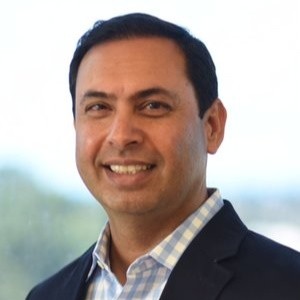
Sandeep Sardana is Founder and General Partner at BluePointe Ventures. We had a terrific discussion on how we each look for a startup story through financial metrics.
Sramana Mitra: Let’s start by introducing yourself to our audience. Tell us a bit about your journey. What path brings you here?
>>>