
categories
HOT TOPICS
- The Accelerator Conundrum
- The Startup Velocity Question
- Platform as a Service
- Man and Superman
- Web 3.0 = (4C + P + VS)
- The Future: End of Capitalism
- Capitalism 2.0

Funding for a Business
1Mby1M Virtual Accelerator Investor Forum: With Bill Baumel, Managing Director of Ohio Innovation Fund (Part 1)
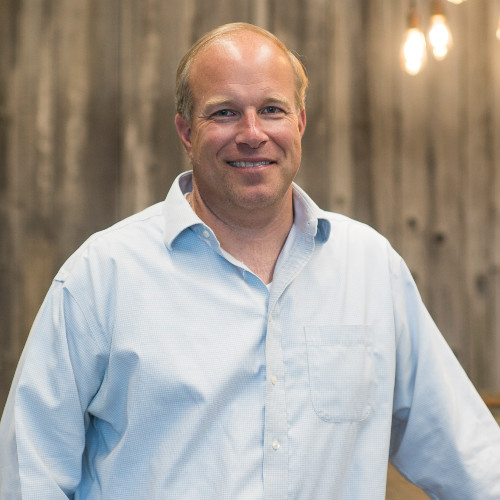
Bill Baumel, Managing Director at Ohio Innovation Fund, is one of the pioneers of the Ohio startup ecosystem.
Sramana Mitra: Let’s start with some introduction to where you are with your work with Ohio Innovation Fund. What’s happening in Ohio as an ecosystem?
>>>1Mby1M Virtual Accelerator Investor Forum: With Steve Eskenazi, Angel Investor (Part 4)
Sramana Mitra: I was talking to Eric Benhamou two days ago. He was like, “I’m looking for a good application or use case for NFT.” What about exits? What have you seen through your investments?
Steve Eskenazi: I think there are a couple of tried and true methodologies. I think the best company gets bought and not sold. You have to build companies the right way and you have to scale them the right way. Throwing money at problems is not a solution.
>>>1Mby1M Virtual Accelerator Investor Forum: With Steve Eskenazi, Angel Investor (Part 3)
Sramana Mitra: Here’s a trend question. You have watched the music business for a long time. What is your analysis of the music business? We see music deals from time to time. A lot of the industry believes that you can’t make money in the music business. Can you talk about that?
Steve Eskenazi: I don’t look at it as binary. Some people say you can’t make money. I think it’s very selectively investable. That has been my approach. I was a private investor in Spotify as well. I’ve raised the bar on music deals more than I would in other spaces. I would probably agree that it’s really tough to make money in the music space.
>>>1Mby1M Virtual Accelerator Investor Forum: With Steve Eskenazi, Angel Investor (Part 1)
Steve Eskenazi is an Angel Investor, and we had a number of interesting trend conversations.
Sramana Mitra: Let’s start with a little bit of your background. Tell us about what path you have traveled.
Steve Eskenazi: My career has three distinct phases. In the 1990s, I was Wall Street’s digital media analyst introducing Wall Street to companies like America Online and Electronic Arts. For the next 10 years, I was a venture capitalist for a firm called Walden VC where we invested in internet, SaaS, and digital media companies.
>>>1Mby1M Virtual Accelerator Investor Forum: With Andrus Oks, Founding Partner of Tera Ventures (Part 3)
Sramana Mitra: The other advantage you have is, there is a substantial enterprise software buyer market in Europe as well. The Indian buyer market is not as mature. Europe has lots of large enterprises that buy a lot of technology. You could build a substantial business catering to European enterprise customers. That’s one observation.
The second one is that language is an issue in Europe more than in India. In India, the business operates mostly in English. There’s a bit more of a language issue in Europe. English is, not necessarily, the lingua franca of Europe. In your region, English is more of the lingua franca.
>>>1Mby1M Virtual Accelerator Investor Forum: With Steve Eskenazi, Angel Investor (Part 2)
Sramana Mitra: Let’s do some more examples of the kinds of companies you like to invest in. Is Resonato an IT investment?
Steve Eskenazi: It’s a technology company that occupies the intersection of technology and consumer electronics. Our first TVs were thick. Now, TVs are very thin. They are doing for the speaker market what was done to the TV market. They are making flat-core speakers. They don’t make the speakers. They license their technology. They’re heavily patent-protected.
>>>1Mby1M Virtual Accelerator Investor Forum: With Andrus Oks, Founding Partner of Tera Ventures (Part 2)
Sramana Mitra: How do the Estonian culture and entrepreneurial momentum play into your investment strategy? Are you looking for people to have developer shops in Estonia or some kind of backend in Estonia?
Andrus Oks: Estonia is very special. To put in context, it is a small country with a population of 1.3 million. We actually have 10 Estonian unicorns. Last year, it was more than a billion dollars in investment. This year, it’s already more than a billion dollars. This is very helpful. We achieved this quite fast as well.
>>>1Mby1M Virtual Accelerator Investor Forum: With Andrus Oks, Founding Partner of Tera Ventures (Part 1)
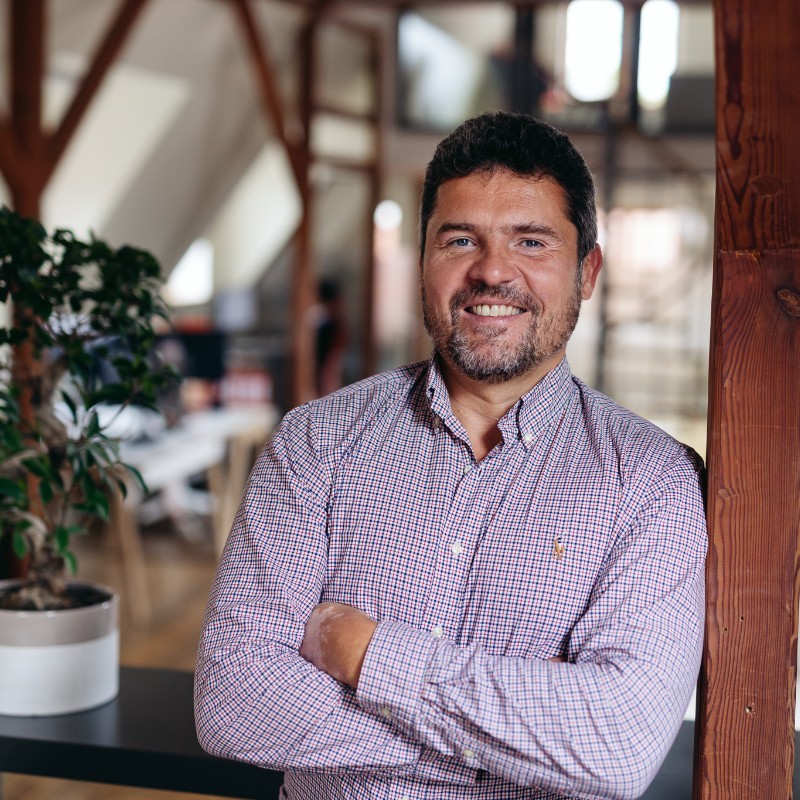
Andrus Oks is Founding Partner at Tera Ventures, based in Estonia. We have a great discussion on entrepreneurship in the Baltic and Scandinavian countries in particular.
Sramana Mitra: Let’s start by introducing our audience to yourself as well as Tera Ventures.
Andrus Oks: I’m one of the founding partners of Tera Ventures. Tera is an Estonian-based seed fund. We currently invest from our €45 million second fund. We are halfway through. We have done 15 deals. We are doing another 15. We support our portfolio companies throughout the rounds. We like to be early. We’re often the first investors.
>>>