
categories
HOT TOPICS
- The Accelerator Conundrum
- The Startup Velocity Question
- Platform as a Service
- Man and Superman
- Web 3.0 = (4C + P + VS)
- The Future: End of Capitalism
- Capitalism 2.0

Funding for a Business
The Startup Velocity Question: What Hinders Acceleration in VC Funded Companies?

I have been running 1Mby1M since 2010. I find myself saying to entrepreneurs ad nauseam that VCs want to invest in startups that can go from zero to $100 million in revenue in 5 to 7 years.
Startups that do not have what it takes to achieve velocity should not be venture funded.
Experienced VCs, over time, have developed heuristics to gauge what constitutes a high growth venture investment thesis.
>>>1Mby1M Virtual Accelerator Investor Forum: With Max Brickman, Founder at Heartland Ventures (Part 3)
Sramana Mitra: You have to build around capital-efficient principles. What about companies in the Midwest?
Max Brickman: Absolutely. We have one called Claira. Katie Hall is the founder. It does competency-based evaluation of your current workforce. When you look at a map of Fortune 1,000 companies, they’re predominantly in the Midwest. There’s an unfair advantage that a lot of these companies have by being in the Midwest. Your customers are going to be more interested. We are seeing it more and more.
>>>1Mby1M Virtual Accelerator Investor Forum: With Max Brickman, Founder at Heartland Ventures (Part 2)
Sramana Mitra: Let’s do some examples of companies that you have invested in especially where you have brought them to your customers very early on.
Max Brickman: One would be Workstream. We are one of the early investors in their seed round. It targets the HR space – hiring hourly employees. We loved Desmond the founder. We wanted to introduce him to our network and see if other people agreed.
>>>1Mby1M Virtual Accelerator Investor Forum: With Max Brickman, Founder at Heartland Ventures (Part 1)
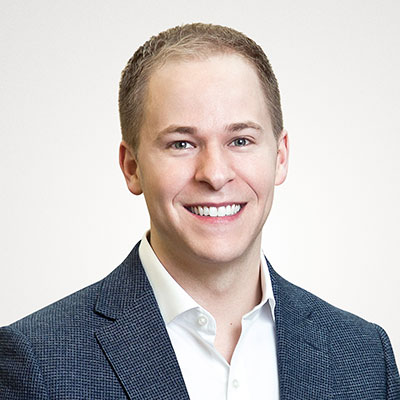
Max Brickman, Founder at Heartland Ventures, talks about his firm’s investment thesis.
Sramana Mitra: Let’s start with a little bit of introduction about your background.
Max Brickman: I’m from Wisconsin. I started in the entrepreneurial space early on. I bought my first property in northern Wisconsin when I was 14. It was money from a landscaping company that I had.
>>>1Mby1M Udemy Courses with Sramana Mitra: Financing
Raising money to build a startup is a huge challenge. To be able to raise any money at all, you must first understand how investors think. We have developed the following courses catering to entrepreneurs in different stages of their entrepreneurial journey.
>>>Best of Bootstrapping: Scaled with Angel Money in Canada
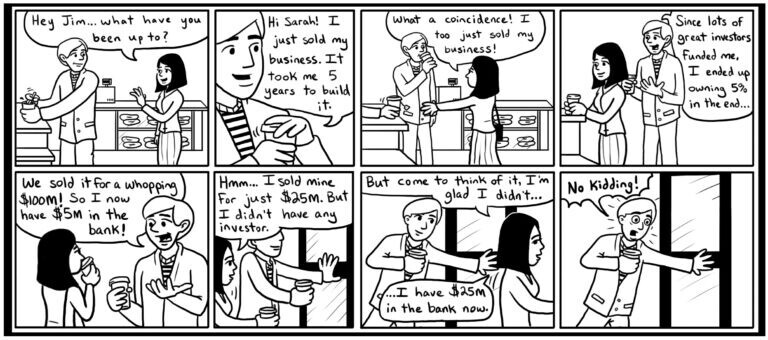
If you haven’t already, please study our Bootstrapping Course and Investor Introductions page.
When we spoke in 2015, Joel Lessem was scaling a profitable company in Toronto called Firmex, and had only spent $4 million in angel money to get to almost $10 million in revenue. Datasite acquired Firmex in 2021.
Sramana Mitra: Let’s start with the very beginning of your story. Where are you from? Where were you born, raised, and in what kind of background?
Joel Lessem: I was born in Israel but raised in Toronto from the age of three. I grew up in Toronto.
Startup Ecosystem in Kolkata: Lack of Funding

Join us on Thursday, July 20, at 8:30 p.m. IST / 8 a.m. PDT for a special roundtable program: Brainstorming on Eastern India Startup Development. Come share your perspective, sign up to Speak and we will accommodate as many as possible with a few minutes to talk, register here. In case you missed it, you can listen to the recording of this roundtable here.
There is no risk capital available in Kolkata.
This is a refrain that I have heard before many times: there is no risk capital. There is no venture capital. There is no Angel capital. There is no seed capital.
The truth is, in the Valley, most funding goes to validated businesses that are bootstrapped by founders. Or to repeat entrepreneurs with a significant track record of success.
>>>Use Bootstrapping with Services to Increase Your Probability of Fund Raising

Raising funding for startups in Silicon Valley is a low probability game. Fewer than 1% who try actually succeed.
Outside the Valley, the startup ecosystems are mostly immature, and the probability gets even lower.
The bar to raise seed funding is getting higher and higher. Seed investors are mostly operating as growth investors, expecting that the entrepreneur will somehow manage to bridge the gap and bring a concept to realization. In fact, what these investors really want is to invest in businesses that have traction, not just validation.
In short, they want to come to the rescue of victory.
