
categories
HOT TOPICS
- The Accelerator Conundrum
- The Startup Velocity Question
- Platform as a Service
- Man and Superman
- Web 3.0 = (4C + P + VS)
- The Future: End of Capitalism
- Capitalism 2.0

Funding for a Business
1Mby1M Virtual Accelerator AI Investor Forum: With Naganand Doraswamy, Managing Partner and Founder at Ideaspring Capital (Part 4)
Sramana Mitra: I think for entrepreneurs listening to this conversation, there are two takeaways that you want to consider. One is, find a platform that you can build on. If you’re building enterprise products or mid-market B2B products, look at a platform called Cohere.
>>>1Mby1M Virtual Accelerator AI Investor Forum: With Naganand Doraswamy, Managing Partner and Founder at Ideaspring Capital (Part 2)
Sramana Mitra: Let’s double click down on your current portfolio. Let’s discuss the AI company that you have invested in and let’s also discuss the five to seven AI SaaS companies that are bringing in AI co-pilots. So, let’s do some case studies and understand these trends a little bit from the ground so that you can talk with real experience.
>>>1Mby1M Virtual Accelerator AI Investor Forum: With Naganand Doraswamy, Managing Partner and Founder at Ideaspring Capital (Part 1)
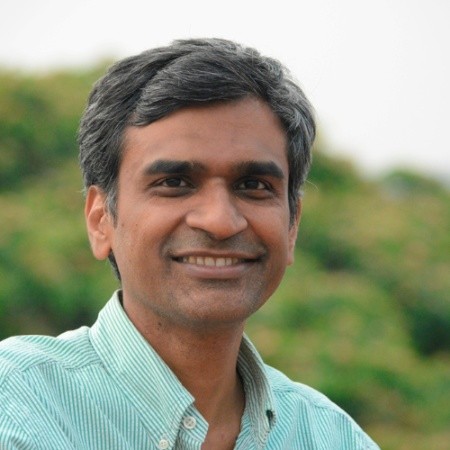
Naganand Doraswamy, Managing Partner and Founder at Ideaspring Capital, discusses how he is thinking about investing in AI. There’s a lot of confusion around AI right now. The hype is astronomical. Amidst this noisy environment, we’re trying to bring you some signal, some wisdom.
>>>The Startup Velocity Question: Repeatability Drives Fundability

Founder-led sales is acceptable for the Seed round.
It is NOT acceptable for Series A or beyond.
At the minimum, you need a Repeatability Hypothesis to raise a sizable venture round.
>>>1Mby1M Virtual Accelerator AI Investor Forum: With Ashmeet Sidana, Chief Engineer at Engineering Capital (Part 2)
Sramana Mitra: All right, let’s discuss the second example.
Ashmeet Sidana: Sure, another example I’m very proud of is a company called Robust Intelligence. Again, I was the first investor and they did a good job. CEO Yaron Singer, PhD from Berkeley, was at Harvard when he observed the hallucination problems with the development and deployment of AI models.
>>>1Mby1M Virtual Accelerator AI Investor Forum: With Ashmeet Sidana, Chief Engineer at Engineering Capital (Part 1)
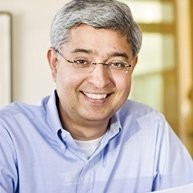
Ashmeet Sidana, Chief Engineer at Engineering Capital, talks about his AI investment thesis. It’s a wonderful discussion that not only entrepreneurs should listen to, but investors should also listen in to calibrate their own investment thesis.
>>>1Mby1M Virtual Accelerator Investor Forum: With Julien Pham, 3CC Third Culture Capital (Part 7)
Sramana Mitra: You must have seen in the media how we’ve advocated very, very seriously bootstrapped startups. As a forum, we have legitimized bootstrapped startups. So today bootstrap startups take a lot of pride. Ten years ago, the bootstrapped startups used to apologize for being bootstrapped startups. Today, they don’t.
>>>1Mby1M Virtual Accelerator Investor Forum: With Julien Pham, 3CC Third Culture Capital (Part 6)
Sramana Mitra: I’m asking a simpler question. Are these all B to B companies – businesses selling to hospitals or insurance companies or pharmaceutical companies?
Julien Pham: Oh, we do a little bit of everything. We have a few B to C, B to B, or B to B to C companies because end user oftentimes is the patient. If you remember, one of our important screening criteria of the quintuple aim is, how does it improve outcomes for patients? So we want to make sure that it somehow touches patients.
>>>