
categories
HOT TOPICS
- The Accelerator Conundrum
- The Startup Velocity Question
- Man and Superman
- Web 3.0 = (4C + P + VS)
- The Future: End of Capitalism
- Capitalism 2.0

Cloud Computing
Featured Videos
Thought Leaders in Cyber Security: Ondrej Vlcek, CEO of Avast (Part 3)
Ondrej Vlcek: To do security properly is not cheap. All these vendors might be creating great coffee makers or toasters, but they have no experience in building software.
What they typically do is reuse something that is publicly available and hire some people. The end product is very poor when it comes to security quality. This is not feasible in the long term.
>>>Thought Leaders in Cyber Security: Ondrej Vlcek, CEO of Avast (Part 2)
Ondrej Vlcek: There’s also something called spear-phishing. Spear-phishing is targeted phishing that is sent to a specific individual with a handcrafted individual which includes details from the personal life of the person or some kind of project or product that person is working on. It could also be something that makes the entire message much more credible.
At the end of the day, the odds of the victim clicking is higher. The problem with spear-phishing is that it has been difficult and expensive to conduct. You would have to do some kind of research and study. You have to craft the message so that it comes across as genuine.
>>>Thought Leaders in Cyber Security: Ondrej Vlcek, CEO of Avast (Part 1)
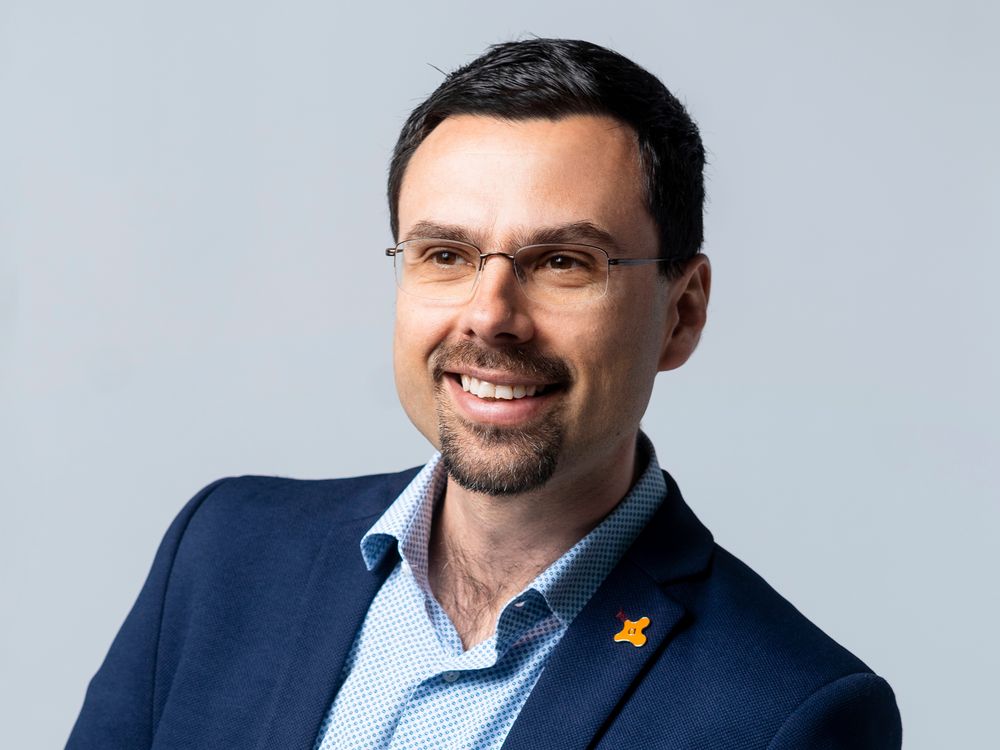
In this edition of the TLCS interview series, we discuss the immense vulnerabilities in B2C security.
Sramana Mitra: Let’s start by introducing our audience briefly to Avast. We’ve covered the company before and we’ll put that in context. From your perspective, do provide a little bit of summary and also a bit about yourself.
>>>Thought Leaders in Cyber Security: Kris Lahiri, Chief Security Officer, Egnyte (Part 6)
Kris Lahiri: We’ve had a company that specializes in just drone pictures. They take live pictures of a site by drones and keeps that integrated. It uses this as an update to see how that project is progressing and roll that up into whatever reporting they want.
It doesn’t have to separately figure out what to do with the data from the company that works on drone. That is integrated through Egnyte. Similarly, there are these ecosystems that are built out for many industries. Life sciences is a good example.
>>>Thought Leaders in Cyber Security: Kris Lahiri, Chief Security Officer, Egnyte (Part 5)
Kris Lahiri: There is another angle which is what you were referring to. I’ll bring up Egnyte in the life sciences space. Nowadays, there’s a lot of very serious work being done by life sciences companies that are using either genomics or other types of DNA sequencing, which needs a huge amount of elastic compute.
It’s a perfect environment for what happens in the public cloud like Google Cloud and AWS. The results of those experiments is what they need to collaborate on.
>>>Thought Leaders in Cyber Security: Kris Lahiri, Chief Security Officer, Egnyte (Part 4)
Kris Lahiri: In those four to five years, IT either did not have the tools that they would like or people’s thinking had to change. IT was just constantly looked at as a naysayer. If I go and ask my IT how to build this environment, they’re just going to say no.
So I’ll get a department-level AWS account and go build this out in AWS and demonstrate certain results. I’ll integrate some kind of a Hadoop backend and process all this data. They’re able to really work and produce results very rapidly.
>>>Thought Leaders in Cyber Security: Kris Lahiri, Chief Security Officer, Egnyte (Part 3)
Kris Lahiri: We integrate with all the top identity management providers. Now that I know who can get in, what types of access do they have? It’s not necessary that everybody in your finance department should automatically have access to payroll info. It’s also not true that everybody needs access to the finance folder.
This type of real-life situations that we’ve seen in the past as well as with our customers is what is built into the platform. We refer to this as our permissions model.
>>>Thought Leaders in Cyber Security: Kris Lahiri, Chief Security Officer, Egnyte (Part 2)
Sramana Mitra: I would like you to isolate the different security issues of a content platform and comment on each of them. What are the challenges? How do you differentiate? What are the issues we are dealing with in the current landscape?
Kris Lahiri: I’m going to come at it from a little bit of a deeper technical perspective. Very baseline infrastructure type of issues come up. We look at any content that a customer shares or stores within Egnyte as crown jewels of that company.
>>>