
categories
HOT TOPICS
- The Accelerator Conundrum
- The Startup Velocity Question
- Man and Superman
- Web 3.0 = (4C + P + VS)
- The Future: End of Capitalism
- Capitalism 2.0

Cloud Computing
Featured Videos
Thought Leaders in Cloud Computing: Actifio CEO Ash Ashutosh (Part 3)
Sramana Mitra: You said you have 3,600 customers. If you think about the industry trend, you have modernized the use of data in enterprises quite significantly. What is the adoption level in your target market of your kind of technology? Is it early adopters? Is it early majority?
Ash Ashutosh: We’re probably getting to the early mainstream phase. We’re well past early adopters. People understand now. I look at the five of the top 20 global energy companies, five of the top 10 insurance companies, and six of the largest banks.
>>>Thought Leaders in Cloud Computing: Actifio CEO Ash Ashutosh (Part 2)
Sramana Mitra: One of the things I’m hearing in your description is that there is the infrastructure layer of making this data available. Then there is an application layer to make use of that data. Is that a correct observation?
Ash Ashutosh: Yes. In fact, there are three layers. One is the data virtualization layer, which is where we capture it and tag it. Then there is data mobility. You have to move it around seamlessly. It was very tough when the cloud platforms came around.
>>>Thought Leaders in Cloud Computing: Actifio CEO Ash Ashutosh (Part 1)
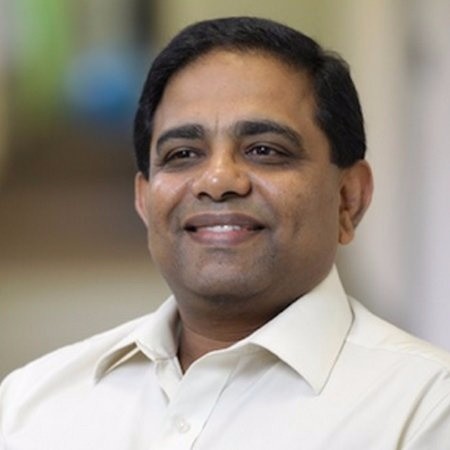
We’ve covered Actifio when it was a much smaller company. Now approaching sustainable profitability and an IPO, the company has scaled heights. Here, we look at the trends in its space.
Sramana Mitra: Let’s start by introducing our audience to Actifio. We have covered you before. We have the beginning story. It’s been awhile since we talked. Let’s do some level-setting first.
>>>Thought Leaders in Cyber Security: Portshift CEO Ran Ilany (Part 2)
Ran Ilany: The second thing that we’re doing is authenticating the communication of those workloads. That is to say, the actual identity of the workload is injected into the traffic stream so that every connection would be, first and foremost, authenticated and would then be authorized.
The whole notion here is moving from IP port and protocol to workload identity that can be authenticated at runtime. This is what we call the runtime protection.
>>>Thought Leaders in Cyber Security: Portshift CEO Ran Ilany (Part 1)

This interview puts the spotlight on a highly specialized area of cyber security, identity-based workload protection.
Sramana Mitra: Let’s start by introducing our audience to yourself as well as to Portshift.
>>>Thought Leaders in Cyber Security: Portshift CEO Ran Ilany (Part 3)
Sramana Mitra: Going back to the ecosystem, where do you sit in the ecosystem?
Ran Ilany: We start with the vendors for container and security solutions that focus on scanning. We assume that what goes to the runtime is clean. Then we provide the runtime protection based on those signatures that we generate that are based on the artifact.
>>>Thought Leaders in Cyber Security: RiskRecon CEO Kelly White (Part 3)
Sramana Mitra: What does the opportunity landscape look like? What are the white spaces in the scope of what you are watching carefully?
Kelly White: This isn’t new, but in some ways, it is new. Digital transformation has driven organizations to rapidly outsource systems and services to a wide range of service providers.
This digital transformation has also been accompanied with a dramatic change in the architecture on which systems are built and operated. Think of the cloud ecosystems of Amazon and Microsoft.
>>>Thought Leaders in Cyber Security: RiskRecon CEO Kelly White (Part 2)
Sramana Mitra: Could you point out the ecosystem around you in a bit more detail? Who are the people you interface with? Whom do you compete with?
Kelly White: There’s quite a large industry around managing third-party cyber security risks. The roots of that industry are in GRC platform providers.
>>>