
categories
HOT TOPICS
- The Accelerator Conundrum
- The Startup Velocity Question
- Man and Superman
- Web 3.0 = (4C + P + VS)
- The Future: End of Capitalism
- Capitalism 2.0

568th 1Mby1M Entrepreneurship Podcast with Abinash Saikia, EnCloudEn (Part 5)
Sramana Mitra: The whole industry has become really good at deal-making by just using Zoom. This is very much in favor of international entrepreneurs. You can now do deals globally just by using online tools.
Abinash Saikia: We thought that we would probably need to meet at some point. We were able to build good relationships. I had built a very good bond with the corp dev head. I joined his team at Quantum. We bonded well and that helped us be more credible.
Sramana Mitra: What about price negotiations?
>>>Featured Videos
Best of Bootstrapping: Bootstrapped from Arizona to $10M
If you haven’t already, please study our Bootstrapping Course and Investor Introductions page.
After putting the spotlight on Entrepreneurship in Arizona, I spoke with Pagely CEO Joshua Strebel. He shares another terrific story of bootstrapping success from Arizona.
Sramana Mitra: Let’s start at the very beginning of your journey. Where are you from? Where were you born and raised? What kind of background?
Joshua Strebel: I was born in a little town in Idaho called Soda Springs. I’m the youngest of nine children. I grew up primarily in Las Vegas, Nevada and was splitting time within Salt Lake City, Utah. My parents were divorced when I was younger, so I went back and forth between households. I finished high school in Salt Lake City and ended up in Arizona where I went to college at Northern Arizona University.
Sramana Mitra: When was it that you came out of college?
May 5 – 574th 1Mby1M Mentoring Roundtable for Entrepreneurs
Entrepreneurs are invited to the 574th FREE online 1Mby1M Mentoring Roundtable on Thursday, May 5, 2022, at 8 a.m. PDT/11 a.m. EDT/5 p.m. CEST/8:30 p.m. India IST.
If you are a serious entrepreneur, register to “pitch” and sell your business idea. You’ll receive straightforward feedback, advice on next steps, and answers to any of your questions. Others can register to “attend” to watch, learn, and interact through the online chat.
You can learn more here and REGISTER TO PITCH OR ATTEND HERE. Register and you will receive the recording by email, even if you are unable to attend. Please share with any entrepreneurs in your circle who may be interested. All are welcome!
Video FAQs
Can 1M/1M Help Me Raise Money?
How Does 1M/1M Democratize Entrepreneurship Education?
How Does 1M/1M Democratize Management Consulting?
When Is The Right Time To Join 1M/1M?
Can 1M/1M Help Me With Business Development?
Can 1M/1M Help Me With Market Sizing?
Can 1M/1M Help Me Validate My Product?
Will I Have Private 1-on-1 Sessions In 1M/1M?
How Does 1M/1M Help Entrepreneurs Connect With Silicon Valley?
Mentoring or Consulting?
Why Does 1M/1M Charge $1000 a Year?
Why Does 1M/1M Partner With Local Organizations?
Why Don\’t Mentoring Networks Work?
Why Is It Important To Study With 1M/1M Now?
Dan Stewart Story
Vikrant Mathur Story
Roundtable Recap: Startup Trends Discussion with Steve Eskenazi
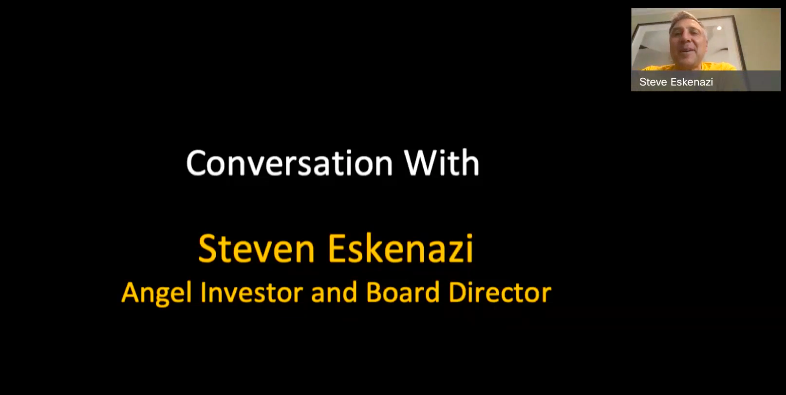
During this week’s roundtable, we had as our guest Angel investor Steve Eskenazi. We had a number of interesting trend conversations.
iBay
As for entrepreneur pitches, up first we had Pradheep from Singapore pitching iBay. The company has significant traction.
Capriquota
Next we had Olabode Qudus from Ogun, Nigeria, pitch Capriquota, a concept stage venture with a little bit of validation.
BEI.RE
Then we had Ranga Krishnan from San Jose, California, pitch BEI.RE, a prop tech venture that also has some degree of validation.
You can listen to the recording of this roundtable here:

Applying AI to Lead Generation: Rev CEO Jonathan Spier (Part 4)
Sramana Mitra: What year did you move back to B2B tech?
Jonathan Spier: 2020. In fact, it was the very beginning of 2020. Right around that time, COVID hit. I spent most of that year being a stay-at-home dad and a homeschool teacher which, it turns out, I’m not good at.
Sramana Mitra: How old are your kids?
Jonathan Spier: Just one. He’s 13. It was good fun. At the end of that year, I was ready to go back to B2B. That’s how I met my first company.
>>>573rd Roundtable for Entrepreneurs Starting NOW: Live Tweeting by @1Mby1M
Today’s 573rd FREE online 1Mby1M Roundtable For Entrepreneurs is starting NOW, on Thursday, April 28, at 8 a.m. PDT/11 a.m. EDT/5 p.m. CEST/8:30 p.m. India IST. CLICK HERE to join. PASSWORD: startup All are welcome!
568th 1Mby1M Entrepreneurship Podcast with Abinash Saikia, EnCloudEn (Part 4)
Abinash Saikia: I had learned a lot of stuff. There are three things you could do. LinkedIn is one. Second is, if you have a connection, that is even better. What also works are cold emails. It has worked in my case. If you have the right message to the right person in the company, you get noticed. The hit rate is not very high. At the same time, if you have the right message, email also works.
Sramana Mitra: LinkedIn is a very good tool to research who are the right people you need to get connected to. The warmer the introduction you can get, the better. Cold email and cold LinkedIn work, but if you can work your network, that is always a desirable way. The point that you are making is that cold contact also works. If you have something relevant, people are willing to talk to you. There is a bit of a playbook.
>>>573rd Roundtable for Entrepreneurs Starting in 30 Minutes: Live Tweeting by @1Mby1M
Today’s 573rd FREE online 1Mby1M Roundtable for Entrepreneurs is starting in 30 minutes, on Thursday, April 28, at 8 a.m. PDT/11 a.m. EDT/5 p.m. CEST/8:30 p.m. India IST. CLICK HERE to join. PASSWORD: startup All are welcome!
