
categories
HOT TOPICS
- The Accelerator Conundrum
- The Startup Velocity Question
- Man and Superman
- Web 3.0 = (4C + P + VS)
- The Future: End of Capitalism
- Capitalism 2.0

577th Roundtable for Entrepreneurs Starting NOW: Live Tweeting by @1Mby1M
Today’s 577th FREE online 1Mby1M Roundtable For Entrepreneurs is starting NOW, on Thursday, June 2, at 8 a.m. PDT/11 a.m. EDT/5 p.m. CEST/8:30 p.m. India IST. CLICK HERE to join. PASSWORD: startup All are welcome!
Featured Videos
577th Roundtable for Entrepreneurs Starting in 30 Minutes: Live Tweeting by @1Mby1M
Today’s 577th FREE online 1Mby1M Roundtable for Entrepreneurs is starting in 30 minutes, on Thursday, June 2, at 8 a.m. PDT/11 a.m. EDT/5 p.m. CEST/8:30 p.m. India IST. CLICK HERE to join. PASSWORD: startup All are welcome!
1Mby1M Virtual Accelerator Investor Forum: With Steve Eskenazi, Angel Investor (Part 1)
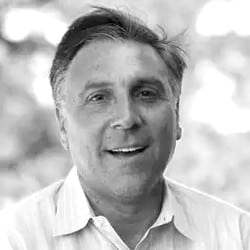
Steve Eskenazi is an Angel Investor, and we had a number of interesting trend conversations.
Sramana Mitra: Let’s start with a little bit of your background. Tell us about what path you have traveled.
Steve Eskenazi: My career has three distinct phases. In the 1990s, I was Wall Street’s digital media analyst introducing Wall Street to companies like America Online and Electronic Arts. For the next 10 years, I was a venture capitalist for a firm called Walden VC where we invested in internet, SaaS, and digital media companies.
>>>Video FAQs
Can 1M/1M Help Me Raise Money?
How Does 1M/1M Democratize Entrepreneurship Education?
How Does 1M/1M Democratize Management Consulting?
When Is The Right Time To Join 1M/1M?
Can 1M/1M Help Me With Business Development?
Can 1M/1M Help Me With Market Sizing?
Can 1M/1M Help Me Validate My Product?
Will I Have Private 1-on-1 Sessions In 1M/1M?
How Does 1M/1M Help Entrepreneurs Connect With Silicon Valley?
Mentoring or Consulting?
Why Does 1M/1M Charge $1000 a Year?
Why Does 1M/1M Partner With Local Organizations?
Why Don\’t Mentoring Networks Work?
Why Is It Important To Study With 1M/1M Now?
Dan Stewart Story
Vikrant Mathur Story
20-Year Journey of a Fat Startup with Major Pivots: Scott Sellers, CEO of Azul (Part 3)
Sramana Mitra: How did you spin the Java story?
Scott Sellers: The other two founders worked for a company called Shasta Networks. This was in the late 90s. It was a cable and DSL model termination system. They built an appliance to do this. They put together the hardware and wrote a ton of software to make it all work. In the late 90s, they chose Java inside this appliance. This was on the leading edge in terms of what Java is capable of. They had a really nice outcome by selling it to Redback.
>>>1Mby1M Virtual Accelerator Investor Forum: With Andrus Oks, Founding Partner of Tera Ventures (Part 3)
Sramana Mitra: The other advantage you have is, there is a substantial enterprise software buyer market in Europe as well. The Indian buyer market is not as mature. Europe has lots of large enterprises that buy a lot of technology. You could build a substantial business catering to European enterprise customers. That’s one observation.
The second one is that language is an issue in Europe more than in India. In India, the business operates mostly in English. There’s a bit more of a language issue in Europe. English is, not necessarily, the lingua franca of Europe. In your region, English is more of the lingua franca.
>>>20-Year Journey of a Fat Startup with Major Pivots: Scott Sellers, CEO of Azul (Part 2)
Sramana Mitra: What was your role in that founding team?
Scott Sellers: I was in the hardware engineering team. I managed the team and did a lot of coding and Verilog to do the chip design. We did all of our backend chip design in-house. I sat on the Board and raised money. It’s always the most entertaining part about building a company. It’s wonderful when you’re successful too. It’s so exciting when you’re at that inception point. It’s nothing other than the potential that you’re talking about.
>>>Best of Bootstrapping: Bootstrapping with Services from Romania to over $5M
If you haven’t already, please study our Bootstrapping Course and Investor Introductions page.
Tremend Managing Partner Marius Hanganu has built a services company from Romania to over $5 million in revenue. When we spoke in 2018, he was trying to bootstrap a product using the services business.
Sramana Mitra: Let’s start at the very beginning of your personal journey. Where are you from? Where were you born, raised, and in what kind of background?
Marius Hanganu: I’m from Romania. I was born near the seaside. At an early age, we moved to the capital city of Bucharest. My father is an Admiral in the Navy. A bit of that made a mark on myself. I got into computers around 12. I got into the Polytechnic University of Bucharest in the Computer Science Department. It’s probably the best in the country.
June 2 – 577th 1Mby1M Mentoring Roundtable for Entrepreneurs
Entrepreneurs are invited to the 577th FREE online 1Mby1M Mentoring Roundtable on Thursday, June 2, 2022, at 8 a.m. PDT/11 a.m. EDT/5 p.m. CEST/8:30 p.m. India IST.
If you are a serious entrepreneur, register to “pitch” and sell your business idea. You’ll receive straightforward feedback, advice on next steps, and answers to any of your questions. Others can register to “attend” to watch, learn, and interact through the online chat.
You can learn more here and REGISTER TO PITCH OR ATTEND HERE. Register and you will receive the recording by email, even if you are unable to attend. Please share with any entrepreneurs in your circle who may be interested. All are welcome!
