
categories
HOT TOPICS
- The Accelerator Conundrum
- The Startup Velocity Question
- Man and Superman
- Web 3.0 = (4C + P + VS)
- The Future: End of Capitalism
- Capitalism 2.0

1Mby1M Virtual Accelerator Investor Forum: With Bill Baumel, Managing Director of Ohio Innovation Fund (Part 1)
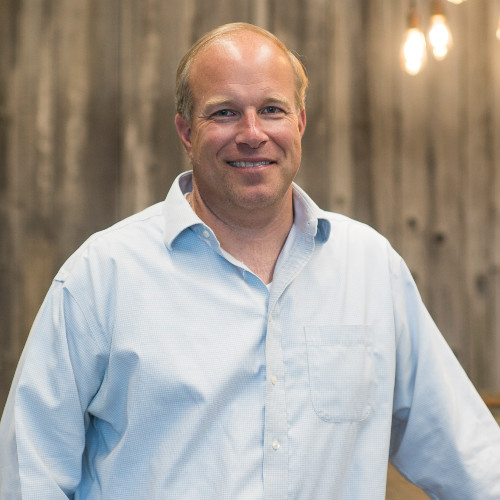
Bill Baumel, Managing Director at Ohio Innovation Fund, is one of the pioneers of the Ohio startup ecosystem.
Sramana Mitra: Let’s start with some introduction to where you are with your work with Ohio Innovation Fund. What’s happening in Ohio as an ecosystem?
>>>Featured Videos
Bootstrapping Using Facebook Ads to $5M: Dow Janes Co-founders Laurie-Anne King and Britt Baker (Part 2)
Sramana Mitra: Britt, get us to the point where you launched Dow Janes. How did you get yourselves off the ground?
Britt Baker: It’s the fall of 2019. I have another job at that time that I decided was not my passion. I’d be going to dinner parties and cocktail parties and everyone would ask when’s the next Dow Janes meeting. I knew that Laurie-Anne had started an online business before. I called Laurie-Anne. She was about eight months pregnant.
>>>577th Roundtable Recording with Chandrashekar Kupperi, Peaceful Progress Fund
In case you missed it, you can listen to the recording of this roundtable here:
Video FAQs
Can 1M/1M Help Me Raise Money?
How Does 1M/1M Democratize Entrepreneurship Education?
How Does 1M/1M Democratize Management Consulting?
When Is The Right Time To Join 1M/1M?
Can 1M/1M Help Me With Business Development?
Can 1M/1M Help Me With Market Sizing?
Can 1M/1M Help Me Validate My Product?
Will I Have Private 1-on-1 Sessions In 1M/1M?
How Does 1M/1M Help Entrepreneurs Connect With Silicon Valley?
Mentoring or Consulting?
Why Does 1M/1M Charge $1000 a Year?
Why Does 1M/1M Partner With Local Organizations?
Why Don\’t Mentoring Networks Work?
Why Is It Important To Study With 1M/1M Now?
Dan Stewart Story
Vikrant Mathur Story Download" class="hvideo iframe playbut videow" href="https://www.youtube.com/embed/a> ?rel=0&autoplay=1"> Download TuneIn " class="hvideo iframe playbut videow" href="https://www.youtube.com/embed/a> ?rel=0&autoplay=1"> TuneIn
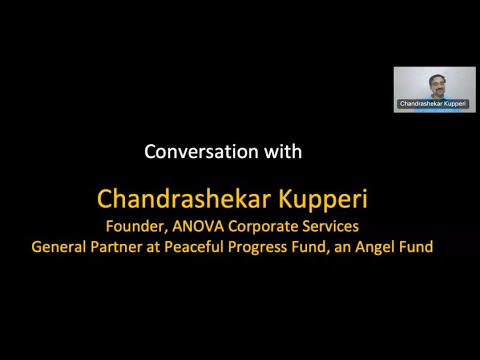
577th 1Mby1M Entrepreneurship Podcast with Chandrashekar Kupperi, Peaceful Progress Fund
Chandrashekar Kupperi is General Partner at Peaceful Progress Fund, an angel fund in India. We have some very interesting discussions on consumer startups in India, especially the ones targeting lower economic strata consumers.
Podcast: Play in new window | Download
Subscribe: Apple Podcasts | TuneIn | RSS
Best of Bootstrapping: Bootstrapping Linguamatics to Over $10M from the UK
If you haven’t already, please study our Bootstrapping Course and Investor Introductions page.
Cambridge, England is a great place for high-end technical talent. This story from 2017 traces the journey of a group of such talented people with core expertise in Natural Language Processing, including Co-founder Roger Hale, and how they turned their expertise into a robust, profitable business.
Sramana Mitra: Let’s start at the very beginning of your personal journey. Where are you from? Where were you born, raised, and in what kind of background?
Roger Hale: I think I had quite a normal upbringing. I grew up in Yorkshire in the northeast of England. My mother came from a family with a local manufacturing business. She also ran a restaurant for a while. My father was an academic. He was a mathematician. He had actually been a code breaker and worked with some of the very first computers as part of that. I didn’t obviously know that until later.
Bootstrapping Using Facebook Ads to $5M: Dow Janes Co-founders Laurie-Anne King and Britt Baker (Part 1)
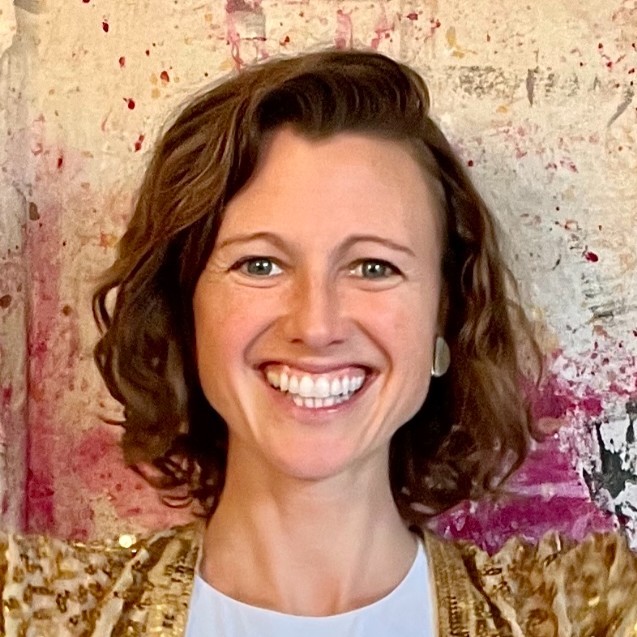

Facebook gets a tremendous bad rap for its many nefarious side effects. Numerous small businesses, however, have been possible because of Facebook’s incredible Ad engine.
Sramana Mitra: Let’s go back to the beginning of your journey. Where are you from? Where were you born and raised? What is the story leading up to this? We’ll do Laurie-Anne as well in that mode.
>>>20-Year Journey of a Fat Startup with Major Pivots: Scott Sellers, CEO of Azul (Part 7)
Sramana Mitra: Let’s switch to the other side of the business. What go-to-market strategy did you go with that?
Scott Sellers: The product is called Platform Prime. It is based on open source technology. It’s the same OpenJDK that the open-source Zulu comes from. To that, we add proprietary elements that make it better. It makes it faster, scalable, and easier to deploy in clouds. We’ve deployed a traditional enterprise go-to-market for that.
>>>1Mby1M Virtual Accelerator Investor Forum: With Steve Eskenazi, Angel Investor (Part 4)
Sramana Mitra: I was talking to Eric Benhamou two days ago. He was like, “I’m looking for a good application or use case for NFT.” What about exits? What have you seen through your investments?
Steve Eskenazi: I think there are a couple of tried and true methodologies. I think the best company gets bought and not sold. You have to build companies the right way and you have to scale them the right way. Throwing money at problems is not a solution.
>>>