
categories
HOT TOPICS
- The Accelerator Conundrum
- The Startup Velocity Question
- Man and Superman
- Web 3.0 = (4C + P + VS)
- The Future: End of Capitalism
- Capitalism 2.0

1Mby1M Virtual Accelerator Investor Forum: With Janam Mehta, Partner of Campus Fund and Venture Investments at JSW Ventures (Part 2)
Sramana Mitra: The other trend that is equally interesting are companies that are being built in India facing the Indian market. The FinTech sector is a really interesting sector. The health tech sector is really interesting. The EdTech is really interesting. They are crowded, but that is bound to happen in a booming market. With time, it will become clear which ones make it.
Of course, there is a unicorn mania going on. There is a lot of excessive funding. I don’t believe that just the ones that are going to get the maximum amount of funding are going to be the ones that are going to win those spaces. They have an advantage which is a capital advantage. They also have a disadvantage of not having the discipline in how to manage cash. We’ll see how all that plays out. Right now, there’s a correction going on. The bottom line is, there is movement.
>>>Featured Videos
1Mby1M Virtual Accelerator Investor Forum: With Evan Zimmerman, Chairman of Jovono (Part 2)
Sramana Mitra: What is the geography focus?
Evan Zimmerman: We mostly invest in the US but we actually have done a number of deals outside. The people who invest in the US primarily do so for a few reasons. For some people, it’s because they don’t feel that they can understand the local market. There are also some logistical and legal considerations. We’ve done a number of deals in Israel and UK. You’re seeing a lot more funds going to Latin America, but we haven’t done a deal yet.
>>>1Mby1M Virtual Accelerator Investor Forum: With Janam Mehta, Partner of Campus Fund and Venture Investments at JSW Ventures (Part 1)
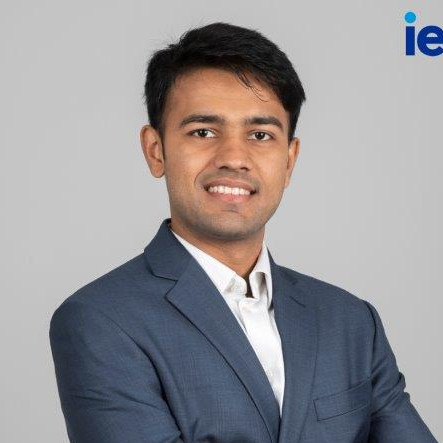
Janam Mehta, Partner at Campus Fund and Venture Investments at JSW Ventures, discusses the progress of the Indian startup ecosystem.
Sramana Mitra: Tell us about a bit of your background as well as what are you up to with the investments.
>>>Video FAQs
Can 1M/1M Help Me Raise Money?
How Does 1M/1M Democratize Entrepreneurship Education?
How Does 1M/1M Democratize Management Consulting?
When Is The Right Time To Join 1M/1M?
Can 1M/1M Help Me With Business Development?
Can 1M/1M Help Me With Market Sizing?
Can 1M/1M Help Me Validate My Product?
Will I Have Private 1-on-1 Sessions In 1M/1M?
How Does 1M/1M Help Entrepreneurs Connect With Silicon Valley?
Mentoring or Consulting?
Why Does 1M/1M Charge $1000 a Year?
Why Does 1M/1M Partner With Local Organizations?
Why Don\’t Mentoring Networks Work?
Why Is It Important To Study With 1M/1M Now?
Dan Stewart Story
Vikrant Mathur Story
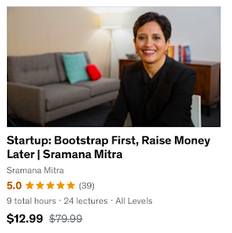
Popular Udemy – 1Mby1M Tech Startup Courses For Sale in August

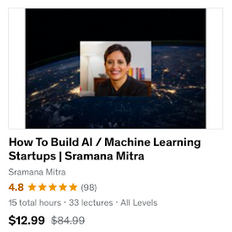
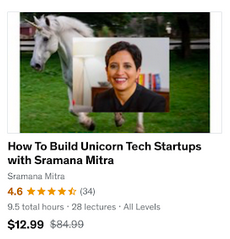
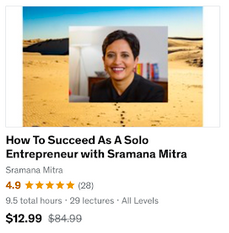
Our popular Udemy-1Mby1M Tech Startup Courses will be on sale through August! Learn how to put one step before the other on your entrepreneurial journey. Whether you are just starting your entrepreneurship education or interested in startups raising venture capital, we have startup strategies and mentoring advice from successful founders and investors to share with you.
These courses are available throughout the month of August for $12.99 each. Discount coupons for our most popular courses listed below will be automatically applied when you click on the courses to BUY NOW!
1Mby1M Virtual Accelerator Investor Forum: With Evan Zimmerman, Chairman of Jovono (Part 1)

Evan Zimmerman, Chairman of Jovono, discusses his fund’s investment philosophy, especially around pre-seed and seed.
Sramana Mitra: Tell us a bit about yourself and Jovono. Let’s get acquainted.
Evan Zimmerman: I started my first company when I was a teenager. It was a consumer product company called Mighty Mug. I was successful and sold millions of units. From there, I went on to start Jovono which is a venture capital firm that invests in paradigm-shifting founders. They’re solving hard problems and building delightful products.
>>>Catching Up On Readings: EY Global IPO Trends Q2 2022
This report from Ernst & Young analyzes the global IPO trends. The energy sector dominated the top 10 IPOs and replaced tech as the top fundraiser. For this week’s posts, click on the paragraph links.
>>>Thought Leaders in Financial Technology: NorthOne CEO Eytan Bensoussan (Part 7)
Sramana Mitra: What is the revenue trajectory that you can share? How many subscribers do you have? What is the situation now?
Eytan Bensoussan: We don’t share specifics on that. What COVID did for us was, it actually put jet fuel in the engine and nobody told us. We thought it was the end of everything. Small businesses in America were looking for some sort of a banking offering that could be run from their basement. It turned a lot of eyes on folks like us and others in our space who are designed for branchless banking. The company grew dramatically.
>>>Thought Leaders in Financial Technology: NorthOne CEO Eytan Bensoussan (Part 6)
Sramana Mitra: It’s a very crucial point where you raise your first institutional round of financing. It doesn’t have to be an institutional round, but it has to be a seed round. How much was the seed round?
Eytan Bensoussan: It was $1.7 million.
Sramana Mitra: The investors are from New York??
>>>