
categories
HOT TOPICS
- The Accelerator Conundrum
- The Startup Velocity Question
- Man and Superman
- Web 3.0 = (4C + P + VS)
- The Future: End of Capitalism
- Capitalism 2.0

588th Roundtable Recording with Yanev Suissa, SineWave Ventures
In case you missed it, you can listen to the recording of this roundtable here:
Featured Videos
Roundtable Recap: September 1 – More on Vertical Cloud Investment Thesis
During this week’s roundtable, we had as our guest Yanev Suissa, Managing Partner and Founder at SineWave Ventures. Yanev discussed his firm’s successes as well as investment thesis. Vertical Cloud is one of the key ones with an emphasis on Enterprise Data Platforms.
You can listen to the recording of this roundtable here:
Thought Leaders in Financial Technology: Ed Wallen, CEO of C&R (Part 1)
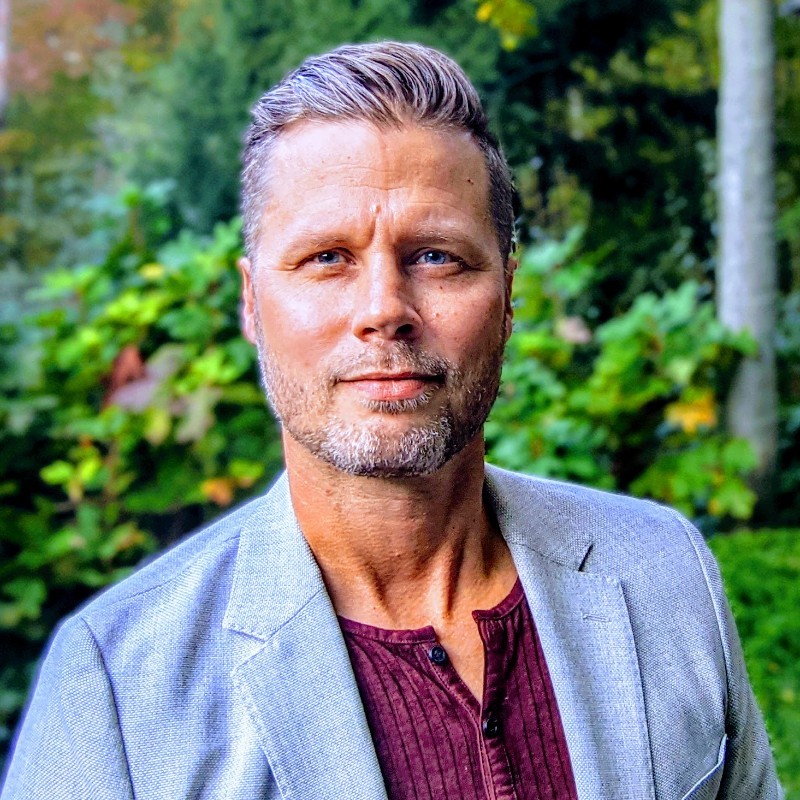
Ed talks about combining humanity with Artificial Intelligence to create compelling outcomes in the Collections and Receivables world. Fascinating advances in FinTech.
Sramana Mitra: Let’s start by introducing our audience to yourself as well as to the company.
Ed Wallen: I’m the CEO of C&R Software. I’ve been doing this for about 25 years building, marketing, and selling financial services solutions and systems. For the last 17 years or so, it’s been on the subsegment of that collections and recovery market.
>>>Video FAQs
Can 1M/1M Help Me Raise Money?
How Does 1M/1M Democratize Entrepreneurship Education?
How Does 1M/1M Democratize Management Consulting?
When Is The Right Time To Join 1M/1M?
Can 1M/1M Help Me With Business Development?
Can 1M/1M Help Me With Market Sizing?
Can 1M/1M Help Me Validate My Product?
Will I Have Private 1-on-1 Sessions In 1M/1M?
How Does 1M/1M Help Entrepreneurs Connect With Silicon Valley?
Mentoring or Consulting?
Why Does 1M/1M Charge $1000 a Year?
Why Does 1M/1M Partner With Local Organizations?
Why Don\’t Mentoring Networks Work?
Why Is It Important To Study With 1M/1M Now?
Dan Stewart Story
Vikrant Mathur Story
Building a Global Hardcore Financial Technology Company from Brazil: Ricardo Josua, CEO of Pismo (Part 6)
Sramana Mitra: What is your engineering team in Brazil like? How big is it? Is it all in one place?
Ricardo Josua: It’s spread around the world. We have 280 engineers at this point.
Sramana Mitra: In Sao Paulo?
Ricardo Josua: No, they’re remote. Maybe 120 are in Sao Paulo. We have become remote-first. People have an office if they want to go to an office. If the team wants to have a meeting and three of them are in India, everyone has to connect on their own device. It has to be the same experience for everyone. We have now engineers in India and Singapore. We have a growing team of engineers in the US and UK.
>>>From Developer to Serial Entrepreneur: Michael Morris, CEO of Torc (Part 6)
Sramana Mitra: I have a slightly different kind of question. You are a developer who turned into a successful entrepreneur. You have a real insight into how a developer becomes an entrepreneur. Torc is working on the basis of equipping developers to be freelancers and blossom their careers. Given what’s going on in the world today, there is this tremendous desire for developers to be entrepreneurs. Is that something that you’re thinking about? Is that something that you want to facilitate?
Michael Morris: In our original business plan, we wanted to have a track in Torc that allows that path of going from a developer to an entrepreneur. I also want to be realistic. I think that for 9 out of 10 developers that want to go down that path, it’s not a great idea. Maybe they’re part of an entrepreneurial team. Everybody wants to be a CEO or a visionary.
>>>September 8 – 589th 1Mby1M Mentoring Roundtable for Entrepreneurs

Entrepreneurs are invited to the 589th FREE online 1Mby1M Mentoring Roundtable on Thursday, September 8, 2022, at 8 a.m. PDT/11 a.m. EDT/5 p.m. CEST/8:30 p.m. India IST.
If you are a serious entrepreneur, register to “pitch” and sell your business idea. You’ll receive straightforward feedback, advice on next steps, and answers to any of your questions. Others can register to “attend” to watch, learn, and interact through the online chat.
You can learn more here and REGISTER TO PITCH OR ATTEND HERE. Register and you will receive the recording by email, even if you are unable to attend. Please share with any entrepreneurs in your circle who may be interested. All are welcome!
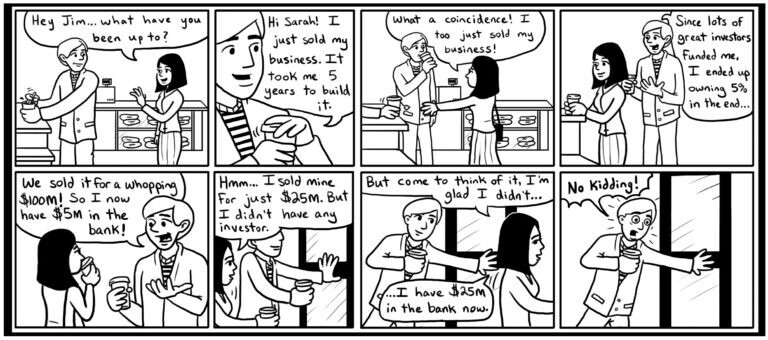
Best of Bootstrapping: Bootstrapped a Virtual Company to $25M
If you haven’t already, please study our Bootstrapping Course and Investor Introductions page.
I am a huge fan of virtual companies. Here is a conversation from 2019 about a virtual company built with excellent execution by a Russian entrepreneur, Percona Founder CEO Peter Zaitsev.
Sramana Mitra: Let’s start at the very beginning of your journey. Where are you from? Where were you born, raised, and in what kind of background?
Peter Zaitsev: I was born in what was the Soviet Union. I studied Math and Computer Science in Moscow State University. I started my first startup company while studying.
Building a Global Hardcore Financial Technology Company from Brazil: Ricardo Josua, CEO of Pismo (Part 5)
Sramana Mitra: Your core value proposition when it comes to the global market is the combination of payments and core banking?
Ricardo Josua: This is one of the main features. You have everything rolled up in a single integration. The second one was that this is not a monolithic solution. It can provide all the systems, but you can build around them. One of the pains that we try to solve was that we don’t want to be the bottleneck in the development of products from our clients. We have to make sure that we have out-of-the-box solutions if you want a basic product.
>>>