
categories
HOT TOPICS
- The Accelerator Conundrum
- The Startup Velocity Question
- Man and Superman
- Web 3.0 = (4C + P + VS)
- The Future: End of Capitalism
- Capitalism 2.0

Best of Bootstrapping: Bootstrapped a Book E-commerce Business
If you haven’t already, please study our Bootstrapping Course and Investor Introductions page.
When we spoke in 2014, BookPal Founder CEO Tony DiCostanzo had identified a gap in the book business and had built a thriving company. Let’s learn the how, what, and why of it.
Sramana Mitra: Tell us a bit about yourself. Where are you from? Where were you born and raised?
Tony DiCostanzo: I was born in Anchorage, Alaska. Shortly after turning two, I moved up to Nome, Alaska – from a small city to an even smaller village of 3,000 people. We lived there through the sixth grade and then moved back to Anchorage through most of high school. I ended up spending a couple of years in Washington State but found that California was more of my natural habitat. I came down to go to school at Pepperdine University and met my wife who was from southern California. It was a natural fit to stay here and be close to her family. That was what drove us to the Orange County area.
Featured Videos
Use Bootstrapping with Services to Increase Your Probability of Fund Raising

Raising funding for startups in Silicon Valley is a low probability game. Fewer than 1% who try actually succeed.
Outside the Valley, the startup ecosystems are mostly immature, and the probability gets even lower.
The bar to raise seed funding is getting higher and higher. Seed investors are mostly operating as growth investors, expecting that the entrepreneur will somehow manage to bridge the gap and bring a concept to realization. In fact, what these investors really want is to invest in businesses that have traction, not just validation.
In short, they want to come to the rescue of victory.
Thought Leaders in Artificial Intelligence: Iterate CTO Brian Sathianathan (Part 1)
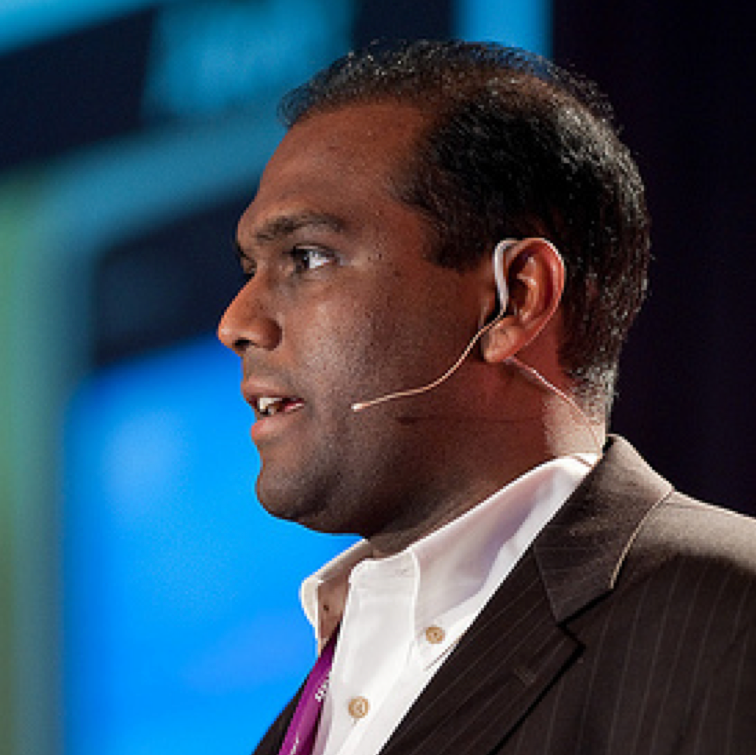
In this interview, we explore the priorities of enterprise decision makers through the lens of an AI platform vendor.
Sramana Mitra: Let’s start by introducing the audience to yourself as well as to Iterate.
>>>Video FAQs
Can 1M/1M Help Me Raise Money?
How Does 1M/1M Democratize Entrepreneurship Education?
How Does 1M/1M Democratize Management Consulting?
When Is The Right Time To Join 1M/1M?
Can 1M/1M Help Me With Business Development?
Can 1M/1M Help Me With Market Sizing?
Can 1M/1M Help Me Validate My Product?
Will I Have Private 1-on-1 Sessions In 1M/1M?
How Does 1M/1M Help Entrepreneurs Connect With Silicon Valley?
Mentoring or Consulting?
Why Does 1M/1M Charge $1000 a Year?
Why Does 1M/1M Partner With Local Organizations?
Why Don\’t Mentoring Networks Work?
Why Is It Important To Study With 1M/1M Now?
Dan Stewart Story
Vikrant Mathur Story
Best of Bootstrapping: Bootstrapped CloudSense with Services on Force.com
If you haven’t already, please study our Bootstrapping Course and Investor Introductions page.
When had this conversation in 2014, the Force.com platform – now Salesforce Platform – was a great bootstrapping device for entrepreneurs. Read how Co-founder CTO Alex Fuller and Co-founder CEO Richard Britton bootstrapped CloudSense to a sizable product company on the platform.
Sramana: Alex, let’s start with your personal journey. Where were you born and raised? What are the roots of your entrepreneurial story?
Alex Fuller: I was born in Wimbledon in the UK where the tennis championship is held. My educational background was not focused on technology. I studied classics at Oxford University, which focused on Latin, Greek, and Linguistics. Before that, I had already acquired an interest in technology. I got into computing as a child when I was 12 years old. I had a keen interest in computing throughout my school years.
Bootstrapping to $3M a month: Prequel CEO Timur Khabirov (Part 4)
Sramana Mitra: What are some examples of non-paid customer acquisition?
Timur Khabirov: Some celebrity who makes their own content. Let’s talk about viral effect. The first one was BTS. I didn’t know about this band before, but they started using Prequel. When I woke up, we were on the top. The BTS group used Prequel during the Grammys. Twitter was crazy.
Sramana Mitra: That gave you a huge lift.
>>>Catching Up On Readings: OpenAI’s GPT-4 Rollout
This interview by ABC News’ Rebecca Jarvis with Open AI CEO Sam Altman explores the risks and opportunities of GPT-4, the latest iteration of the AI language model. For this week’s posts, click on the paragraph links.
>>>Bootstrapping to $3M a month: Prequel CEO Timur Khabirov (Part 3)
Sramana Mitra: Talk to me about influencer marketing. What did you do?
Timur Khabirov: Influencer marketing is a bit complicated. If you’re doing user acquisition, it’s a clear traffic. You understand your consumers. You understand the conversion rate. With influencer marketing, it’s not that easy to manage this.
Sramana Mitra: But it’s worthwhile in your opinion?
>>>Bootstrapping to $3M a month: Prequel CEO Timur Khabirov (Part 2)
Sramana Mitra: Explain, step by step, how you brought this product to market?
Timur Khabirov: You need to understand what the market needs. We have social media platforms. What do they need? First and foremost, it has to be a time saver. Then, it has to be easy.
Sramana Mitra: Are we talking about a B2C product?
>>>