
categories
HOT TOPICS
- The Accelerator Conundrum
- The Startup Velocity Question
- Man and Superman
- Web 3.0 = (4C + P + VS)
- The Future: End of Capitalism
- Capitalism 2.0

From PhD Student to Machine Learning Entrepreneur: SuperAnnotate CEO Tigran Petrosyan (Part 2)
Sramana Mitra: When you applied to the Berkeley accelerator, how much time passed between your $100,00 funding to the accelerator?
Tigran Petrosyan: We got accepted to Berkeley after two months and then into the program after four months.
Sramana Mitra: How long were you in the accelerator?
>>>Featured Videos
Free Review Coupon for Machine Learning Udemy Course

We are looking for feedback and reviews of our Machine Learning preview course on Udemy:
Machine Learning AI Startup Case Studies with Sramana Mitra
There is a limited number of free coupons available, so please only enroll if you plan on reviewing this course.
To review the course CLICK HERE and the free coupon will be automatically applied. Or the free coupon code is FE320B844D72F5E95E87.
This free coupon will expire in five days on May 13.
From PhD Student to Machine Learning Entrepreneur: SuperAnnotate CEO Tigran Petrosyan (Part 1)
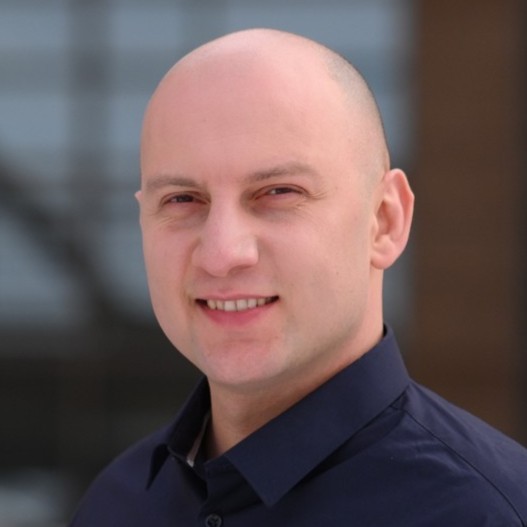
Tigran and his brother were Ph.D. students when they decided to quit their Ph.D. program and build a company out of their Ph.D. research technology.
They have since raised over $15M in funding and built a customer base of ~200 in their ML Ops business. They are leveraging countries like Armenia and Bangladesh for development and data services.
>>>Video FAQs
Can 1M/1M Help Me Raise Money?
How Does 1M/1M Democratize Entrepreneurship Education?
How Does 1M/1M Democratize Management Consulting?
When Is The Right Time To Join 1M/1M?
Can 1M/1M Help Me With Business Development?
Can 1M/1M Help Me With Market Sizing?
Can 1M/1M Help Me Validate My Product?
Will I Have Private 1-on-1 Sessions In 1M/1M?
How Does 1M/1M Help Entrepreneurs Connect With Silicon Valley?
Mentoring or Consulting?
Why Does 1M/1M Charge $1000 a Year?
Why Does 1M/1M Partner With Local Organizations?
Why Don\’t Mentoring Networks Work?
Why Is It Important To Study With 1M/1M Now?
Dan Stewart Story
Vikrant Mathur Story
Catching Up On Readings: TiE50 2023
This feature from TiEcon covers the winners of the 2023 edition of TiE50, TiE Silicon Valley’s premier annual awards program, contested by thousands of early to mid-stage startups worldwide. For this week’s posts, click on the paragraph links.
>>>How NOT To Build a Startup: Ned Hill, CEO of Position Imaging (Part 7)
Sramana Mitra: Let’s go back to the point you were pivoting. How much money did you get at that point to do the pivot?
Ned Hill: Very little on a grip. My burn rate was over $100,000 a month. I was being given a couple hundred thousand dollars to go through the next couple of months. I knew I needed some commercial traction. I approached UPS and told them what I was doing. We did a pilot.
Sramana Mitra: Paid pilot?
>>>How NOT To Build a Startup: Ned Hill, CEO of Position Imaging (Part 6)
Sramana Mitra: Five years have gone by at this point and then you do the pivot. How much money has gone in in these five years?
Ned Hill: $3 million or $4 million. It wasn’t that we weren’t doing commercial deals. I had prepped everybody that this was going to take a while. We had the ability to show people what we had created. It is mind-blowing. They had faith in me.
>>>Best of Bootstrapping: Bootstrapped First, Raised Money Later to Exit
If you haven’t already, please study our Bootstrapping Course and Investor Introductions page.
Continuing with our theme of Bootstrap First, Raise Money Later, here is Founder William King’s story of bootstrapping Zephyr Health, a robust company in the healthcare industry. This strategy led to funding by Kleiner Perkins by the time we spoke in 2015. Zephyr Health was acquired in 2018 by Anju Software.
Sramana Mitra: Let’s start at the very beginning of your story. Where are you from? Where were you born, raised, and in what kind of circumstances?
William King: I was born in Princeton, New Jersey. I lived in Princeton until I was 18. I’m the oldest of six children. That’s a little bit unique in that we had a lot of action in the house. The age span was actually a difference of 10 years, which was pretty interesting and pretty heroic, now that I’m a parent myself. As a child, part of my experience in growing up was leading my siblings and helping them to participate. Kids look up to their older brothers and sisters. A lot of what was instilled in me at a very young age is this notion of making good choices, collaboration, and the idea that people are paying attention to the things that you’re doing.
How NOT To Build a Startup: Ned Hill, CEO of Position Imaging (Part 5)
Ned Hill: We’re building a platform that not only could deliver packages for residents and buildings but also send notifications to these residents. We needed to flesh it out before we released it. I took my time. I’m thankful we did. It’s the best system in the world for package management. Working on the platform is also the basis for many other applications like pick-up and drop-off. In New York, you can’t drop it unattended.
Sramana Mitra: How much money went into funding your 12 years of technology development with no revenue?
>>>