categories
HOT TOPICS
- The Accelerator Conundrum
- The Startup Velocity Question
- Platform as a Service
- Man and Superman
- Web 3.0 = (4C + P + VS)
- The Future: End of Capitalism
- Capitalism 2.0

Australia’s Startup Accelerator Ecosystem: Sydney – Finance, AI, and Enterprise

Sydney is, without question, the epicenter of Australia’s startup activity. It’s where the country’s capital markets, banking ecosystem, and investor networks converge. It’s also home to the headquarters or APAC bases of many global technology giants—Google, Microsoft, Amazon, Atlassian, Canva—all of which feed talent, capital, and credibility into the ecosystem. Yet, despite all this, the Accelerator Conundrum is particularly acute here. Sydney founders are under immense pressure to “go big fast,” and many lose sight of the fundamentals early.
>>>Featured Videos
Australia’s Startup Accelerator Ecosystem: The Conundrum

Australia is large, geographically fragmented, and culturally diverse—but its startup ecosystem for IT and IT-enabled services is increasingly coherent, globally competitive, and full of promise. Cities like Sydney and Melbourne dominate in scale and investment, but smaller capitals like Brisbane, Adelaide, Perth, and Canberra are rising fast.
>>>1Mby1M Virtual Accelerator AI Investor Forum: Yanev Suissa, SineWave Ventures (Part 4)
Sramana Mitra: Yanni, you said you are investing in superintelligence. Tell me more about what you’ve invested in and your thesis on superintelligence.
>>>Video FAQs
Can 1M/1M Help Me Raise Money?
How Does 1M/1M Democratize Entrepreneurship Education?
How Does 1M/1M Democratize Management Consulting?
When Is The Right Time To Join 1M/1M?
Can 1M/1M Help Me With Business Development?
Can 1M/1M Help Me With Market Sizing?
Can 1M/1M Help Me Validate My Product?
Will I Have Private 1-on-1 Sessions In 1M/1M?
How Does 1M/1M Help Entrepreneurs Connect With Silicon Valley?
Mentoring or Consulting?
Why Does 1M/1M Charge $1000 a Year?
Why Does 1M/1M Partner With Local Organizations?
Why Don\’t Mentoring Networks Work?
Why Is It Important To Study With 1M/1M Now?
Dan Stewart Story
Vikrant Mathur Story
Building a Startup as a Solo Entrepreneur

For the longest time, there has been a stigma around solo entrepreneurs. Y Combinator doesn’t really like solo entrepreneurs. VCs don’t like to fund solo entrepreneurs. So what do you do if you want to do your venture as a solo entrepreneur?
I think you should go ahead.
If you play your hand smartly, you can succeed.
1Mby1M Virtual Accelerator AI Investor Forum: Yanev Suissa, SineWave Ventures (Part 3)
Sramana Mitra: Yeah. So, Yev, I want to make a point, and I want your thoughts on it.
We hear a lot from people saying, “This is just a wrapper on top of ChatGPT.” But there is a lot of domain knowledge in specific verticals that you can solve very well with a wrapper on top of ChatGPT, because the domain knowledge is where the real work is happening.
>>>Top Accelerators for Marathon not 3-month Sprint in Mumbai
The 3-Month Myth
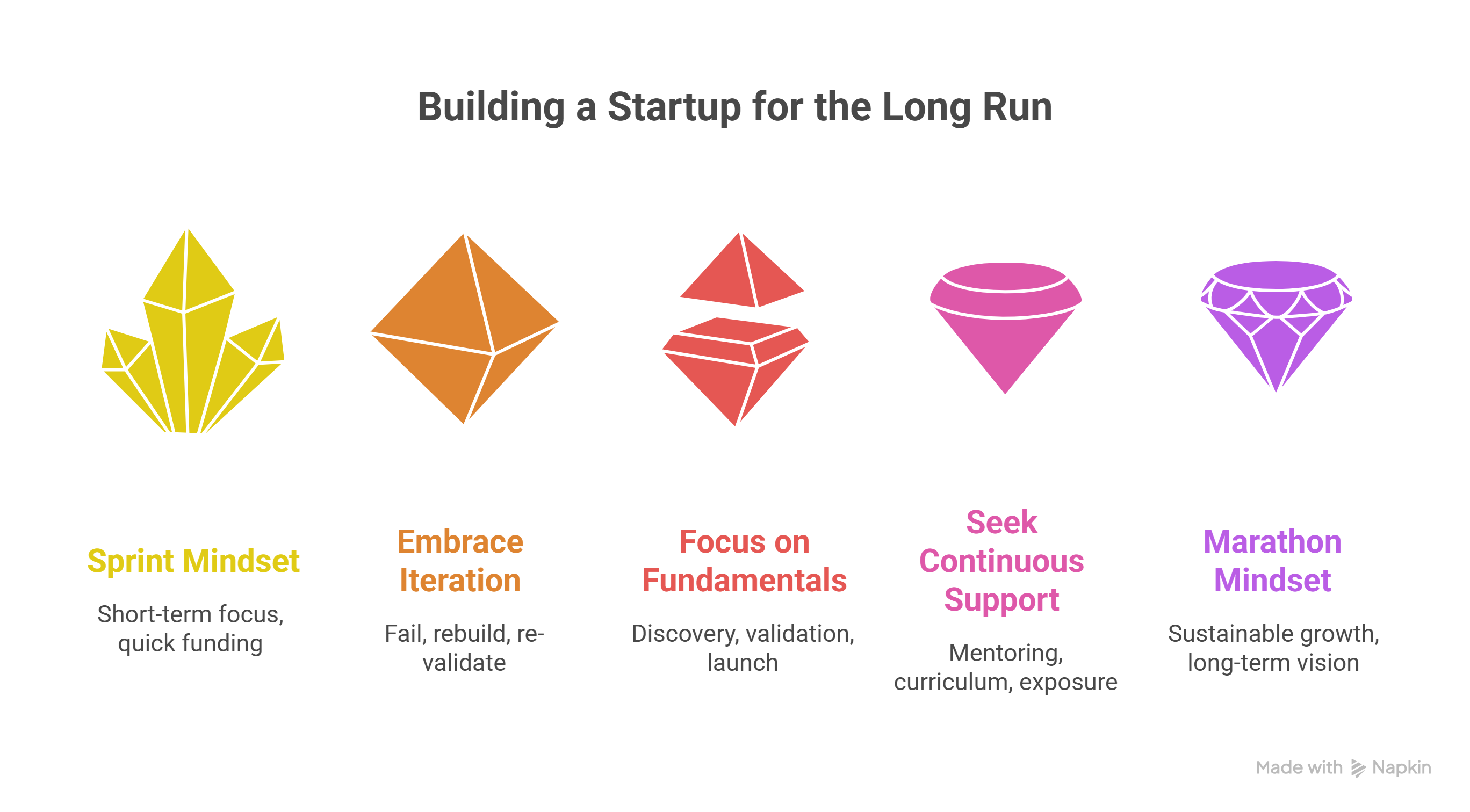
A 90-day program can change a life—but rarely builds a company. Most Mumbai accelerators run on a fixed calendar: 12 weeks, a demo day, and then it’s over. But real founders don’t build in quarters. They build in cycles. They fail, rebuild, and re-validate over time.
This post profiles Mumbai accelerators that go beyond the 3-month model—in spirit, structure, or support.
>>>1Mby1M Virtual Accelerator AI Investor Forum: Yanev Suissa, SineWave Ventures (Part 2)
Sramana Mitra: Very true. This is very true. I want to underscore that you should not raise money at the highest valuation you can, because you’re pricing yourself out of the exit market and out of further fundraising. If you don’t meet milestones that are that aggressive and far ahead of the curve, you will be stuck.
>>>Top Accelerators for Long Term Mentoring in Mumbai
The Mentorship Mirage
Almost every accelerator promises mentorship.
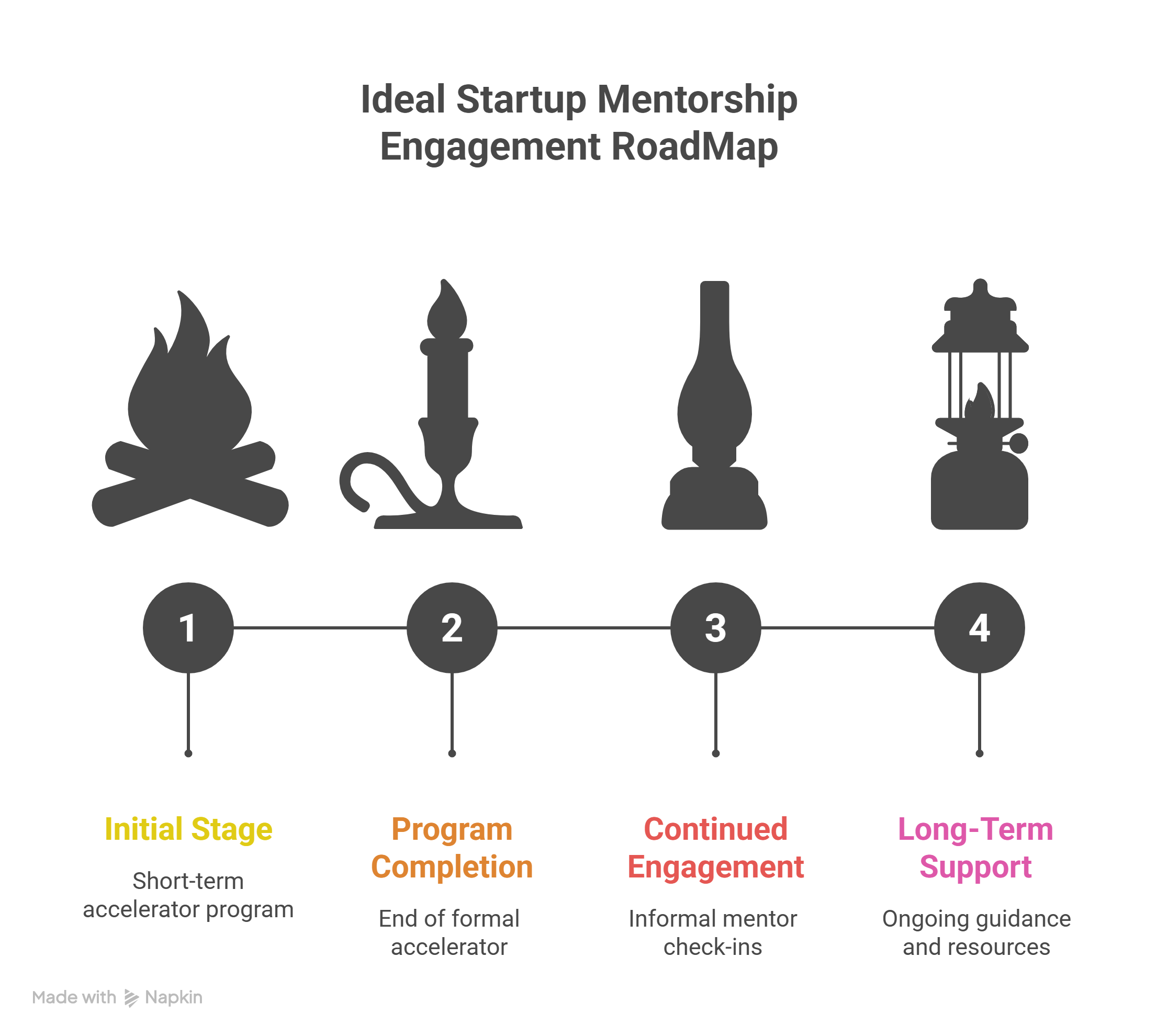
But most deliver a short burst—three months, one demo day, then silence.
Long-term mentoring is rare in Mumbai’s accelerator scene. And for founders building over years (not weeks), this is a gap that slows growth, weakens clarity, and increases emotional isolation.
In this post, we spotlight Mumbai-based programs that offer deep, consistent, long-term mentoring—or at least try.
>>>