
categories
HOT TOPICS
- The Accelerator Conundrum
- The Startup Velocity Question
- Man and Superman
- Web 3.0 = (4C + P + VS)
- The Future: End of Capitalism
- Capitalism 2.0

Artificial Intelligence
1Mby1M Udemy Courses with Sramana Mitra: Domain Knowledge
At 1Mby1M, we believe in learning from case studies of successful entrepreneurs. These case studies involve discussions on opportunities and challenges specific to the domain such as Generative AI, E-Commerce, Digital Health, Cyber Security, and FinTech.
>>>Featured Videos
Can 1M/1M Help Me Raise Money?
How Does 1M/1M Democratize Entrepreneurship Education?
How Does 1M/1M Democratize Management Consulting?
When Is The Right Time To Join 1M/1M?
Can 1M/1M Help Me With Business Development?
Can 1M/1M Help Me With Market Sizing?
Can 1M/1M Help Me Validate My Product?
Will I Have Private 1-on-1 Sessions In 1M/1M?
How Does 1M/1M Help Entrepreneurs Connect With Silicon Valley?
Mentoring or Consulting?
Why Does 1M/1M Charge $1000 a Year?
Why Does 1M/1M Partner With Local Organizations?
Why Don\’t Mentoring Networks Work?
Why Is It Important To Study With 1M/1M Now?
Dan Stewart Story
Vikrant Mathur Story
Thought Leaders in Artificial Intelligence: Jack Porter, CEO of Razorthink (Part 1)
We hear a lot about deep learning algorithms and their applications on very large data sets. This interview delves into a company and its customer base that works in that area.
Sramana Mitra: Let’s start by introducing our audience to yourself as well as to the company.
Jack Porter: I’m the CEO of Razorthink. We provide a specific segment of artificial intelligence called machine super intelligence, which is the intersection of advanced deep learning and high-performance computing. Our customers are some of the largest customers in the world. We sit on top of their big data stack and we track patterns. >>>
The Future: India Will Take AI on the Chin

India’s development over the last two decades owes a lot to globalization and IT outsourcing from the West.
Today, the Indian IT-BPO industry employs 3.7 million people.
A large portion of this is relatively low skilled, or at least mid-range skilled positions.
Artificial Intelligence, it seems, will deliver on its promise on many vectors. Low-skilled tasks that can be automated WILL be automated. This will start showing impact relatively soon. Some analysts like HfS research have projected a job loss of 640,000 by 2021.
>>>


Thought Leaders in Artificial Intelligence: Stuart Wall, CEO of Signpost (Part 1)
Virtual Marketing Assistant sounds like a dream. Signpost is making it real. This is a great story about a very promising company.
Sramana Mitra: Let’s start with introducing our audience to Signpost. What do you do? What kind of customers do you work with? What trends do you align with?
Stuart Wall: Signpost is an artificial intelligent CRM. The idea is that tools like Salesforce provide a very important function, i.e. how can companies keep track of their customers and prospective customers. The problem is a lot of marketing technology, including that of Salesforce, is way too hard to use. It’s difficult to set up and is very manual. >>>
5 Thought Leaders in Artificial Intelligence

After publishing my recent article, Must-read Articles on Artificial Intelligence, in which I’ve shared my thoughts and concerns about AI, some have asked for more.
Here are my in-depth interviews with five (actually six) thought leaders who are deeply engaged in artificial intelligence development today that I hope will provide a good overall perspective on where and how AI is being applied today, where AI stands in 2016:
- Or Shani, CEO of Adgorithms. Over time, the entire profession of media buying will be obliterated. Algorithms will do all the work. This is one of the sectors most vulnerable to be entirely automated by AI. Or Shani speaks on the theme and provides a great example of what is already happening.
- Andreas Wieweg, CTO and Andy Peart, CMO of Artificial Solutions. Have you used Siri? Have you used Amazon’s Echo? Have you used any other natural language activated by personal assistant? The world of AI is rife with speculations on where this field is going, and this discussion is a wonderful expose on that topic.
Must-read Posts on Artificial Intelligence
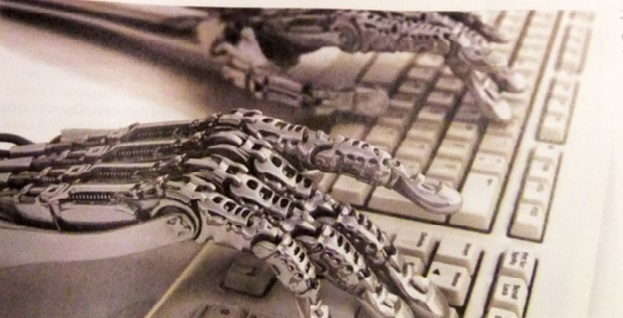
My deep concerns over the impact that Artificial Intelligence, Machine Learning, Robotics, and over-automation will eventually have on society have led me to write several thought-provoking articles to help raise awareness while course correction is still possible.
Whichever way the future unfolds, we do have some time in hand. The kind of mass scale automation that may eventually come about is still 50-100 years away, most likely. Still, there is a very high probability that massive degrees of automation WILL eventually come about. Huge displacement of workers WILL take place due to such automation. Given that eventuality, are we facing Utopia or Dystopia? My prediction, unfortunately, is the latter.
>>>
Future of Artificial Intelligence: The Triumph of Communism?
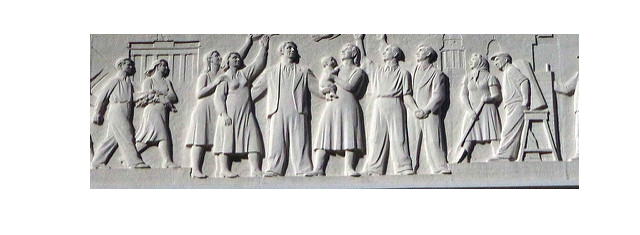
I have written several pieces already on my deep concerns about the kind of society we’re moving towards in the next 30-50 years as technology-induced changes sweep through society, rendering hundreds of millions of people unemployable.
Future of Work: Utopia or Dystopia?
Future of Artificial Intelligence: Brexit, Trump and Other Calamities
Artificial Intelligence: Just Because We Can, Does It Mean That We Should?
Future of Artificial Intelligence: All Play, No Work Society
Future of Artificial Intelligence: Demonetization
It seems to me that the end game in this thought experiment is the triumph of communism. Let me explain.
>>>
Future of Artificial Intelligence: Demonetization

As a follow-up to my series of articles on Artificial Intelligence, my friend Som Das sent me an article by Peter Diamandis on demonetization and the “abundance” that will be created with the help of technology.
People are concerned about how AI and robotics are taking jobs and destroying livelihoods… reducing our earning capacity, and subsequently destroying the economy.
Future of Artificial Intelligence: All Play, No Work Society

My earlier post, Future of Work: Utopia or Dystopia? expresses concern about a jobless world. A recent The Atlantic article asks: Would a Work-free World Be So Bad?
People have speculated for centuries about a future without work, and today is no different, with academics, writers, and activists once again warning that technology is replacing human workers. Some imagine that the coming work-free world will be defined by inequality: A few wealthy people will own all the capital, and the masses will struggle in an impoverished wasteland.
