
categories
HOT TOPICS
- The Accelerator Conundrum
- The Startup Velocity Question
- Man and Superman
- Web 3.0 = (4C + P + VS)
- The Future: End of Capitalism
- Capitalism 2.0

Opinions
Featured Videos
Why the Indian Market Continues to Disappoint

Indian B-to-C startups started off with huge promise and were constantly compared with China’s Alibaba. But the reality has been consistently sobering. The Economist offers some excellent analysis on the phenomenon in two articles: India’s missing middle class and India has a hole where its middle class should be.
Some notable points:
The Future of Silicon Valley

We saw Star Wars: The Last Jedi last week. It feels dated.
All these alternate realities are essentially religious stories, which is why they’ve achieved cult status.
I love Harry Potter. Some love Lord of the Rings. All good vs. evil stories in epic style.
I’m in the mood for post-religious stories.
The world isn’t black and white. It’s full of gray.
Where Are the Real Leaders?

We saw Darkest Hour this week.
The year is 1940. Belgium and Holland have fallen to Hitler’s Germany. France is within days of defeat. England within days of attack. With 300,000 troops stuck in Dunkirk, Churchill becomes prime minister. No one wins by negotiating with a dictator. No nation has survived by surrendering. Churchill operates with instinct and courage, as he turns down Mussolini’s offer to negotiate peace with Hitler.
Greed Has Built. Will Greed Also Destroy?

We saw recently on Netflix Ken Burns’ documentary, The West.
Between the Spanish conquistadors and the Jeffersonian Americans, with some contribution from the British and the French, the American Indians and twenty one million buffalos were wiped off the American West.
Let’s Go Beyond Superficial Virtual Interactions in 2018
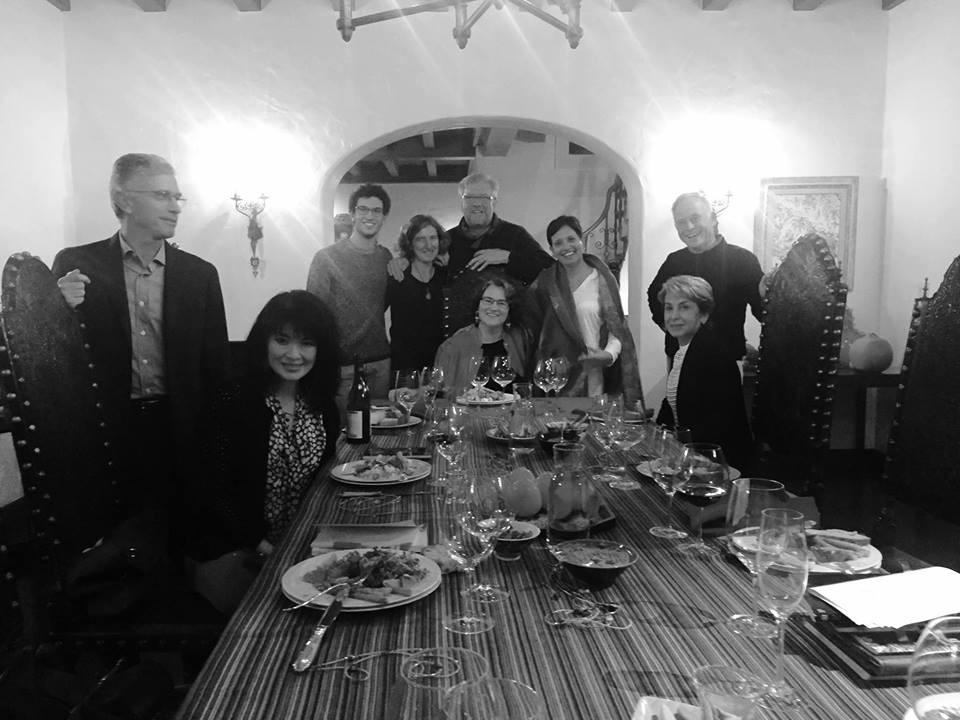
I started a literary group about a year ago focused on serious literary works. We call it Caravanserai Literati. I have always been passionate about literature. This endeavor, however, is a return to serious study of literature at a level that I haven’t engaged in since my last semester in college when I read a dozen major literary works in a single semester. That was the Spring of 1993.
An Antidote to Social Media Addiction

I’ve thought a lot about the world we’re marching towards in which virtual interactions and relationships far outweigh real, in-person exchanges. The art of conversation, body-language, human and humane interaction – holding hands, looking at people with meaningful warmth – are fading away.
I write this for those who share my discomfort.
Six Books That Have Offered Me Significant Insights in 2017

It’s that time of the year when we take stock of how the year that is about to fade away has been. For me, books are a large part of the process of processing information and synthesizing insights. Here are six books that have helped advance my thinking this year.
1. Sapiens A Brief History of Humankind by Yuval Noah Harari: The book is an anthropologist’s view of how human history has progressed over many millenniums. Its first great insight is that the core differentiating factor between our human species versus others is the power we have for story telling. “You could never convince a monkey to give you a banana by promising him limitless bananas after death in monkey heaven.” Religions are stories. Nations are stories. Corporations are stories. And all these stories have served as organizing principles to enable humankind to collaborate in large numbers and make spectacular progress. Today, we’re entering a phase in human history where these stories we’ve been telling are insufficient to continue to empower large-scale cooperation. Cracks are opening up in the organizing principles of the world. Extremely thought provoking in today’s context.
8 Founder Podcasts Discuss Building Startups in Europe

Last year I wrote about The Next European Renaissance, in which we explore whether Europe’s recognized enthusiasm for culture in its various forms – food, music, architecture, literature, and many more – and greater commitment to the preservation and promotion of such expressions of culture would offer a good platform for generating new and important ideas given the enabling technology of today.
Entrepreneurs, especially those based in Europe, will also find advice and inspiration from the following group of successful European entrepreneurs. Each shares their interesting journey in a 30-minute podcast interview.
