
categories
HOT TOPICS
- The Accelerator Conundrum
- The Startup Velocity Question
- Man and Superman
- Web 3.0 = (4C + P + VS)
- The Future: End of Capitalism
- Capitalism 2.0

Opinions
Featured Videos
Colors: Nestled Valley, Snow

Nestled Valley, Snow | Sramana Mitra, 2017
I’m publishing this series on LinkedIn called Colors to explore a topic that I care deeply about: the Renaissance Mind. I am just as passionate about entrepreneurship, technology, and business, as I am about Art and Culture. In this series, I will typically publish a piece of Art – a painting, a poem, a piece of music, so forth – and I request you to spend a minute or two deeply meditating on it. I urge you to watch your feelings, thoughts, reactions to the piece, and write what comes to you, what thoughts it triggers, in the dialog area. Let us see what stimulation this interaction yields. For today – Nestled Valley, Snow
Nestled Valley, Snow | Sramana Mitra, 2017 | Water color and Pastel | 18 x 24, On Paper
Related Reading: If I Were 22: I Was Fired from My Own Company
Best of Bootstrapping: Bootstrapping to Unicorns
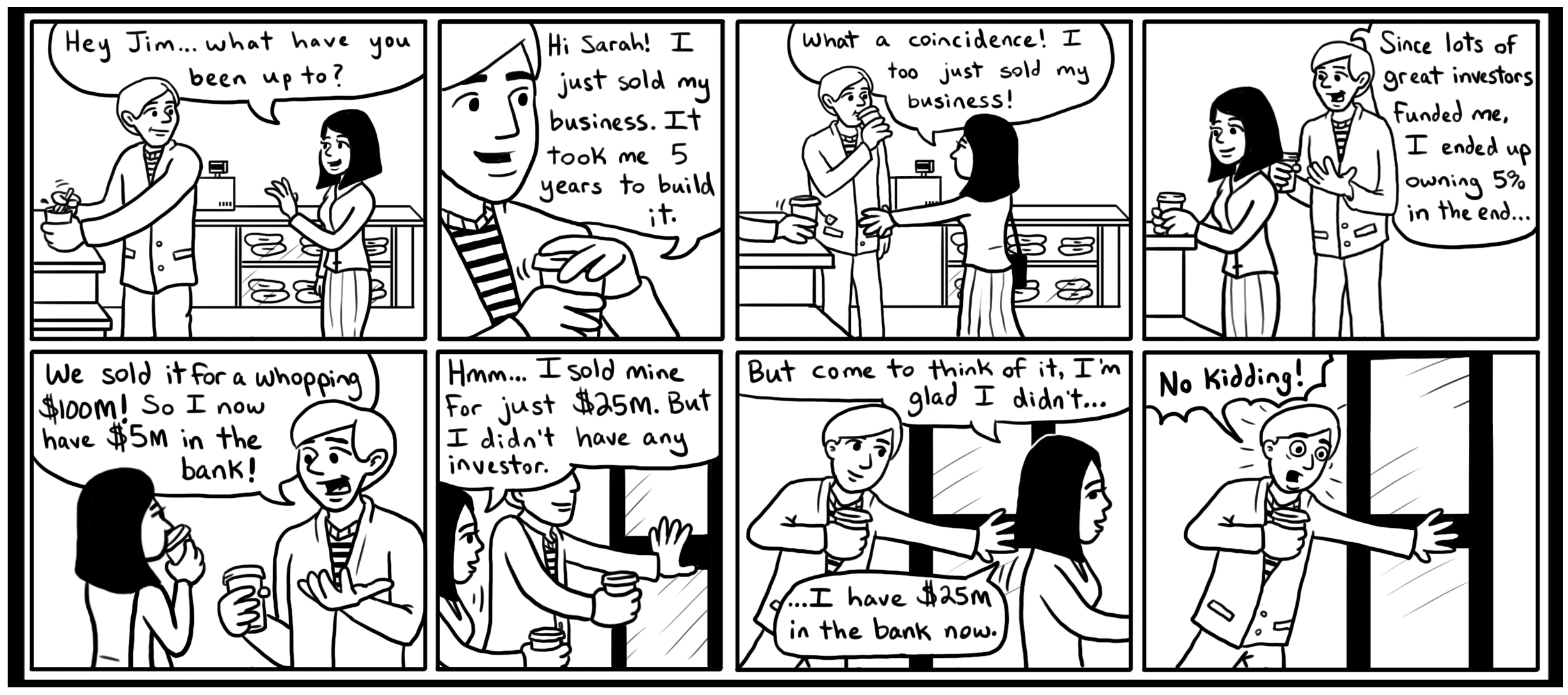
While it doesn’t happen that often, Bootstrapped Unicorns do exist.
My 2014 Entrepreneur Journeys book, Billion Dollar Unicorns has a whole section on this topic. You can read an excerpt on my blog titled Bootstrapped Unicorns. In this piece, I discuss three companies, Zoho, eClinicalWorks, and Veeam, that have bootstrapped to about a billion dollars in revenues.
Revenues NOT valuation.
That puts their valuations in the five to ten billion range or beyond. So they are Unicorns (billion dollar valuation) many times over.
You can also read an interview with Sridhar Vembu of Zoho here that describes the early journey of the company: Happily Bootstrapping: Zoho CEO Sridhar Vembu.
I interviewed him again some years later on Thought Leaders in Cloud Computing: Sridhar Vembu, CEO of Zoho.
You can read an interview with Girish Navani of eClinicalWorks on his early journey here: Built To Enjoy: eClinicalWorks CEO Girish Navani
I also interviewed him again some years later on Thought Leaders in Healthcare IT: Girish Navani, CEO of eClinicalWorks
Girish was also at one of our roundtables where he described his journey. You can listen to the recording here:
You can read about Ratmir Timashev’s journey here: Unicorn in the Making: Veeam CEO Ratmir Timashev. Veeam DID become a Unicorn and has raised Private Equity funding.
Ratmir was also at one of our roundtables where he describing his journey. You can listen to the recording here:
Related Case Studies:
Bootstrap First, Raise Money Later, Build an EdTech Unicorn from Canada: John Baker, CEO of D2L
Bootstrapping a Billion Dollar Unicorn in Online Real Estate: Auction.com CEO Jeff Frieden
Best of Bootstrapping: Alteryx Bootstrapped with Services to a Public Unicorn
AI Unicorn ZipRecruiter First Bootstrapped, then Raised Money
Billion Dollar Unicorns: Celonis Bootstrapped First, Raised Money Later
Bootstrapped Unicorn: Qualtrics Founders Walk Away with $7 Billion
Billion Dollar Unicorns: CarGurus Bootstraps its Way to an IPO
Billion Dollar Unicorns: Adyen Bootstraps to Multi-Billion Valuations
Billion Dollar Unicorns: eClinicalWorks Bootstraps With A Paycheck
Colors: Snow Storm, Monochrome

Snow Storm, Monochrome | Sramana Mitra, 2017
I’m publishing this series on LinkedIn called Colors to explore a topic that I care deeply about: the Renaissance Mind. I am just as passionate about entrepreneurship, technology, and business, as I am about Art and Culture. In this series, I will typically publish a piece of Art – a painting, a poem, a piece of music, so forth – and I request you to spend a minute or two deeply meditating on it. I urge you to watch your feelings, thoughts, reactions to the piece, and write what comes to you, what thoughts it triggers, in the dialog area. Let us see what stimulation this interaction yields. For today – Snow Storm, Monochrome
Snow Storm, Monochrome | Sramana Mitra, 2017 | Water color and Pastel | 18 x 24, On Paper
Related Reading: Silicon Valley: The Next Decade
Best of Bootstrapping: Blitzscaling vs. Bootstrapping
You must have read something or the other about Blitzscaling, the hypergrowth phenomenon that Reid Hoffman has been championing:
What entrepreneur or founder doesn’t aspire to build the next Amazon, Facebook, or Airbnb? Yet those who actually manage to do so are exceedingly rare. So what separates the startups that get disrupted and disappear from the ones who grow to become global giants?
Colors: Stimulating the Renaissance Mind

I’m publishing a new series on LinkedIn called Colors to explore a topic that I care deeply about: the Renaissance Mind. I am just as passionate about entrepreneurship, technology, and business, as I am about Art and Culture. In this series, I will typically publish a piece of Art – a painting, a poem, a piece of music, so forth – and I request you to spend a minute or two deeply meditating on it. I urge you to watch your feelings, thoughts, reactions to the piece, and write what comes to you, what thoughts it triggers, in the dialog area. Let us see what stimulation this interaction yields. For today – White Snow, Brown Canyon.
Snow in Bryce Canyon, Utah | Sramana Mitra, 2017 | Watercolor and Pastel | 18 x 24, On Paper
Best of Bootstrapping: The Buy Side of Bootstrapping to an Exit
I am sure you are following the Bootstrapping to Exit (let’s call it B2E) articles. Last time, I showed you some case studies of larger companies who are acquiring bootstrapped startups.
In this post, I will double-click down on the buy-side psychology of the B2E phenomenon.
Best of Bootstrapping: Some Bootstrapping to Exit Case Studies
You have, presumably, read my recent article Bootstrapping to Exit. As a follow-up, let me offer you some case studies.
From Freshworks Has Acquired Nine Capital Efficient Startups:
All the nine acquisitions by Freshworks have been for undisclosed amounts. Cloud-based video collaboration platform 1CLICK, acquired in 2015, was founded in 2012 and had raised an undisclosed seed round from Blume Ventures and The Chennai Angels in 2014.
Best of Bootstrapping: Bootstrap First and Raise Money Later
I wrote a book called Billion Dollar Unicorns a few years back. Writing this book took me through the extensive process of talking to entrepreneurs who have built tech companies with valuations above a billion dollars. While there is a tremendous amount of serendipity involved in any extraordinary success story, one recurring theme comes up in these case studies. I am particularly excited to share this nugget because it applies broadly to all classes of entrepreneurial ventures.
Bootstrap first, raise money later.
That’s what Fred Luddy did when he founded ServiceNow back in 2005. Leveraging his domain knowledge and expertise in IT ServiceDesk software, he rapidly acquired 12 customers before raising funding. Initially, he started charging $25 per seat and the 12 customers paid up. He raised $2.5 million in venture capital WITH 12 customers, and ample validation.
