
categories
HOT TOPICS
- The Accelerator Conundrum
- The Startup Velocity Question
- Platform as a Service
- Man and Superman
- Web 3.0 = (4C + P + VS)
- The Future: End of Capitalism
- Capitalism 2.0

Venture Capital
1Mby1M Virtual Accelerator Investor Forum: With Biplab Adhya and Venu Pemmaraju of Wipro Ventures (Part 3)
Sramana Mitra: What about geography?
Venu Pemmaraju: The companies that we invest in must have a go-to market play in North America. Therefore, they should have a leadership presence in North America. For example, in our current portfolio, we have companies with headquarters in Israel, India, and in the US. Just to add to that, one of the criteria also is that it is not just a simple resell opportunity.
If it’s just a simple resell opportunity, it’s not very exciting. There has to be an opportunity for us to do some value-add services on top of it. That is an important criterion. It’s just Biplab and me who are based here doing the investment, although we do have principals in India and >>>
1Mby1M Virtual Accelerator Investor Forum: With Kerry Rupp of True Wealth Ventures (Part 1)
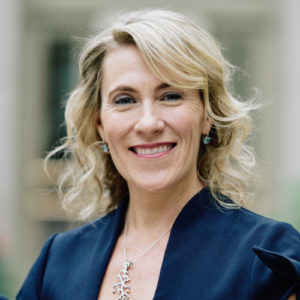
Responding to a popular request, we are now sharing transcripts of our investor podcast interviews in this new series. The following interview with Kerry Rupp was recorded in October 2018.
Kerry Rupp, Partner at True Wealth Ventures, discusses their women-focused investment thesis.
Sramana Mitra: Let’s get you introduced to our audience. Tell us about your investing focus. What is the size of the fund? What sized checks are you writing?
Kerry Rupp: True Wealth Ventures fund one is approximately $20 million. We’re typically focused on women-led companies, which we define as >>>
1Mby1M Virtual Accelerator Investor Forum: With Biplab Adhya and Venu Pemmaraju of Wipro Ventures (Part 2)
Sramana Mitra: The question I’m asking is a little bit beyond what you just answered. Let us say we have a company that we want to send to you for investment. This company already has product-market fit. It is already deployed in major customers. It’s understood that it fits your stage requirement and validation requirement. Beyond that, how much of your decision making is going to be predicated on the fact that this product can be brought to market leveraging Wipro’s channel?
Biplab Adhya: That plays a very strong role. At the same time, we also have to consider quite a few issues as well. The first one would be who are the other co-investors in the company. Does this company have institutional investors who have the ability to support his company going forward? That is a very important consideration. >>>
1Mby1M Virtual Accelerator Investor Forum: With Milos Sochor of Y Soft Ventures (Part 5)
Sramana Mitra: For just your niche, you’re seeing a couple of hundred ventures from that hinterland. It’s actually very encouraging that that much entrepreneurial activity is happening in that region. That means that other sectors are getting into entrepreneurship as well. Conceivably, there are around 500 to 1,000 startups in action in that geography.
Milos Sochor: Absolutely. That would be a correct assumption. Entrepreneurship and startups have really taken off. I spent some time in the United States and I came back right when the crisis hit in 2009. I worked at an incubator that I had built into the largest incubator in the Czech Republic. When I compare what was happening in 2009, the type of deals and the way that people were presenting them, it was laughable.
The whole Silicon Valley way of raising money came and a lot of know-h0w was transferred. More Western Europe and US VCs visited and they >>>
1Mby1M Virtual Accelerator Investor Forum: With Biplab Adhya and Venu Pemmaraju of Wipro Ventures (Part 1)

Responding to a popular request, we are now sharing transcripts of our investor podcast interviews in this new series. The following interview with Milos Sochor was recorded in June 2018.
Biplab Adhya and Venu Pemmaraju are Co-Heads of Wipro Ventures.
Sramana Mitra: Tell us a bit about yourselves as well as Wipro Ventures. Let’s introduce our audience to the investment activities of Wipro Ventures. >>>
1Mby1M Virtual Accelerator Investor Forum: With Milos Sochor of Y Soft Ventures (Part 4)
Sramana Mitra: Capital-efficient company building that goes straight into acquisition is a very good model for entrepreneurs, especially entrepreneurs doing it for the first time. I see no problem at all with that model. I think it’s a great model.
Milos Sochor: I hope we play a big role. Like I said, Y Soft has made many mistakes and has learned the hard way. I’ll give you another example of a company that is in our portfolio. We have done business with them in Japan. They went from zero to money in the bank in three months. It took Y Soft 12 years to break into the Japanese market.
It was strategically important for us because that’s where Konica Minolta, our biggest partner, is headquartered. It is very hard to sell in the >>>
1Mby1M Virtual Accelerator Investor Forum: With Milos Sochor of Y Soft Ventures (Part 3)
Sramana Mitra: I have a couple of questions on this one. What is the competitive landscape of something like this when you’re investing in something like this in your local geography?
Milos Sochor: They’re often mistaken with companies that provide Bluetooth and RFID technologies. I would move those more into the consumer space. Savio provides their technology which is called Ultra-Wide Band (UWB). It’s a very heavy-duty and precise solution. It’s way beyond Bluetooth and RFID chips. Those tags are pretty expensive. We are talking about hundreds of euros per tag. You are not able to put it on every box.
It would be for more expensive equipment or workers in the warehouse. They’re in the heavy-duty space. They do have some competition but usually, >>>
1Mby1M Virtual Accelerator Investor Forum: With Ravi Mohan of Shasta Ventures (Part 6)
Ravi Mohan: The last company is a company called Analpan. Anaplan is really taking Excel and putting it in the cloud so businesses can plan better and really model any type of business problem. How do I do my financial plans for the year? How do I do my workforce plans for the year? They’ve been growing very well. What’s common in all these three cases?
In all three cases, they had various degrees of product-market fit. In Apptio’s case, they had talked to 15 enterprises and all these enterprises had wanted the solution. We could see a clear reason why the CIO needed this solution. The CIO is getting pressurized that IT costs were increasing. They needed to justify that. >>>
