
categories
HOT TOPICS
- The Accelerator Conundrum
- The Startup Velocity Question
- Platform as a Service
- Man and Superman
- Web 3.0 = (4C + P + VS)
- The Future: End of Capitalism
- Capitalism 2.0

Venture Capital
1Mby1M Virtual Accelerator Investor Forum: With Kelly Perdew of Moonshots Capital (Part 2)
Sramana Mitra: What is the definition, in your case, of late seed and early Series A? What metrics are you looking for?
Kelly Perdew: Typically, there’s an MVP. They’ve found a problem where they’ve either built a solution for and have started selling that to more than one client. They’ve raised some money. Usually, it’s in the $200,000 to $500,000 range that helped them to get to that point. Frequently, that’s friends and family, credit cards, and maybe one or two angels.
Interestingly enough, a lot of our deal flow comes from the ecosystem itself. Techstars, YCombinator, and 500 Startups are already curating lots and lots of entries to select the company that they think could be the most viable. Criteria in terms of where we want to invest is they have some revenue >>>
1Mby1M Virtual Accelerator Investor Forum: With Kerry Rupp of True Wealth Ventures (Part 5)
Sramana Mitra: Are you chasing unicorns?
Kerry Rupp: No. The other thing about our business is that we are looking for capital-efficient companies that aren’t likely to need a Series C and maybe not even a Series B to get to their exit. We are expecting these companies to be able to see an acquisition exit in a three to five-year window. It’s really in the range where most exits happen. The data will show you that despite all the excitement of unicorns and the potential of the few that make it, most exits happen between $40 million and $70 million.
We’re looking for companies who can see a pathway to being large enough that they can be appealing acquisition targets for $100 million exits in a >>>
1Mby1M Virtual Accelerator Investor Forum: With Kelly Perdew of Moonshots Capital (Part 1)
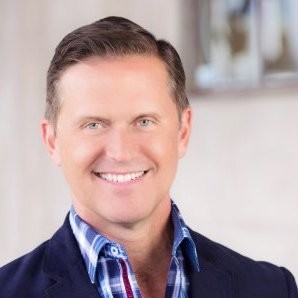
Responding to a popular request, we are now sharing transcripts of our investor podcast interviews in this new series. The following interview with Kelly Perdew was recorded in June 2018.
Kelly Perdew is Co-founder and Managing General Partner at Moonshots Capital, a firm that has a unique investment thesis of supporting military veterans. Very interesting insights.
Sramana Mitra: Let’s start by having you share a little bit about your background as well as the background of your fund. What is the investing focus? How big is the fund? What kind of investments are you making? >>>
1Mby1M Virtual Accelerator Investor Forum: With Kerry Rupp of True Wealth Ventures (Part 4)
Sramana Mitra: What is the go-to market strategy in each of these cases? Are you particularly counting on clinicians recommending this? In that case, are you actively working with the clinicians to get them to recommend?
Kerry Rupp: Interestingly, both business models are available for both businesses. If I take the watch, traditionally the other types of devices in the space were clearly targeted to seniors who were in a place in their life where they were not going to care anymore. It was sold through dealer networks. That market is still available to UnaliWear.
You can imagine that this watch is also opening up a much younger demographic. Let’s say the 70 and up who are still active and maybe playing golf and tennis and doing things, but want that security of being able to connect to a call center if they hurt their head. All of a sudden, there’s a >>>
1Mby1M Virtual Accelerator Investor Forum: With Biplab Adhya and Venu Pemmaraju of Wipro Ventures (Part 5)
Sramana Mitra: What about technology trends? I’m sure you’re immediately going to say AI. I know AI is a big trend. Is there anything else that you’re seeing out there that is worth highlighting?
Venu Pemmaraju: I was just going to add that. The other thing that we’re also seeing is most of these companies are trying to focus on automation, ease of use, and bringing in a consumer experience into some of these enterprise plays. Also on a very different level, the round sizes are much bigger now than what it used to be. Perhaps, it’s a reflection of the maturity of companies that Biplav was talking about even at an earlier stage. It’s also a reflection of more capital needed now to compete. There are quite a few companies in each segment.
Sramana Mitra: If it’s a venture-fundable segment that has been identified, it’s flushed with competition. In a way, less
1Mby1M Virtual Accelerator Investor Forum: With Kerry Rupp of True Wealth Ventures (Part 3)
Sramana Mitra: Talk about your portfolio. What have you invested in? As you take us through some of these examples, talk about why you chose to invest in those. We got the woman founder part of it. Beyond that, give us a sense of how you think about deals.
Kerry Rupp: We’re in three companies. The fund will expect to invest in 10 to 12. All three of them are in the health sector. The first is a smart watch for seniors. It’s called UnaliWear. It essentially helps with things like guards against wandering and medication reminders. One of the things that’s particularly unique about this product is, it varies its target specifically to the lifestyle and the physical health of the seniors. The font is black and white in really large font size for macular degeneration.
All of the interaction with the watch is through voice. They don’t have to push buttons and learn how to navigate a smartphone. They’re talking to >>>
1Mby1M Virtual Accelerator Investor Forum: With Biplab Adhya and Venu Pemmaraju of Wipro Ventures (Part 4)
Sramana Mitra: I want to ask you one question about the cyber security practice of Wipro and how all these investments play into the dynamics of that. One thing we are hearing from CISOs is that they are bombarded with vendors trying to sell them solutions.
Cyber security is one of the most active spaces for both startups as well as venture activity. There are a lot of vendors who are trying to get mind share with CISOs and CIOs. What is your guidance to this community of entrepreneurs who are trying to sell into these buyers? For small vendors to get mindshare, it’s very difficult. How do you navigate this dynamics? >>>
1Mby1M Virtual Accelerator Investor Forum: With Kerry Rupp of True Wealth Ventures (Part 2)
Sramana Mitra: Is the woman decision maker in the purchasing decision critical?
Kerry Rupp: It is critical. Not all decisions are always going to be made by women, but they are in markets that are dominantly women.
Sramana Mitra: We’re on the same page so far. Talk about geography. Where do you like to invest?
Kerry Rupp: Definitely US-based entities just because we are a small fund. We are based in Austin, Texas, and there’s a lot of opportunities here in Texas. There actually aren’t any other funds with a specific gender lens in Texas. We spend most of our time in going to events and co-working within the State. We’re pretty mobile in going to Dallas, Houston, and San Antonio. We will take deal flow from anywhere. >>>
