
categories
HOT TOPICS
- The Accelerator Conundrum
- The Startup Velocity Question
- Platform as a Service
- Man and Superman
- Web 3.0 = (4C + P + VS)
- The Future: End of Capitalism
- Capitalism 2.0

Venture Capital
1Mby1M Virtual Accelerator Investor Forum: With Raj Singh of Singh Ventures (Part 1)
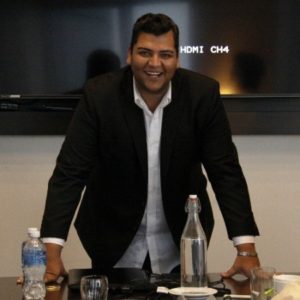
Responding to a popular request, we are now sharing transcripts of our investor podcast interviews in this new series. The following interview with Raj Singh was recorded in September 2016.
Raj Singh, Founder and Executive Director at Singh Ventures, offers a window into his firm’s investment thesis.
Sramana Mitra: Tell us about your investing focus. How big is the fund? What size investments do you make?
Raj Singh: I run an early-stage VC fund. We are about $50 million right now. We were founded about two years ago. We focus on mobile technologies. We get involved with anywhere from a concept stage to less than $10,000 a month of recurring revenue. What’s really unique about our fund is what we do in addition to the capital. >>>
1Mby1M Virtual Accelerator Investor Forum: With John Dougery of Inventus Capital (Part 1)
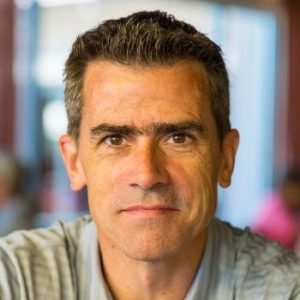
Responding to a popular request, we are now sharing transcripts of our investor podcast interviews in this new series. The following interview with John Dougery was recorded in May 2016.
John Dougery, Co-Founder and Managing Director of Inventus Capital, a fund that is one of the earliest players in the Silicon Valley – India corridor, discusses his firm’s investment focus, as well as reviews the trends of the Indian market.
Sramana Mitra: Tell us a little bit about your firm. You’re a Co-Founder of the firm so you must have founded the firm with a certain thesis. How has it evolved over the years that you’ve been in action in this corridor?
John Dougery: This firm is one of my entrepreneurial efforts along with my co-founders. It all came out of my mutual >>>
1Mby1M Virtual Accelerator Investor Forum: With Ron Heinz of Signal Peak Ventures (Part 3)
Sramana Mitra: What is the typical round size?
Ron Heinz: We typically put in between $3 million and $6 million. Our ownership structures tend to be between 15% to 25%. Our average check size upfront is $5 million and the reserve would be double of that.
Sramana Mitra: When you do a Series A in that order, are you the only fund typically? These days, people don’t need as much money even though there has been a frenzy of raising too much capital. You actually do not need as much money. When we’re talking about a $5 million Series A, are we talking about a $10 million Series A because there’s another investor involved? >>>
1Mby1M Virtual Accelerator Investor Forum: With Ron Heinz of Signal Peak Ventures (Part 2)
Sramana Mitra: A couple of points to add to what you said is, I started seeing a bit of an inflection point in Utah after Omniture. Omniture was a very visible success out of Utah. Omniture went public. Adobe acquired Omniture. That has been the milestone. The other thing, from a trend point of view is, companies from Utah have done great bootstrapping.
Both Pluralsight and InsideSales were bootstrapped to a very large degree. They did not actually take much early stage capital at all. By the time they took capital, that capital was a lot of capital and not your traditional
1Mby1M Virtual Accelerator Investor Forum: With Ron Heinz of Signal Peak Ventures (Part 1)
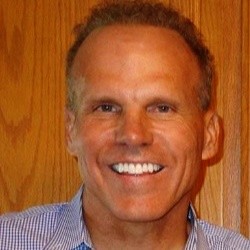
Responding to a popular request, we are now sharing transcripts of our investor podcast interviews in this new series. The following interview with Ron Heinz was recorded in May 2017.
Ron Heinz, Founder and Managing Director at Signal Peak Ventures, a venture firm operating mostly in the Rocky Mountain corridor, discusses what’s happening in Utah, as well as Colorado and Arizona. We’ve covered a number of companies from that area including Pluralsight, InsideSales, Steals.com, Ping Identity, and InfusionSoft. Today, there are over a thousand funded startups in those geographies. Bootstrapping runs heavy in the startup culture of the region.
Sramana Mitra: Let’s start by having you tell us about Signal Peak Ventures. >>>
1Mby1M Virtual Accelerator Investor Forum: With Nathan Lustig of Magma Partners (Part 4)
Sramana Mitra: I think it was in 1997. I was funding a company of my own that I had founded. We did all our product development for very little money in India. It was before the trend where you could be building companies in India. I met with 36 venture capitalists before I could find one to actually do this with me. That was NEA.
It was hell. People were telling me, “We don’t fund companies with product development in India.” A decade later if you were in Silicon Valley and not doing product development in India, you were a fool. These kinds of
1Mby1M Virtual Accelerator Investor Forum: With Sandeep Singhal of Nexus Venture Partners (Part 4)
Sramana Mitra: What stage did you invest in Arkin?
Sandeep Singhal: We came in at the very start. We seeded the company. We expect to see more of this going forward. It’s just very efficient if the go-to market strategy is being developed in the US with team members that are based here and the MVP is built out in India. We’ve seen that in the past with Druva and PubMatic. We believe that we’ll see more of that approach.
Sramana Mitra: Especially in the enterprise context. Companies that are selling to global SMEs are actually marketing and selling from India as well and getting further along before they choose to move to the US in
6 Investors Discuss their Portfolios via the Virtual Accelerator Investor Forum

Entrepreneurs can learn a lot about investors from their process of evaluating the funding-worthiness of startups. Within the Virtual Accelerator Investor Forum, I have asked investors to talk a bit about their own investment portfolios. What have you invested in and why? When did the entrepreneur come to you? At what stage and with what metrics? What convinced you to invest? In the following interviews, each investor shares the kinds of businesses in their portfolios and explains why they were drawn to those companies.
Susan Mason, General Partner at Aligned Ventures, talks about the dysfunctions of the broader venture capital model, and what her firm is doing to address those. Excellent conversation.
