
categories
HOT TOPICS
- The Accelerator Conundrum
- The Startup Velocity Question
- Platform as a Service
- Man and Superman
- Web 3.0 = (4C + P + VS)
- The Future: End of Capitalism
- Capitalism 2.0

Venture Capital
1Mby1M Virtual Accelerator Investor Forum: With Oded Hermoni of Rhodium Venture Partners (Part 3)
Sramana Mitra: We are in 2017. Lots of stuff have already been built. Nowadays, there aren’t so many wide open opportunities for doing fundamental things the way Salesforce or Facebook did it. The incumbents are incredibly powerful. They have monopolistic power.
We have a lot of capital in the system right now. If you’re managing a chunk of money, you have to think of an investment thesis of where you can really get returns. One of the observations I’ve had is that if everybody is chasing unicorns, it’s not going to work because there aren’t that many unicorns. Unicorns, by definition,
1Mby1M Virtual Accelerator Investor Forum: With John Dougery of Inventus Capital (Part 5)
John Dougery: I think that the point about SaaS is all about market size, but we have a different view. We have been doing SaaS companies since we started 10 years ago out of India. We’ve always had a thesis that business software companies are going to be very interesting product opportunities. That came out of our own perspective where we don’t have a geographic bias.
We’re going to invest in startups in Silicon Valley. We’re going to invest in startups in India. We do it out of a thesis-based approach and say, “Which one is the best product?” Even business software that is addressing the Indian market ultimately is going to face competition from overseas or they have to go overseas. They have to have a thesis that they can be number one. >>>
1Mby1M Virtual Accelerator Investor Forum: With Oded Hermoni of Rhodium Venture Partners (Part 2)
Sramana Mitra: What about industry sector? Do you have preferences? Do you have concentrations? Do you have expertise in specific sectors?
Oded Hermoni: We usually invest a lot in media. A couple of months ago, you covered two Israeli companies Outbrain and Tabula. We invested in Outbrain very early on. We also invested in a company called Gizmo, which is a US-based company. One of our latest investments is a company called comedy.com that now has 3.5 billion views per month. Those were our investments in media.
We have some consumer-related companies. We have security companies such HexaTier that was acquired by Huawei. We have >>>
1Mby1M Virtual Accelerator Investor Forum: With John Dougery of Inventus Capital (Part 4)
John Dougery: We had a thesis around services-based businesses in e-commerce for consumers. Financial technologies are a big segment there. We invested in Policybazaar, which is the leading online insurance marketplace by a factor of 10 over its competition now. It was about a factor of five when we first invested.
It’s getting increasing commissions from the insurance providers for selling. We’re the lead investor in FundsIndia, which is the leading online mutual fund marketplace for consumers in India. Again, it provides price discovery, understanding of these products so you can stay away from the products with a high load or an insurance where you cannot be taken advantage of. >>>
1Mby1M Virtual Accelerator Investor Forum: With Oded Hermoni of Rhodium Venture Partners (Part 1)
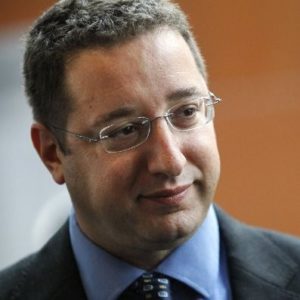
Responding to a popular request, we are now sharing transcripts of our investor podcast interviews in this new series. The following interview with Oded Hermoni was recorded in October 2017.
Oded Hermoni is Managing Partner at Rhodium Venture Partners, and is also co-founder of an Angel group, J-Angels.
Sramana Mitra: Tell us about Rhodium. What is the focus of the firm? How big is the fund? What sized investments do you make?
Oded Hermoni: Rhodium is not the typical fund. It’s an Israeli-US investment arm of a family office. We have only one LP. We >>>
1Mby1M Virtual Accelerator Investor Forum: With John Dougery of Inventus Capital (Part 3)
Sramana Mitra: Let’s do a couple of case studies of the kinds of companies that you have invested in and had successes with. If you could, for the benefit of our entrepreneurs, walk us through the logic and thought process of the investment thesis when you invested.
John Dougery: I’ll start with companies that are based in Bangalore. It’s a very typical example of how we work. This is an entrepreneur that we started tracking and mentoring because we liked him back in 2006. This was when we were just forming the firm. We didn’t have the capital yet, but we were engaged in the community and we helped him find his seed financing. >>>
1Mby1M Virtual Accelerator Investor Forum: With Raj Singh of Singh Ventures (Part 2)
Sramana Mitra: What do you see in the deal flow? We are in the end of 2017. In the last three months, what trends have you spotted?
Raj Singh: To be very honest, the deal flow is slowing down towards the end of the year, but we still see a lot of the P2P model. I’ve sees looking at a lot of different use cases in the P2P model in the fourth quarter that I’ve not seen in the first few quarters of 2017. Like I said, the deal flow does seem to be slowing down as we get into the holidays.
Sramana Mitra: What kind of trends are you looking to invest into? The first question is what are you seeing in the inbound deal flow. What broad trends do you invest against at this point going forward? >>>
1Mby1M Virtual Accelerator Investor Forum: With John Dougery of Inventus Capital (Part 2)
John Dougery: There are many opportunities and efficiencies in India to build world-class products for business customers out of India. Our focus was, and continues to be, both consumer consumption in India and also business consumption both in India and globally.
About half our companies are business software companies with an increasingly heavy dose of services inside them. It’s not just technology. It can be very high-end advanced services. India has gone through a huge renaissance in the last two years. There has been more than a doubling and tripling in the amount of capital, number of companies being started, and the quality of companies being started. >>>
