
categories
HOT TOPICS
- The Accelerator Conundrum
- The Startup Velocity Question
- Platform as a Service
- Man and Superman
- Web 3.0 = (4C + P + VS)
- The Future: End of Capitalism
- Capitalism 2.0

FinTech
Thought Leaders in Financial Technology: Infinicept CEO Todd Ablowitz (Part 2)
Todd Ablowitz: Then in 2009, Jack Dorsey started Square. He scratched that itch that I always had – more like 15 questions in 45 seconds to sign up a merchant. I loved what he was doing except I knew enough to know that what they were doing was breaking the rules at that time. Ten years earlier, PayPal was in a similar situation and the rules changed. I knew that was a possibility, and I was hopeful.
>>>Thought Leaders in Financial Technology: Infinicept CEO Todd Ablowitz (Part 1)
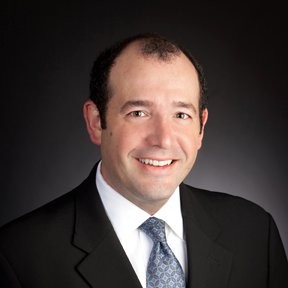
FinTech is a complex industry with massive changes underway. In this interview, Todd and I attempt to explore what is defensible in this highly competitive space.
Sramana Mitra: Let’s start by introducing our audience to yourself and to Infinicept.
>>>Thought Leaders in Financial Technology: Bristol Gate Capital Partners CEO Richard Hamm (Part 5)
Sramana Mitra: If they’re significantly assisted by technology, they need to be trained to use that technology and do their job of helping investors as opposed to making those decisions themselves, which involves a different level of financial understanding.
Richard Hamm: As I pointed out, Digit is doing exactly that. They’re trying to develop it so that anybody within a couple of days of training could navigate a person through the choices they could make.
>>>Thought Leaders in Financial Technology: Bristol Gate Capital Partners CEO Richard Hamm (Part 4)
Sramana Mitra: Let’s switch to the other question which is open problems in FinTech using the kinds of approaches you’re talking about. Where do you see the possibilities of applying these kinds of techniques? And to do what?
Richard Hamm: In the FinTech world, which is alive and well in Toronto, my biggest concern, particularly for FinTech that sells itself into banks, is that it’s no different than a lot of technologies. They’re built to solve a particular problem. They’re not an integrated solution.
>>>Thought Leaders in Financial Technology: Bristol Gate Capital Partners CEO Richard Hamm (Part 3)
Sramana Mitra: How is this information consumed by your customers? Is there a human in between the bank’s automated system and where the consumer touches the bank?
Richard Hamm: At the front-end, we use predictive analytics. We also add our own human influence on this to verify the accuracy of the models by good old-fashioned fundamental analysis to make sure that the 65 names that are generated are worthy of investment. We drive that number down to 22.
>>>Thought Leaders in Financial Technology: Bristol Gate Capital Partners CEO Richard Hamm (Part 2)
Sramana Mitra: When a bank does hire you to do this kind of work, double-click down to exactly how the technology works and what it is that it’s doing on behalf of the bank.
Richard Hamm: What the banks want us to do is to satisfy their investment-oriented customers by giving them a good return.
Sramana Mitra: I’m trying to understand what’s happening in the guts.
>>>Thought Leaders in Financial Technology: Bristol Gate Capital Partners CEO Richard Hamm (Part 1)

Richard discusses predictive AI applications in FinTech, including the state of the robo advisor industry.
Sramana Mitra: Let’s start by introducing our audience to yourself as well as to Bristol Gates.
>>>Thought Leaders in Financial Technology: Eyal Shinar, CEO of Fundbox (Part 7)
Sramana Mitra: Does Apple need to click on your button too on the platform?
Eyal Shinar: No.
Sramana Mitra: Then you don’t need any integration with Apple.
Eyal Shinar: That’s correct. That’s what I was saying earlier. In most scenarios, we don’t need anything from the buyer side. The way to think about it is you need to integrate Fundbox Pay. The integration there is a one-click process.
Read more