
categories
HOT TOPICS
- The Accelerator Conundrum
- The Startup Velocity Question
- Platform as a Service
- Man and Superman
- Web 3.0 = (4C + P + VS)
- The Future: End of Capitalism
- Capitalism 2.0

Entrepreneur Interviews
A Conversation About Sexual Harassment with Janine Yancey, CEO of Emtrain (Part 3)
Sramana Mitra: What was an average deal size when you were selling these to your first batch of clients?
Janine Yancey: I believe the first actual client was Intuit. I think it was $30,000 for their whole organization. It was significantly discounted. Some of the first clients were organizations that I had relationships with.
Sramana Mitra: That’s perfect. What was the first year of selling the product?
Janine Yancey: The first year was 2004. Even before I was actually working for Emtrain, I was creating something within the >>>
A Conversation About Sexual Harassment with Janine Yancey, CEO of Emtrain (Part 2)
Sramana Mitra: Let’s do the Entrepreneurs Journeys story. When did you step out of your Google affiliation and start this company?
Janine Yancey: In 2004 or 2005. I was still practicing law through the end of 2005. I had formally started Emtrain as a corporation because I’m a lawyer so it’s an easy enough thing for me to do. Emtrain was on the books as early as 2000, but it was in name only. Then in 2006, a few of us jumped into actually doing it as a full-time occupation.
Sramana Mitra: What was the first version of what you put together and what you released? How did you get
A Conversation About Sexual Harassment with Janine Yancey, CEO of Emtrain (Part 1)
If you haven’t already, please study our Bootstrapping Course and Investor Introductions page.
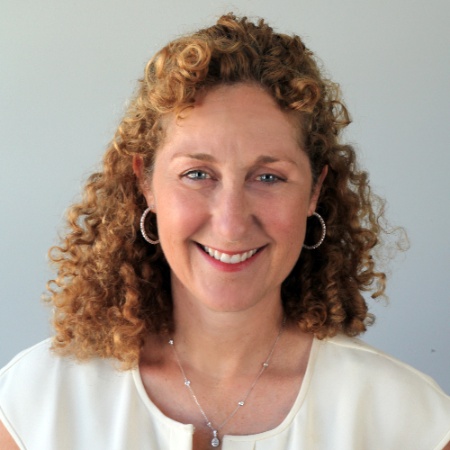
Janine has built a $5M a year bootstrapped business in the realm of legal training for employment and workplace issues. A core part of her expertise is in sexual harassment and related concerns that are currently hot topics in the industry. This is a must-read interview for those following the discussion in the media.
Sramana Mitra: Let’s start at the very beginning of your journey. Where are you from? Where were you born, raised, and in what kind of background?
Janine Yancey: I’m from Los Angeles, but then I was educated in Berkeley and then at Hastings College of Law, which is in >>>
Bootstrapping with Sophisticated Strategy: Rob Douglas, CEO of BioConnect (Part 6)
Sramana Mitra: Interesting. When did you crack your first multi-million enterprise deal in this mode?
Rob Douglas: A couple of years ago. Now it’s a regular course for our company.
Sramana Mitra: Excellent. This strategy really worked out.
Rob Douglas: Yes, it has. It needs a lot of patience to get there. You really have to be willing to see the thing through over a multi-year period of time. The interesting thing is, it took us eight years to complete 30 integrations and form 30 partnership ecosystem. >>>
Bootstrapping with Sophisticated Strategy: Rob Douglas, CEO of BioConnect (Part 5)
Sramana Mitra: Talk about the customer acquisition strategy and the scaling of revenue.
Rob Douglas: Customer acquisition is a three-step process. Step one is, BioConnect needs to be integrated into target software platforms. Step two is, we use that partner’s ecosystem to plant the flags of BioConnect. If we become integrated into that software platform, that platform’s partners and customer base consume our technology. An end user will now start consuming BioConnect as part of their platform.
Many times, what happens is that an end user finds out about BioConnect and realizes that it’s an enterprise platform. Then >>>
Bootstrapping with Sophisticated Strategy: Rob Douglas, CEO of BioConnect (Part 4)
Sramana Mitra: Did you bootstrap this company? How did you build the product? How long did it take your to build the product?
Rob Douglas: We bootstrapped it. We incorporated and started in the basement. The first year was all spent in research. From there, we began the process of developing what our product would be and look for people in our ecosystem who could be the first early customers to test our concepts and ideas.
It took us two years to get to a point where we had a 0.5 version. I would also add that in that two years, we pivoted at least >>>
Bootstrapping with Sophisticated Strategy: Rob Douglas, CEO of BioConnect (Part 3)
Sramana Mitra: What was the premise of this company?
Rob Douglas: We were then, and still are, on the quest for rightful identity. We believe that the trillions of dollars of fraud that lives in our economic system has a direct connection to the fact that we don’t actually communicate with real people but rather with credentials.
Coming from the biometric industry, I could see an impending futurewhere there will be billions of biometric sensors in the market and the world can’t consume them. The biometric sensor is a very efficient way of confirming your >>>
Bootstrapping with Sophisticated Strategy: Rob Douglas, CEO of BioConnect (Part 2)
Sramana Mitra: In 2001, you’re done with Siebel Systems. What happens next?
Rob Douglas: My ultimate goal was to become a successful entrepreneur and CEO. It was now time to learn more general management skills. I joined a company called Pivotal, which was a mid-market CRM company based out of Vancouver. I was the EVP of Sales for North America. While I was doing that, I had now taken my first Board position in a company called MKS, based in Waterloo.
I was now learning what it was like to be an executive and ultimately govern the growth of tech companies. This was post the dot-com >>>
