
categories
HOT TOPICS
- The Accelerator Conundrum
- The Startup Velocity Question
- Platform as a Service
- Man and Superman
- Web 3.0 = (4C + P + VS)
- The Future: End of Capitalism
- Capitalism 2.0

Entrepreneur Interviews
Building Businesses in Aftermarket Designer Merchandise: ShopWorn CEO Richard Birnbaum (Part 6)
Richard Birnbaum: When I gave you the example of their cost of goods at 8% of retail, nothing is a secret. If we’re able to buy aged inventory from the stores, depending on the brand, deal and condition, it’s worth paying anywhere between 15 cents to 35 cents on retail price.
We’re giving a terrific value to the consumer. The brand is selling more goods to the authorized dealer. We’ve made ourselves the first and only official partner of the brands who are sanctioned to sell their goods online. We’re selling the latest, the greatest, and the best, but it’s at full retail. Maybe you’ll find a 10% coupon online. We’re offering a tremendous value to the consumer.
>>>Building Two Open-Source Startups in a Row: Sysdig CEO Loris Degioanni (Part 1)

If you haven’t already, please study our Bootstrapping Course and Investor Introductions page.
Loris has specialized expertise in building Open Source companies. Read how he has done it twice.
Sramana Mitra: Let’s start at the very beginning of your journey. Where are you from? Where were you born, raised, and in what kind of background?
Loris Degioanni: As you can tell from my accent, I wasn’t born in the United States. I was born in Italy. I was born in a unique part of Italy. I was raised in a little town called Menaggio in one of the mountain valleys connecting Northern Italy and Southern France.
>>>Building Businesses in Aftermarket Designer Merchandise: ShopWorn CEO Richard Birnbaum (Part 5)
Richard Birnbaum: We also noticed that the brands were beginning to end distributor contracts and were setting up their own distribution companies in the United States. For example, their cost of goods on an item was 8% of retail. Their biggest cost is not the cost of goods. It’s the marketing and advertising. It’s the romancing of the product.
Their business model was basically working on about 70% margins. Their cost on the goods would be 8% of retail. Then they would sell the goods to their offshore distributors for about 30% of retail. Those distributors would go out to the retail stores and wholesale for about 50% of retail. Some brands have 45% offline discount. That’s the way the model is built.
>>>Building Businesses in Aftermarket Designer Merchandise: ShopWorn CEO Richard Birnbaum (Part 4)
Richard Birnbaum: Even though distributors around the world were back-dooring the goods into the United States through e-commerce, I personally believe that the brands just closed one eye. It gave them deniability. The deniability factor is very important for them because when the dealers would start to complain, the brand would say, “We have no idea how they got the goods. We didn’t sell it to them. We have no idea how they got it.”
The fact of the matter is, of course, the brand knew how they got it. They got it because they sold it to a distributor who gave them false promises. The goods ended up exactly where the goods weren’t supposed to end up.
>>>Building Businesses in Aftermarket Designer Merchandise: ShopWorn CEO Richard Birnbaum (Part 3)
Sramana Mitra: This business started with you taking consignment inventory. Is that how you continued or did you switch to buying inventory?
Richard Birnbaum: The next step was going to the 47th Street in Manhattan and checking out all the different vendors. I was trying to learn the distribution model of dealers of these great brands of watches. They were selling at discounted rates, but they weren’t authorized dealers.
>>>Building Businesses in Aftermarket Designer Merchandise: ShopWorn CEO Richard Birnbaum (Part 2)
Richard Birnbaum: We realized that the garment business was not for long term. We were buying back in the late 80’s. We were buying designer goods in the United States. We were buying Tommy Hilfiger, Calvin Klein, and Ralph Lauren. Back in those days, e-commerce was not what it is today.
>>>Building Businesses in Aftermarket Designer Merchandise: ShopWorn CEO Richard Birnbaum (Part 1)
If you haven’t already, please study our Bootstrapping Course and Investor Introductions page.
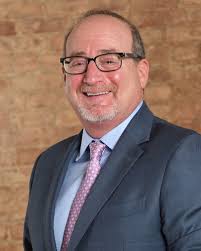
Richard has built several business in the “shopworn” designer merchandise segment. Learn more about the business through his journey.
Sramana Mitra: Let’s start at the very beginning of your journey. Where are you from? Where were you born, raised, and in what kind of background?
Richard Birnbaum: I grew up in Brooklyn, New York. I was born into a family of merchants. My father taught me at a young age that everything is about value. Even when we’d go to a diner as a kid, he couldn’t go on raving enough about what a great deal it is they’re offering us. He’d say, “We get a salad. We got Jell-O for dessert.” He instilled in me, at an early age, that it’s all about value and giving the customer a great deal.
>>>Bootstrapping With A Paycheck to YCombinator and $10M Series A: Ryan Chan, CEO of UpKeep (Part 7)
Sramana Mitra: What kind of numbers did you do in 2016, 2017, and 2018? What was the ramp in terms of free users and paying users? What was happening?
Ryan Chan: We’ve been growing very fast. We’ve hit a true nerve in this market and the completely underserved industry. Over 2,500 paying companies use UpKeep. Each company could have anywhere from a single user to several hundred users in their UpKeep account. Again, we literally had zero about three years ago, which is nuts.
>>>