
categories
HOT TOPICS
- The Accelerator Conundrum
- The Startup Velocity Question
- Platform as a Service
- Man and Superman
- Web 3.0 = (4C + P + VS)
- The Future: End of Capitalism
- Capitalism 2.0

Entrepreneur Interviews
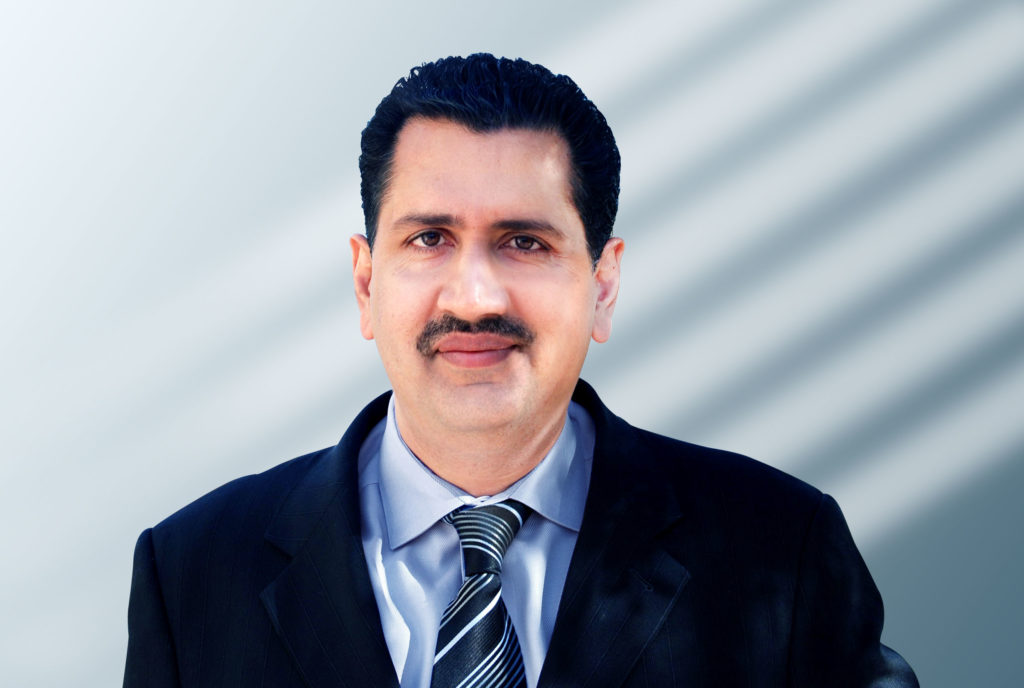
Thought Leaders in Healthcare IT: HealthGrid CEO and Serial Digital Health Entrepreneur Raj Toleti (Part 2)
Sramana Mitra: To achieve what you’re talking about, you must have had to interact with some of the existing systems. I live in Menlo Park, California. The two medical systems that our family interfaces with are the Stanford healthcare system and the UCSS healthcare system.
They have their own electronic medical record system. Epic is very popular. What is the interface that you’ve had to navigate? How are those interfaces adopting this consumerization of healthcare IT?
>>>Thought Leaders in Healthcare IT: HealthGrid CEO and Serial Digital Health Entrepreneur Raj Toleti (Part 1)
Starting a company in the healthcare sector might be easier than you think. Learn how to start your entrepreneurial journey with Sramana’s Udemy courses.
Raj has built and sold three HIT companies and is a real expert in the domain. Excellent discussion on the state of the union in the field and open opportunities that need entrepreneurial problem solving.
Sramana Mitra: Let’s start by introducing our audience to yourself. Give us a bit of background as well as your various healthcare IT companies.
>>>Building Two Open-Source Startups in a Row: Sysdig CEO Loris Degioanni (Part 7)
Sramana Mitra: How do you charge?
Loris Degioanni: We charge based on the number of machines that they need to manage with our platform. It’s the typical function of the number of servers that you’re running.
Sramana Mitra: What is the next milestone after you started monetizing? What are some of the major milestones based on this model that you came up with?
>>>Building Two Open-Source Startups in a Row: Sysdig CEO Loris Degioanni (Part 6)
Sramana Mitra: The $2.5 million of seed capital that you raised, what was the next milestone? How long did it take you from there to deliver your first product?
Loris Degioanni: Based on my background and experience with open source, I decided that I wanted to approach this second adventure with an open source philosophy. This was very important. That was our strategy and vision early on.
>>>Building Two Open-Source Startups in a Row: Sysdig CEO Loris Degioanni (Part 5)
Loris Degioanni: These dynamics towards micro-services means that these companies can essentially break their software into smaller pieces and then use APIs to talk to each other. This spawned a massive industry that is led by the cloud vendors and by open source projects like Kubernetes.
I witnessed the creation of these industries and immediately thought, “We should focus on this. This is new and very different. Managing and observing a software that is split into a thousand little pieces is very different than monitoring a giant monolith.”
>>>Building Two Open-Source Startups in a Row: Sysdig CEO Loris Degioanni (Part 4)
Sramana Mitra: You started your next company in 2012?
Loris Degioanni: 2013. I left Riverbed in 2012. My rotation period with Riverbed was for two years. Despite being very happy at Riverbed and despite learning a lot, I was infected with the bug of being an entrepreneur. It’s really hard to get rid of. Even in the nicest places, I don’t think I can work for somebody else.
I need to wake up, feeling that I am making a difference. I couldn’t feel that at Riverbed. The company was successful. I was contributing, but I couldn’t find that path on what I was doing. Also, you don’t have ownership. I prefer to have situations where I am have more control and impact.
>>>Building Two Open-Source Startups in a Row: Sysdig CEO Loris Degioanni (Part 3)
Loris Degioanni: What we did was, we created a new project based on the same code base. It was called Wireshark. This was 2006. Wireshark was an immediate success. We put a bunch of resources behind it. We told Gerald, “Just keep working on this and make the community happy.”
After 13 years, Wireshark is still one of the most successful open source projects in the history of open source. It has a huge community. It has a huge backing from many companies around the world. It has a vibrant community of developers.
>>>Building Two Open-Source Startups in a Row: Sysdig CEO Loris Degioanni (Part 2)
Loris Degioanni: While I was in New Zealand doing the internship, a professor from the United States texted me saying he’s working in the field of packet catcher. He found WinPcap. He would like to invite somebody from the research group to do research in the United States. I was in New Zealand, so I couldn’t go.
I told this professor that I had to pass the opportunity and find somebody else. The professor told me, “Don’t worry. I’ll wait for you. Finish your work in New Zealand.” In particular, the professor was working for UC Davis. I finished my internship in New Zealand.
>>>