
categories
HOT TOPICS
- The Accelerator Conundrum
- The Startup Velocity Question
- Platform as a Service
- Man and Superman
- Web 3.0 = (4C + P + VS)
- The Future: End of Capitalism
- Capitalism 2.0

ej_temp
From Zero to a Market Cap Bigger than General Motors: Keith Krach, Founder of Ariba (Part 4)
Keith Krach: Benchmark fund number one ended up being the best-performing fund in history. We started it. We were going to an offsite. I said, “Paul, can you do a prototype?” He said, “I can’t do a prototype until we talk to a customer first.” I said, “How many do you think we should talk to?” He goes, “I don’t about. About 50.” I go, “What kind of questions should we ask?” He said, “You’re the CEO. You figure it out.”
We went in and talked to customers. We just asked them two things. How are you doing it now? It was a mess. It’s a paper-based process. Then, what would be ideal? You could parametrically change the business rules. Maybe even use internet to hook up with suppliers. I go, “That’s what we’re doing.” >>>
Concept Financing for a Fat Startup: Tomer Shiran, CEO of Dremio (Part 5)
Sramana Mitra: So 2018, what kind of customer level did you finish at? Beside the regular stuff of getting your sales organization ramped up, was there any other strategic thing that you did that is worth a discussion?
Tomer Shiran: When we launched, we had both a free version of the product and an enterprise edition. The community edition is something that people can start using for free, but it doesn’t have the features that an enterprise would need. In our first few quarters, a lot of our focus was on building awareness and getting people to download our community edition and start doing things on their own. >>>
From Zero to a Market Cap Bigger than General Motors: Keith Krach, Founder of Ariba (Part 3)
Sramana Mitra: You started navigating the venture capital industry in Silicon Valley?
Keith Krach: Yes, that was my introduction. We had five venture capitalists. It got to a point where we were running out of money.
Sramana Mitra: Who were these people? This is 1989. This is a very immature industry from a venture capital point of view. Who were the guys who were willing to work with you? >>>
Concept Financing for a Fat Startup: Tomer Shiran, CEO of Dremio (Part 4)
Sramana Mitra: In the time that you’ve cracked the market for your early customer base, what has become the dominant use case of the product?
Tomer Shiran: It’s actually pretty diverse now. It’s very horizontal.
Sramana Mitra: So you’re selling to IT?
Tomer Shiran: Oftentimes, we’re selling to IT. We’re either selling to IT or selling to the data consumers. It’s typically a VP of Analytics or a Chief Data Officer. It depends on the organization. The types of customers are pretty diverse. >>>
From Zero to a Market Cap Bigger than General Motors: Keith Krach, Founder of Ariba (Part 2)
Sramana Mitra: What years are we talking?
Keith Krach: We’re talking 1981 to 1987.
Sramana Mitra: You were at GM until ’87 or longer?
Keith Krach: Until ’87. I was Vice President at General Motors and was running a division. It was time to move on. They keep you moving when you’re high potential. I didn’t want to go back in the auto business. I just took a flight and came out to Silicon Valley. I hooked up with a company called Chronos. It was doing enterprise software for the process industry. It’s an early ERP company. The server was an IBM 3090. The client was a Stratos computer. >>>
Concept Financing for a Fat Startup: Tomer Shiran, CEO of Dremio (Part 3)
Sramana Mitra: What was your experience in raising Series A?
Tomer Shiran: It was a very good one. We went through the process. We mapped out which investors we knew that we wanted to discuss this with. We probably met six or seven investors. A majority of them were interested in investing in the Series A. About a month later, we signed the term sheet with both Lightspeed and Redpoint co-leading our $12 million Series A.
Sramana Mitra: What drove that choice of Lightspeed and Redpoint?
Tomer Shiran: The first thing is it’s preferable if you can raise from tier one investors. They have the brand. >>>
From Zero to a Market Cap Bigger than General Motors: Keith Krach, Founder of Ariba (Part 1)
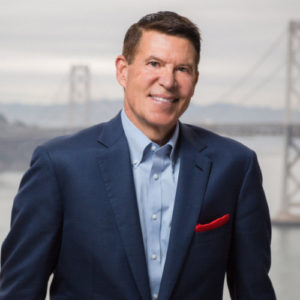
Ariba was the first B2B internet company in history. In this interview, we go back through one of the iconic ventures that shaped Silicon Valley, paving the way for much that came later.
Sramana Mitra: Let’s start at the very beginning of your journey. Where are you from? Where were you born, raised, and in what kind of circumstances?
Keith Krach: I was raised in a small town in Ohio right outside of Cleveland. My father had a five-person machine shop in the good times. It was just me and him in the tough times. >>>
Concept Financing for a Fat Startup: Tomer Shiran, CEO of Dremio (Part 2)
Tomer Shiran: Somewhere in the company, we have some data about our customers and business, but we don’t have that ability to ask questions and get an answer because the data is in so many places and it’s in various different structures. It really requires a lot of engineering effort to do anything with it.
The user that has the need to answer this question don’t have the necessary skills or the access to be able to do that. That was the premise. It was to see if we could solve that problem. It’s not, by any means, a new problem but one that companies have struggled with for a very long time. We thought that that provided an opportunity to do something very different from anything that had been done before in the world of analytics. >>>
