
categories
HOT TOPICS
- The Accelerator Conundrum
- The Startup Velocity Question
- Platform as a Service
- Man and Superman
- Web 3.0 = (4C + P + VS)
- The Future: End of Capitalism
- Capitalism 2.0

ej_temp
A Fat Startup from Virginia: Andrew Rose, CEO of Compare.com (Part 5)
Sramana Mitra: Your first round of funding was from foreign investors for $100 million?
Andrew Rose: That is correct.
Sramana Mitra: Who were these investors? >>>
A Fat Startup from Virginia: Andrew Rose, CEO of Compare.com (Part 4)
Sramana Mitra: In what capacity did you start that company? Were you just a regular entrepreneur or were you doing this in an intrapreneurship mode?
Andrew Rose: It’s a bit of both. The UK office provided the capital. I was employee one and I hired up to hundreds from that point. It is intrapreneurship, but it felt much more like entrepreneurship. You didn’t have a safety net underneath you with a corporate structure around you. You have to do everything. >>>
A Fat Startup from Virginia: Andrew Rose, CEO of Compare.com (Part 3)
Sramana Mitra: We run a lot of intra-preneurship programs. Oracle’s intrapreneurship program is on 1Mby1M. We are very familiar with all that.
Andrew Rose: You know it even better than most. It creates its own opportunities and its own challenges. You’re not necessarily going out and raising money, but you still have all the other corporate dynamics to deal with. I got to learn all kinds of ways that I wouldn’t do things. I certainly learned some ways that I would do things. >>>
A Fat Startup from Virginia: Andrew Rose, CEO of Compare.com (Part 2)
Sramana Mitra: What kind of job did you get in Richmond?
Andrew Rose: That was my big break from chemical engineering. I had ended up getting a Master’s in Project Management from George Washington while I was with Shell. I started my MBA down there as well. I knew where I wanted to go. The move to Richmond gave me the opportunity to leverage the Master’s rather than the undergraduate degree. So I locked into a job with Capital One. >>>
A Fat Startup from Virginia: Andrew Rose, CEO of Compare.com (Part 1)
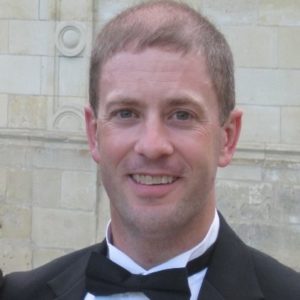
Andrew has raised $185 million for his insurance comparison shopping business. Read on to see how.
Sramana Mitra: Let’s start at the very beginning of your journey. Where are you from? Where were you born and raised? What kind of background?
Andrew Rose: I’m from the mountains of West Virginia. I grew up in a town that is rather famously called the Greenbrier. There’s an incredible resort facility there. I grew up on the wrong side of the fence. I didn’t grow up in the Greenbrier side of the fence, but my mother was an elementary school teacher there. It was a wonderful place to grow up and that’s where I have my foundations. >>>
From Zero to a Market Cap Bigger than General Motors: Keith Krach, Founder of Ariba (Part 7)
Keith Krach: We followed the same path. At Ariba, we focused initially on the buyers. At DocuSign, we focused on the businesses or the consumers. On the DocuSign Global Trust Network, about 400 million consumers are putting on two million documents a day and well in excess of 430,000 companies have standardized. We ran the same play.
We wanted to be in stealth mode longer in terms of being a private company. We raised a lot more money. We ended up getting equity investments from the most powerful tech companies in the world – SAP, Microsoft, Google, Salesforce, Intel, Dell, Telstra, and even FedEx. We created that ecosystem of partners. >>>
From Zero to a Market Cap Bigger than General Motors: Keith Krach, Founder of Ariba (Part 6)
Sramana Mitra: You left in 2003. Did you hand the reins over to somebody else?
Keith Krach: Yes.
Sramana Mitra: That was not the point when SAP acquired Ariba right?
Keith Krach: Yes, 15 years ago.
Sramana Mitra: Why did you let go of the CEO job? >>>
From Zero to a Market Cap Bigger than General Motors: Keith Krach, Founder of Ariba (Part 5)
Sramana Mitra: You were basically selling license software at this point right?
Keith Krach: Yes, we were selling license software. We said, “If we’re ever going to do this again, we’re going to pull as much expense as we can and push as much revenue out as we can. When it came to recognized revenue, I said, “How conservative can we be?” What we did was we recognized that revenue over a two and a half year period. We were booking these deals and getting cash. From a cash flow standpoint, we were cash flow positive from our second quarter of existence.
Sramana Mitra: How much money did you raise from Benchmark? >>>
