
categories
HOT TOPICS
- The Accelerator Conundrum
- The Startup Velocity Question
- Man and Superman
- Web 3.0 = (4C + P + VS)
- The Future: End of Capitalism
- Capitalism 2.0

Cloud Computing
Featured Videos
Thought Leaders in Healthcare IT: ClearDATA CEO Darin Brannan (Part 3)
Sramana Mitra: I have one observation. In everything that I’ve heard so far, it seems to me that this is a cloud computing story. It’s a cloud computing service that you’re applying to the healthcare industry. I haven’t heard anything that is particularly specific to healthcare.
Darin Brannan: The regulatory requirements for healthcare are non-trivial in the US. There’re state-level requirements and national requirements. There are over 300 different checkpoint items you have to clear to ensure that you are compliant. The way in which you interpret the regulations and apply people, process, and technology is an important semantic issue around any technology entering healthcare. >>>
Thought Leaders in Healthcare IT: ClearDATA CEO Darin Brannan (Part 2)
Darin Brannan: We find providers struggling with adding external web applications to their internal application data environment. They realize that they don’t have the security and compliance and are looking for a way to partner with someone like ClearDATA.
We’ve built as many as 42 different websites for a single hospital system on our cloud-based environment. That’s a great example of some of the challenges that you see across the provider system. >>>
Thought Leaders in Healthcare IT: ClearDATA CEO Darin Brannan (Part 1)
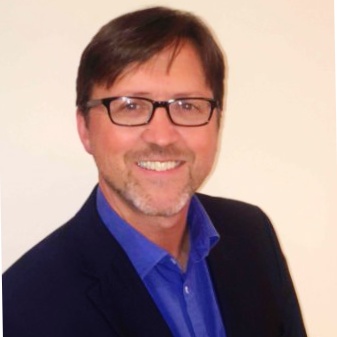
The infrastructure requirements of healthcare IT are particular. Darin discusses the issues.
Sramana Mitra: Let’s start by introducing our audience to ClearDATA as well as yourself.
Darin Brannan: I’m the Co-Founder and CEO of ClearDATA headquartered out of Austin, Texas. I’ve been in the tech business for about 25 years, mostly out of the Bay Area. For the past six years, I’ve been directly and almost exclusively focused on the healthcare IT market. Much of my family is in healthcare as physicians or practitioners. I’ve been around healthcare for a long time. ClearDATA’s >>>
Thought Leaders in Cloud Computing: Rob Bonavito, CEO of Jaggaer (Part 5)
Sramana Mitra: It could very well be that there are opportunities of doing new companies in different verticals in the mid market to achieve similar kinds of integration.
Rob Bonavito: That’s true. Integration is still a challenge. I’d consider it as a roadblock. You look at disparate systems and their ability to communicate is still a challenge. Everyday it’s getting better. If you’re looking at an area to focus in, >>>
Thought Leaders in Cloud Computing: Rob Bonavito, CEO of Jaggaer (Part 4)
Sramana Mitra: Why is the rate of adoption not faster? Why is it that just that 200 corporations are the only ones adopting this?
Rob Bonavito: It’s a newer approach to sourcing. It gives you a lot more capability. The larger corporations are starting to look at it more. Like anything else, it starts to trickle down. We’re starting to see more interest from smaller-sized companies. >>>
Thought Leaders in Cloud Computing: Rob Bonavito, CEO of Jaggaer (Part 3)
Sramana Mitra: What are the nuances of that? How do you accomplish that objective?
Rob Bonavito: It’s a special algorithm that looks at multi-stage optimization. It you think in terms of someone that’s making a cake, you could potentially buy a cake pre-made. You could have several options in terms of ingredient providers and also service providers that would play into the whole supply chain. To be able to determine which route or supplier would provide the most cost effective solution, it takes a series of analysis that goes through an optimization algorithm. >>>
Thought Leaders in Cloud Computing: Rob Bonavito, CEO of Jaggaer (Part 2)
Rob Bonavito: We just completed a census about a month ago. We sent it out to about a thousand customers. We had over 500 responses. Overwhelmingly, they indicated that they were looking at more of focus around procurement and the ability to interface with the rest of the organization and pull that supply chain in even closer. What people don’t realize is when you look at the cost of product that a company >>>
Thought Leaders in Cloud Computing: Rob Bonavito, CEO of Jaggaer (Part 1)
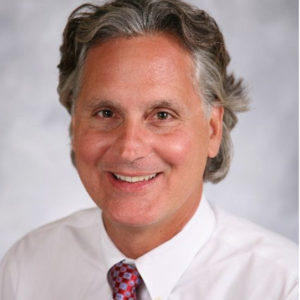
Supply Chains are becoming deeply integrated, cloud-based phenomena. We introduced you to some exciting trends in the Inspyrus story earlier. This discussion further explores this topic, as well as the opportunities for entrepreneurs.
Sramana Mitra: Let’s start by introducing our audience to Jaggaer and also some background about yourself.
Rob Bonavito: I’m the CEO of Jaggaer. Jaggaer is a 22-year-old company. It provides a comprehensive and complete spend solution suite across the commercial, higher ed, and life sciences industry. I recently joined the company six months ago. Let me >>>
