
categories
HOT TOPICS
- The Accelerator Conundrum
- The Startup Velocity Question
- Man and Superman
- Web 3.0 = (4C + P + VS)
- The Future: End of Capitalism
- Capitalism 2.0

Cloud Computing
Featured Videos
Thought Leaders in Cloud Computing: Evident.io CEO Tim Prendergast (Part 3)
Sramana Mitra: What kinds of customers are particularly resonating with your value proposition?
Tim Prendergast: The unique thing about us is, coming from being practitioners first, we are able to understand the problems that anyone going to use the cloud is going to have. In fact, the beauty of a standardized API platform like an Amazon or Azure is that whether you’re a two-person startup or you’re a company with 20,000 engineers, >>>
Thought Leaders in Cloud Computing: Evident.io CEO Tim Prendergast (Part 2)
Sramana Mitra: Let’s click down into the process and talk about what it is that you’re doing for these customers.
Tim Prendergast: If you think about what cloud really is, cloud is programmatically defined infrastructure and services. Instead of people having to sit and click buttons and work through UIs of products, >>>
Thought Leaders in Cloud Computing: Evident.io CEO Tim Prendergast (Part 1)

Tim discusses cloud security challenges in this short conversation.
Sramana Mitra: Let’s start by introducing our audience to yourself as well as Evident.io.
Tim Prendergast: I’m a long-time information security practitioner and one of the early cloud computing adopters. My history goes way back to the early days of PGP encryption and more recently before I started Evident.io, I was one of the principal architects of Adobe.
My focus was on the cloud computing side of the house and transforming that company from someone who had user experiences >>>
Thought Leaders in Financial Technology: Currencycloud CEO Mike Laven (Part 3)
Sramana Mitra: Very good. In your space, what are the trends and what are some open problems that you would point new entrepreneurs to look into?
Mike Laven: If you send a million dollars from San Francisco to New York, it’s a far simpler exercise than sending a thousand dollars from San Francisco to France. The world of moving money around the world is massively compliance and regulation intensive. There are rules about the kinds of information we have to collect about who’s sending the money and who’s receiving the funds and report it to authorities. >>>
Thought Leaders in Financial Technology: Currencycloud CEO Mike Laven (Part 2)
Mike Laven: We effectively provide our customers a one-stop connection to a global banking world. It’s very difficult to find a single bank that optimizes everything for you. Different banks and different payment providers have different strengths. Some are good in Asia. Some are good in Latin America.
Different currency providers have different strengths based on the volume of what they do. Effectively, you connect to us and we handle all of that for you. From the perspective of your business, you’re making your international payments at roughly the same level of difficulty as your domestic payments. >>>
Thought Leaders in Financial Technology: Currencycloud CEO Mike Laven (Part 1)
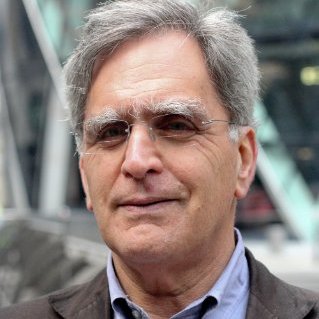
This interview discusses opportunities surrounding the emerging trends in RegTech.
Sramana Mitra: Let’s start by introducing our audience to yourself as well as to Currencycloud.
Mike Laven: I’m the CEO of Currencycloud, which is based in London. For quite some time, I’ve lived and worked back and forth between the Valley and London in the field of financial technology. Currencycloud was started five years ago in 2012. The initial vision was that businesses paid much too much for international payments. There are very good companies in the consumer space on international payments. >>>
Thought Leaders in Financial Technology: Tracy Metzger, COO of Vesta (Part 4)
Tracy Metzger: There is a need today to go out and find a consolidated way to leverage all of these different great technologies that are bespoke in their way of implementation. There is a need to find a way through a single point of interface, to leverage all of these great solutions, and make it easy for a merchant to adopt this technology without having to adopt this technology and without having to manage a myriad of different business relationships. It becomes difficult from an integration standpoint, on an ongoing change management standpoint. >>>
Thought Leaders in Financial Technology: Tracy Metzger, COO of Vesta (Part 3)
Tracy Metzger: Vesta processes anywhere from 300,000 to 500,000 transactions a day and up towards $18 billion in payments a year. We carry elements like their mobile devices and desktop devices. We know the operating systems, screen dimensions, their page viewing history on certain e-commerce websites, and their social reputation information where it’s applicable. There are so many different elements that we use to make a risk screen decision in a split second. If you think about it, Vesta started off focusing on prepaid cellular business 22 years ago. >>>
