
categories
HOT TOPICS
- The Accelerator Conundrum
- The Startup Velocity Question
- Platform as a Service
- Man and Superman
- Web 3.0 = (4C + P + VS)
- The Future: End of Capitalism
- Capitalism 2.0

Bootstrapping
Best of Bootstrapping: Bootstrapped from Belarus, Raised Money from Silicon Valley
If you haven’t already, please study our Bootstrapping Course and Investor Introductions page.
As you know, I love stories of entrepreneurs in different parts of the world finding success through grit and creativity. PandaDoc CEO Mikita Mikado’s story gives us an insight into what’s happening in Belarus, and how he has navigated his way to Silicon Valley. Based on this conversation from 2017, our Bootstrap First, Raise Money Later mantra holds!
Sramana Mitra: Let’s start at the very beginning of your personal journey. Where are you from? Where were you born, raised, and in what kind of background?
Mikita Mikado: I’m from Belarus, which is a small, former Soviet Union state on the western border of Russia. I was born in 1986. That’s about the time when things went down. My journey began there. I went to a normal Belarusian school. I was a typical Belarusian kid at that time.
Bootstrap First, Raise Money Later from Oregon: Paresh Patel, CEO of PayRange (Part 3)
Sramana Mitra: I’ve experienced the use case that you described. The gas station around the corner from me doesn’t have any digital payment option.
Paresh Patel: That was the problem. The machine only took cash.
Sramana Mitra: Do the gas station people attend these kinds of trade shows?‘
>>>Bootstrap First, Raise Money Later from Oregon: Paresh Patel, CEO of PayRange (Part 2)
Sramana Mitra: What is your Ph.D. in?
Paresh Patel: It’s also in e-business and organization management.
Sramana Mitra: The vending machine company was yourself?
Paresh Patel: There were employees. We grew to about 25 employees.
>>>Bootstrap First, Raise Money Later from Oregon: Paresh Patel, CEO of PayRange (Part 1)
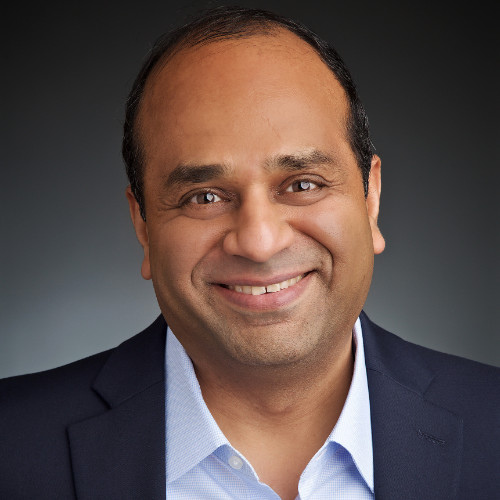
Paresh did a superb job of validating in a bootstrapped mode and then raising significant venture capital. However, he made some mistakes after the fund raise. Eventually, he course-corrected and has built a wonderful business without further infusion of capital. Excellent case study!
Sramana Mitra: Let’s start at the very beginning of your journey. Where are you from? Where were you born, raised, and in what kind of background?‘
>>>Bootstrapping by Piggybacking: Evenica CEO Sadek Ali (Part 6)
Sramana Mitra: If you tried to go into the Shopify marketplace with another e-commerce platform, that wouldn’t work. That was not an option. You were trying to build your own e-commerce platform.
Sadek Ali: Shopify is a long-tail play.
Sramana Mitra: Shopify, on many levels, is not the right marketplace for you.
Sadek Ali: Shopify and Shopify Plus are great products, but they’re not the best products for the mid-market.
>>>Bootstrapping by Piggybacking: Evenica CEO Sadek Ali (Part 5)
Sramana Mitra: You had a diverse set of e-commerce platforms that were in that portfolio.
Sadek Ali: That’s correct. We didn’t really know what the platform was. I picked up technologies my entire life. If you understand how e-commerce works, then you know the operational side of it that they’re looking for. We did that and we said, “Let’s make sure our contracts are easy. Let’s make sure we have happy customers and let’s make sure we have a happy culture in this little group of three.”
They liked our hands-on approach and they liked being able to have an open and honest conversation about e-commerce. We got our three customers monetized right away. For two customers, it took us two years. We still had the contract for them, but they wouldn’t pay us a penny. We had to be persistent because we wanted that conversation with them.
>>>Roundtable Recap: January 6 – Bootstrapping to Exit and Bootstrapping Products Using Services
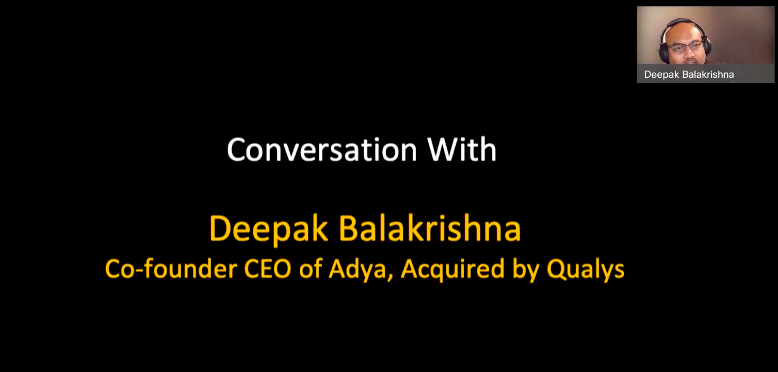
During this week’s roundtable, we had as our guest Deepak Balakrishna, Co-founder CEO of Adya, which was acquired by Qualys. Deepak was in the 1Mby1M program, and I had introduced him to Qualys. We reviewed his lessons from the trenches, steering a Bootstrapping to Exit transaction.
CMD
As for entrepreneur pitch, we had Bijay Mitra and his team from Bhubaneswar, India, pitch CMD, a services company that aims to transform into a product business.
You can listen to the recording of this roundtable here:
Bootstrapping by Piggybacking: Evenica CEO Sadek Ali (Part 4)
Sramana Mitra: They replaced you as the CEO.
Sadek Ali: They tried to. I was the Founder and CTO. My business partner was the CEO. They hired a CEO.
Sramana Mitra: The business got replaced by their CEO.
Sadek Ali: Yes.
Sramana Mitra: That didn’t go well.
>>>