
categories
HOT TOPICS
- The Accelerator Conundrum
- The Startup Velocity Question
- Platform as a Service
- Man and Superman
- Web 3.0 = (4C + P + VS)
- The Future: End of Capitalism
- Capitalism 2.0

Bootstrapping
Building a FinTech Company in Brazil: Sergio Furio, CEO of BankFacil (Part 1)
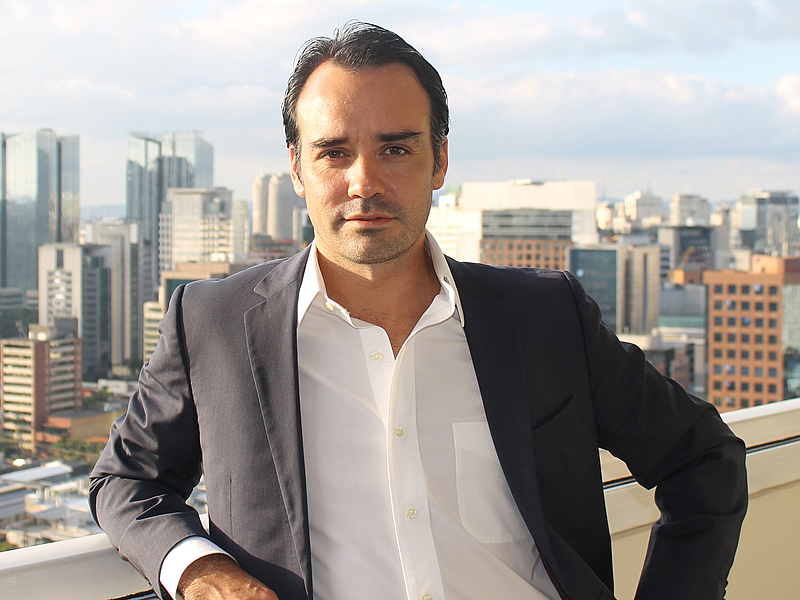
Companies are starting to scale in Latin America. In this story, we bring you a FinTech company’s journey from its bootstrapped beginnings to validation, venture financing, and scaling.
Sramana Mitra: Let’s start at the very beginning of your story. Where are you from? Where were you born, raised, and in what kind of background?
Sergio Furio: I’m Spanish. I graduated in 2000 in Business Administration. I spent five years in Deutsche Bank doing investment banking.
Sramana Mitra: In Spain? >>>
How Do You Improve the Odds of Getting Your Startup Funded?
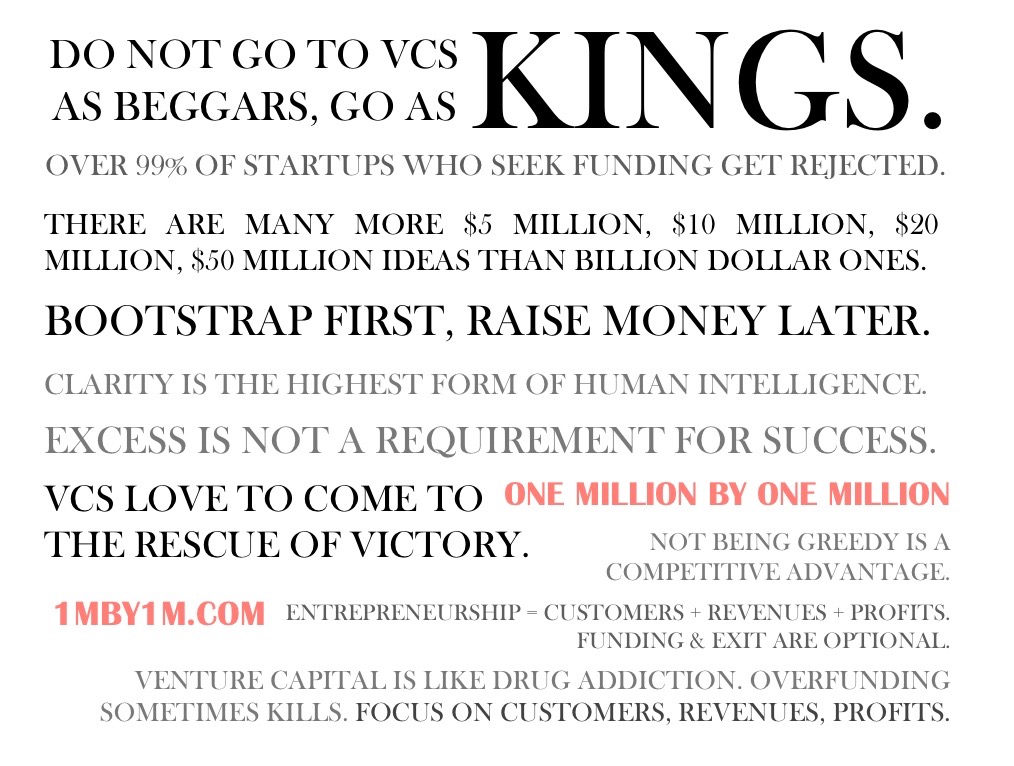
We’ve talked extensively about the alarmingly low probability of getting a startup funded in this video:
We’ve also said that you CAN dramatically increase your odds if you Bootstrap First, Raise Money Later.
Now, watch this 1 minute 41 sec video to learn more about how to improve the odds of getting your startup funded.
Bootstrapping Using Services from Russia: Ruslan Fazlyev, CEO of Ecwid (Part 6)
Sramana Mitra: What did you price the Ecwid product at?
Ruslan Fazlyev: The model back then was one free plan and one paid plan at $70. The pricing model is a bit different now.
Sramana Mitra: $70 a month?
Ruslan Fazlyev: Yes, it’s different now. Now we have premium offerings. There are paid plans at $15, $35, and $99 a month. We also monetize it through Ecwid payments. If you have Ecwid stores, we also enable our customers now with bundled payments. >>>
Bootstrapping Using Services from Russia: Ruslan Fazlyev, CEO of Ecwid (Part 5)
Sramana Mitra: You wanted to set the company for exit.
Ruslan Fazlyev: Yes.
Sramana Mitra: Where did you go to look for financing?
Ruslan Fazlyev: I never really looked proactively for financing. The way it worked is, Ecwid was named as the hottest technology company in Russia after winning this competition by Google and Forbes in 2010. I had a lot of inbound interest. I just reacted on that inbound interest. >>>
Bootstrapping Using Services from Russia: Ruslan Fazlyev, CEO of Ecwid (Part 4)
Sramana Mitra: Not only did you have the platform but you were also offering the integrated consulting services to implement it.
Ruslan Fazlyev: Yes, that was the X-Cart approach but it was not good enough for some customers. Some customers asked, “Is there any way to integrate my store into my site without ever having to hire designers or pay any consulting services?” The answer back then was no. Even though there were some cloud platforms that enabled you to avoid all of the software hassle, but the problem was this store would have a look that was different from the rest of your website.
You would have to hire someone to customize the look of that, which is harder in cloud than with downloadable software. There was no solution for that. We >>>
Bootstrapping Using Services: Sylvana Caridi Coche, CEO of Gravity Pro (Part 4)
Sramana Mitra: What is the business now? Do you sell mostly licenses?
Sylvana Caridi Coche: I switched from 80% services and 20% license to 80% license and 20% services. The goal next year is to do more and more services.
Sramana Mitra: How many people do you have now?
Sylvana Caridi Coche: I have three employees.
Sramana Mitra: This license-selling is something that you can do with very few employees. How profitable is the business? >>>
Bootstrapping Using Services from Russia: Ruslan Fazlyev, CEO of Ecwid (Part 3)
Sramana Mitra: Do you remember the denomination of the customer? How much did the customer pay?
Ruslan Fazlyev: I think it was $100 a license. I did my math quickly. Five cents investment for $100.
Sramana Mitra: Amazing.
Ruslan Fazlyev: My second 5-cent spend was disappointing because there was no customer, but my third spend brought another one. It was 15 cents to get two customers. The next year, we went up to 20 employees. The year after, it was 50. Apparently, I was not the only guy in my city who wanted to build >>>
Bootstrapping Using Services: Sylvana Caridi Coche, CEO of Gravity Pro (Part 3)
Sramana Mitra: In the first year of business, how much did you do revenue-wise?
Sylvana Caridi Coche: I did $7.5 million in revenue.
Sramana Mitra: That’s incredible.
Sylvana Caridi Coche: Yes, that was very unique.
Sramana Mitra: That was with 20 people. >>>
