
categories
HOT TOPICS
- The Accelerator Conundrum
- The Startup Velocity Question
- Man and Superman
- Web 3.0 = (4C + P + VS)
- The Future: End of Capitalism
- Capitalism 2.0

Thursday, November 17 – 596th 1Mby1M Mentoring Roundtable for Entrepreneurs

Entrepreneurs are invited to the 596th FREE online 1Mby1M Mentoring Roundtable on Thursday, November 17, 2022, at 8 a.m. PST/11 a.m. EST/5 p.m. CET/9:30 p.m. India IST.
If you are a serious entrepreneur, register to “pitch” and sell your business idea. You’ll receive straightforward feedback, advice on next steps, and answers to any of your questions. Others can register to “attend” to watch, learn, and interact through the online chat.
You can learn more here and REGISTER TO PITCH OR ATTEND HERE. Register and you will receive the recording by email, even if you are unable to attend. Please share with any entrepreneurs in your circle who may be interested. All are welcome!
Featured Videos
Best of Bootstrapping: Following the Bootstrap First, Raise Money Later Strategy
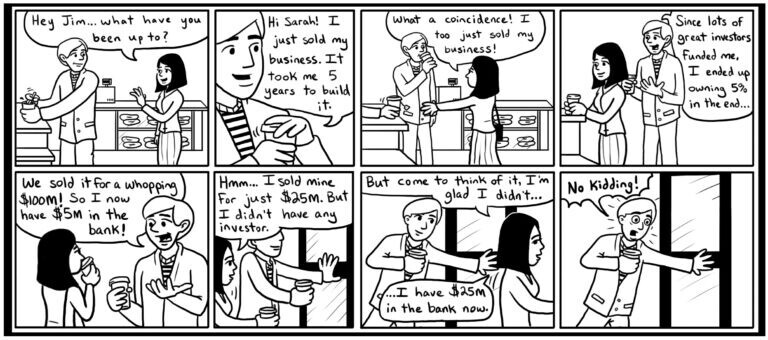
If you haven’t already, please study our Bootstrapping Course and Investor Introductions page.
“My journey was as unexceptional as you can imagine,” says Rukkus Founder CEO Manick Bhan, in describing how he got to $1 million annual revenue rate in transactions before raising financing. He shared the whole story with me in 2021. Rukkus was acquired in 2018.
Sramana Mitra: Let’s start by going back to your very beginnings. I want to hear about where you were born, raised, and in what kind of background.
Manick Bhan: Both my parents come from Kashmir. They raised me in Baltimore, Maryland. That’s where I was born. I’ve grown up mostly in the United States. In the very early days, I liked to take things apart. When I was nine, they bought me this bicycle. The first thing I did was I opened the whole thing up. I took out all the screws and basically dismantled the beautiful bike. They were a little horrified about it because it was a birthday present. This has been pretty constant in my life. I like to take things apart and figure out how they work.
Thought Leaders in Financial Technology: Diversyfund CEO Craig Cecilio (Part 4)
Craig Cecilio: There are little things out there that are meant to protect people, but we’ve to figure out a way to be able to push that out there so people understand what they’re doing. It’s hard for us to tell people exactly, “Don’t invest here. That’s too much money.” That has to be in place.
People need to be educated. That’s the whole thing with crypto. Everyone wants to put money in thinking they can be a millionaire overnight. It’s really the educational component.
>>>Video FAQs
Can 1M/1M Help Me Raise Money?
How Does 1M/1M Democratize Entrepreneurship Education?
How Does 1M/1M Democratize Management Consulting?
When Is The Right Time To Join 1M/1M?
Can 1M/1M Help Me With Business Development?
Can 1M/1M Help Me With Market Sizing?
Can 1M/1M Help Me Validate My Product?
Will I Have Private 1-on-1 Sessions In 1M/1M?
How Does 1M/1M Help Entrepreneurs Connect With Silicon Valley?
Mentoring or Consulting?
Why Does 1M/1M Charge $1000 a Year?
Why Does 1M/1M Partner With Local Organizations?
Why Don\’t Mentoring Networks Work?
Why Is It Important To Study With 1M/1M Now?
Dan Stewart Story
Vikrant Mathur Story
Catching Up On Readings: Web3 Market Landscape
This feature from CB Insights covers in detail the market landscape of Web3 tech companies – how it works and what it could mean for consumers and creators. For this week’s posts, click on the paragraph links.
>>>Thought Leaders in Financial Technology: Diversyfund CEO Craig Cecilio (Part 3)
Sramana Mitra: As they’re getting educated, are they also getting investment recommendations that they can go and click on and sign up for?
Craig Cecilio: No investment advice. It’s a compliance thing. We can’t give investment advice. That’s another challenge. What can we say and what can’t we say from a compliance point of view? There has been a lot of oversight in the last year or two. As we move from this great bull run over the last 10-plus years to this bear market, the pendulum swings in oversight.
>>>Thought Leaders in Financial Technology: Diversyfund CEO Craig Cecilio (Part 2)
Sramana Mitra: Is there a level of financial wealth at which you are finding people? Are these people beginning to build wealth?
Craig Cecilio: That’s a great question. We’re talking about this. We overlapped the statistics on the population and how many are accredited and considered sophisticated. We dove into our community and saw what that is. It was almost identical. There are about 10% to 12% considered accredited. We overlap that with our percentage and it matches. I found that fascinating.
>>>From Developer to Entrepreneur with $20M in Bootstrapped Revenue: Julien Salinas, CEO of NLP Cloud (Part 3)
Sramana Mitra: What percentage of the customers are in the $10,000 range?
Julien Salinas: Among our paid customers, it’s 10%. Maybe a bit less.
Sramana Mitra: How much of this is what you call major account customers?
Julien Salinas: I don’t have the exact number today, but I think it’s something like 150 to 200 like SAP and Lufthansa.
Sramana Mitra: All the lead generation seems to be happening on your blog.
>>>November 17 – 596th 1Mby1M Mentoring Roundtable for Entrepreneurs
Entrepreneurs are invited to the 596th FREE online 1Mby1M Mentoring Roundtable on Thursday, November 17, 2022, at 8 a.m. PST/11 a.m. EST/5 p.m. CET/9:30 p.m. India IST.
If you are a serious entrepreneur, register to “pitch” and sell your business idea. You’ll receive straightforward feedback, advice on next steps, and answers to any of your questions. Others can register to “attend” to watch, learn, and interact through the online chat.
You can learn more here and REGISTER TO PITCH OR ATTEND HERE. Register and you will receive the recording by email, even if you are unable to attend. Please share with any entrepreneurs in your circle who may be interested. All are welcome!
