
categories
HOT TOPICS
- The Accelerator Conundrum
- The Startup Velocity Question
- Man and Superman
- Web 3.0 = (4C + P + VS)
- The Future: End of Capitalism
- Capitalism 2.0

Bootstrapping an AI Chatbot Startup with a Paycheck: Ankush Sabharwal, CEO of CoRover (Part 6)
Sramana Mitra: Your friend gave you some money and gave the money back. What other financing has happened?
Ankush Sabharwal: My two friends who joined as co-founders gave me money. We took angel funding just before IRCTC went live. Then we got funds from Canbank VC. Now we will be announcing a fund raise.
Sramana Mitra: What is the total amount of funding so far?
>>>Featured Videos
Catching Up On Readings: Startups Failure Post-Mortem
This feature from CBInsights provides a compilation of the analysis of 463 startup failures since 2014. Funding, the lifeblood of startups, has dropped 34% from 2021 to 2022. Halfway through 2023, funding only sat at $130.2B, less than a third of 2022’s year-end total. For this week’s posts, click on the paragraph links.
>>>Bootstrapping an AI Chatbot Startup with a Paycheck: Ankush Sabharwal, CEO of CoRover (Part 5)
Sramana Mitra: How much money did you make this way – from advertising?
Ankush Sabharwal: It’s more money than we would have made through subscription.
Sramana Mitra: Really?
Ankush Sabharwal: There are four million users on the website and more in the app every day.
Sramana Mitra: Traffic volume was very large. You just created a way to monetize that traffic for both of you.
>>>Video FAQs
Can 1M/1M Help Me Raise Money?
How Does 1M/1M Democratize Entrepreneurship Education?
How Does 1M/1M Democratize Management Consulting?
When Is The Right Time To Join 1M/1M?
Can 1M/1M Help Me With Business Development?
Can 1M/1M Help Me With Market Sizing?
Can 1M/1M Help Me Validate My Product?
Will I Have Private 1-on-1 Sessions In 1M/1M?
How Does 1M/1M Help Entrepreneurs Connect With Silicon Valley?
Mentoring or Consulting?
Why Does 1M/1M Charge $1000 a Year?
Why Does 1M/1M Partner With Local Organizations?
Why Don\’t Mentoring Networks Work?
Why Is It Important To Study With 1M/1M Now?
Dan Stewart Story
Vikrant Mathur Story
Roundtable Recap: August 31 – Many Common Mistakes CAN Be Avoided with Good Strategy
During this week’s roundtable, we discussed a lot of issues around Positioning, Unit Economics, Business Models and TAM.
Designs Crunch
First up, we had Ali Rehman Khan from Peshawar, Pakistan, pitching Designs Crunch, a design service.
Skori
Then Charles Davey from England pitched Skori, an EdTech concept.
Laika
Next, Charlene Putney from Copenhagen, Denmark, pitch Laika, a Generative AI writing assistant for fiction writers.
You can listen to the recording of this roundtable here:

Bootstrapping an AI Chatbot Startup with a Paycheck: Ankush Sabharwal, CEO of CoRover (Part 4)
Sramana Mitra: You were working at Ultisource when you negotiated with Indian Railways?
Ankush Sabharwal: Yes. In the appraisal cycle when I was about to quit the company, I got the highest rating. I was Group Manager that time. When you’re the manager’s manager, you hardly get the highest rating in appraisals.
>>>September Udemy Coupons for Tech Startup Courses

Our time-tested 1Mby1M methodology for building technology startups has been packaged into short courses on Udemy as a part of our aim to democratize entrepreneurship education at scale globally.
We are offering you up to 85% off of the following Udemy courses this month, spotlighting our most informative and inspirational case studies of noteworthy technology startups.
These coupons will expire on September 30, 2023, so be sure to enroll today!
Bootstrapping:
Bootstrap First, Raise Money Later with Sramana Mitra: TRY1MBY1MSEP2023BTS
Bootstrapping an AI Chatbot Startup with a Paycheck: Ankush Sabharwal, CEO of CoRover (Part 3)
Sramana Mitra: Going back to 2016, there were these platform providers but there were also these other startups that had full applications. Where was the gap? What is the justification of starting CoRover at that point?
Ankush Sabharwal: There were two sets of companies. One was the platform companies and the other is the implementation companies.
>>>Best of Bootstrapping: Bootstrapped Employee Engagement Platform from Guwahati, India
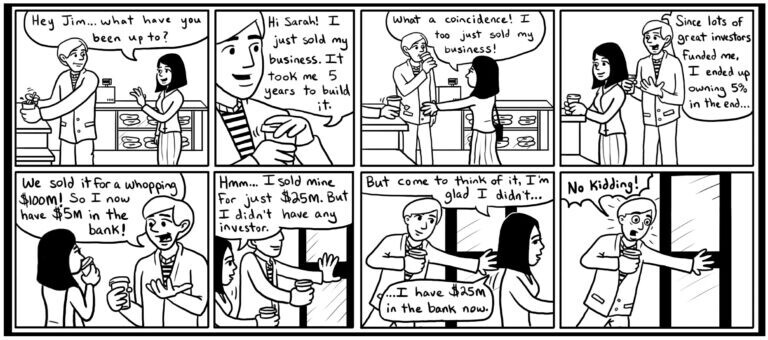
If you haven’t already, please study our free Bootstrapping course and the Investor Introductions page.
I am always thrilled to do stories of pioneering entrepreneurs building technology startups in remote locations. Anjan Pathak, Co-founder and CTO of Vantage Circle, brings us into the nascent scene in Guwahati, in the northeast Indian state of Assam.
Sramana Mitra: Let’s go back to the beginning of your journey. Where are you from? Where were you born and raised? What kind of background did you have?
Anjan Pathak: I was born in a small town in North East India. It’s about 50 kilometers from Guwahati. I spent my childhood there. I studied in a very small school.
