
categories
HOT TOPICS
- The Accelerator Conundrum
- The Startup Velocity Question
- Man and Superman
- Web 3.0 = (4C + P + VS)
- The Future: End of Capitalism
- Capitalism 2.0

Opinions
The Startup Velocity Question: What Hinders Acceleration in VC Funded Companies?
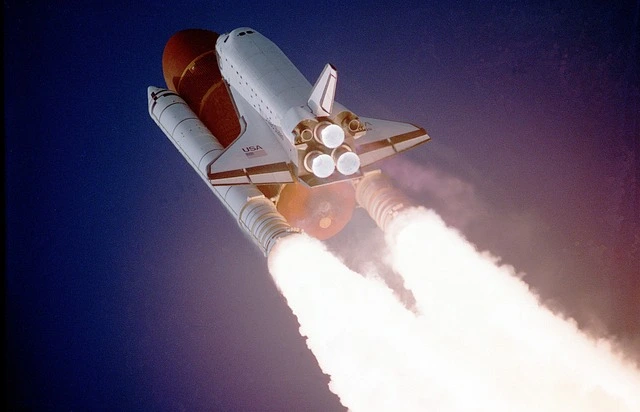
I have been running 1Mby1M since 2010. I find myself saying to entrepreneurs ad nauseam that VCs want to invest in startups that can go from zero to $100 million in revenue in 5 to 7 years.
Startups that do not have what it takes to achieve velocity should not be venture funded.
Experienced VCs, over time, have developed heuristics to gauge what constitutes a high growth venture investment thesis.
>>>#MeToo: I Come From a LONG Heritage of Chauvinism

Today, the #MeToo thread has started to spread all over social media. I want to point you to an article I wrote for women entrepreneurs on how to deal with sexual advances from VCs some time back.
As an attractive woman in the male dominated technology industry, I have dealt with my share of sexual advances. I have never named names in public. I am still not naming names or recounting anecdotes.
Featured Videos
Can 1M/1M Help Me Raise Money?
How Does 1M/1M Democratize Entrepreneurship Education?
How Does 1M/1M Democratize Management Consulting?
When Is The Right Time To Join 1M/1M?
Can 1M/1M Help Me With Business Development?
Can 1M/1M Help Me With Market Sizing?
Can 1M/1M Help Me Validate My Product?
Will I Have Private 1-on-1 Sessions In 1M/1M?
How Does 1M/1M Help Entrepreneurs Connect With Silicon Valley?
Mentoring or Consulting?
Why Does 1M/1M Charge $1000 a Year?
Why Does 1M/1M Partner With Local Organizations?
Why Don\’t Mentoring Networks Work?
Why Is It Important To Study With 1M/1M Now?
Dan Stewart Story
Vikrant Mathur Story
India Currents Names Sramana Mitra the Top Indian Digital Influencer
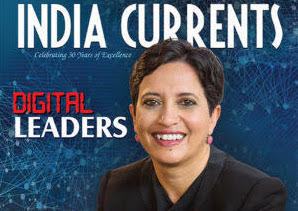
India Currents Magazine has a cover story on Indian digital influencers in its September issue. Sramana Mitra is their top choice. You can read the story here.
Want to discuss your strategy with Sramana Mitra? Come to a free and online 1Mby1M Mentoring Roundtable. Register here.
10 Entrepreneurs Who Bootstrapped to Millions in Podcasts

If you have been putting off moving forward with your own startup venture due to a lack of financing, please listen to this series of podcast interviews with some successful startup founders who managed to bootstrap their businesses to millions in revenue. Each of these 30-minute podcast interviews tells the inspiring story of how they did it.
Girish Navani, CEO at eClinicalWorks – Bootstrapped a billion dollar Unicorn with a paycheck. Girish didn’t quit his job for two years, while he tested and validated his original product and customer base. He now has built a $300 million revenue company that is still 100% bootstrapped, private, and has no desire to sell out or go for an IPO.
Man and Superman: Dealing with Singularity-Based Technology Acceleration

In the previous four segments of this series, we looked at what a singularity is and as part of evidence for the possibility of a technology singularity, we studied the frequency and impact of five scientific revolutions and cataloged the modern intersubjective realities (ISRs) that have co-evolved with the ever faster scientific revolutions and pushed to see how these have historically interacted and why things may be breaking down today.
In the concluding installment of this essay, we will look at how each of us experiences this personally and how our most important social structures are under duress today in ways that never happened in the past.
How Do You Come Up with an Idea for a Venture of Your Own? Find a Niche.

Looking for an idea for a venture of your own?
Examine your passions.
Watch this inspiring 1 minute 32 seconds video and learn more:

>>>
Man and Superman: Intersubjective Realities

By Guest Author Frank H. Levinson
In the previous three segments of this series, we looked at what a singularity is and as part of evidence for the possibility of a technology singularity, we studied the frequency and impact of five scientific revolutions. Let us now catalog the modern intersubjective realities (ISRs) that have co-evolved with the ever faster scientific revolutions and push to see how these have historically interacted and why things may be breaking down today.
Let’s now list key social structures that humans have evolved over time. Remember that all of these are really just different ISRs; thus, they are things we agree to treat as real. In other words, their reality derives only from our agreement. For instance, a $20 bill has very little intrinsic value, it is our nearly world-wide ISR agreement that gives it value. >>>
Man and Superman: Impact of the Science Revolutions

By Guest Author Frank H. Levinson
In the previous two segments, we looked at what a Singularity was and as part of evidence for the possibility of a technology singularity, we studied the frequency of five scientific revolutions. Let us now analyze the impact of these revolutions.
It is perhaps hard for us to realize that the impact of each of these last five revolutions, measured by their pervasive effects which underpin modern life, is as important as the domestication of agriculture or creation of geometry millennia ago. But the modern ones have a much greater social impact because they arise, become widely available and approach near ubiquitous use in vastly shorter adoption times. >>>
Man and Superman: Modern Science Revolutions

By Guest Author Frank H. Levinson
In the first segment of this series, we saw what a singularity was and were looking at the evidence for the possibility of a technology singularity. So, let’s now fill in the revolutionary landscape (remember that the agricultural revolution which started about 10,000 BCE was the first one!).
The next major scientific revolution was led by Greek science and Roman engineering when systematic structure (e.g., modern mathematics was born) and methodology in terms of engineering occurred. We see this reflected in such diverse fields as geometry, >>>
Want to Start a Venture of Your Own? Find a Niche. Start Solo. Run Lean.

Capital efficient ventures remain the best way to build healthy, robust businesses for a large number of entrepreneurs.
Sure, there are exceptions like Facebook, Google, and Amazon that are built differently.
But those are low probability scenarios. And raising money for fat startups has become very difficult.
Want to start a venture of your own? Find a niche. Start solo. Run lean.
And don’t believe the myth that solo entrepreneurs do not succeed.
Watch this inspiring 1 minute 17 seconds video and learn more:

>>>
Man and Superman: Life Near An Approaching Technology Singularity
By Guest Author Frank H. Levinson
Ray Kurzweil began writing more than 25 years ago about the possibility of a technology singularity occurring sometime in the late 20th century. He defines “Singularity” as “a future period during which the pace of technological change will be so rapid, its impact so deep, that human life will be irreversibly transformed.” >>>
