
categories
HOT TOPICS
- The Accelerator Conundrum
- The Startup Velocity Question
- Man and Superman
- Web 3.0 = (4C + P + VS)
- The Future: End of Capitalism
- Capitalism 2.0

Netherlands Startup Accelerator Ecosystem: An Overview
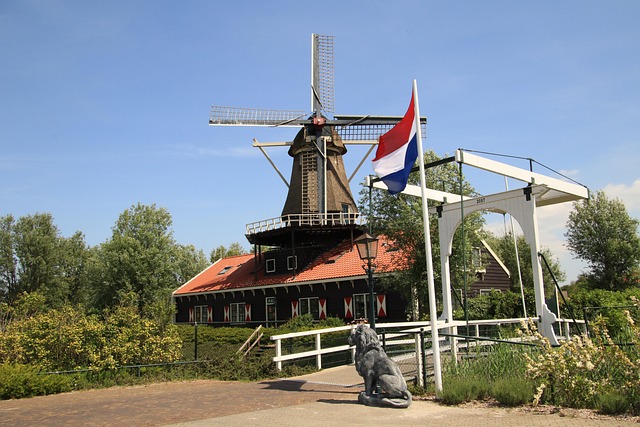
The Netherlands has emerged as one of Europe’s most dynamic startup ecosystems, offering a blend of mature infrastructure, global connectivity, and sector-specific expertise. Key hubs include Amsterdam, Rotterdam, Utrecht, Eindhoven, The Hague, and Groningen, each providing accelerators, incubators, and corporate networks that support IT and IT-enabled service startups. Yet despite this richness, the ecosystem illustrates the accelerator conundrum: founders gain access to resources, mentorship, and visibility, but often face constraints that hinder practical, revenue-first startup growth.
Netherlands Startup Accelerator Ecosystem
Amsterdam is the country’s startup capital, attracting a concentration of accelerators, investors, and international talent. Programs such as StartupAmsterdam, Rockstart, and ACE Venture Lab provide mentorship, networking opportunities, and workspace support. While these programs offer significant advantages, founders encounter high selectivity, equity requirements, and pressure to scale quickly, often before validating their revenue model.
Rotterdam, leveraging its logistics and industrial base, supports IT-enabled enterprise solutions and B2B SaaS startups. Accelerators such as YES!Delft Rotterdam programs and RDM Innovation Hub provide technical and business guidance but remain geographically bound and sector-specific, limiting exposure to global best practices.
Utrecht offers a smaller, yet highly active ecosystem, emphasizing IT service startups and SaaS platforms. Programs like UtrechtInc and Rockstart Digital provide mentorship but often focus on local networks, offering limited scaling guidance and early-stage capital access.
Eindhoven, known for its deep tech capabilities and the High Tech Campus, combines strong research with IT-enabled services innovation. While technical founders benefit from prototyping support and R&D mentorship, accelerators are selective, equity-focused, and often less attuned to practical, revenue-first IT service strategies.
The Hague specializes in government, cybersecurity, and enterprise IT solutions. Accelerators like The Hague Tech provide niche guidance but are selective and location-dependent, constraining founders who aim for broader IT-enabled service markets.
Groningen, an emerging hub, supports IT-enabled digital services and B2B SaaS startups through local incubators and innovation programs. While the ecosystem is tightly knit, it is small, limiting investor access and exposure to diverse mentoring perspectives.
Across all hubs, a consistent pattern emerges: accelerators provide mentorship, visibility, and resources, yet physical presence, equity requirements, and rapid scaling pressures can compromise founders’ ability to validate business models and build sustainable revenue streams. This is the accelerator conundrum, particularly acute for IT and IT-enabled services startups, where capital efficiency, bootstrapping, and customer validation are critical.
The 1Mby1M Approach
1Mby1M addresses these gaps through a virtual, equity-free accelerator and a global mentoring model. Every mentoring session I conduct is treated as a case study, extracting actionable lessons on bootstrapping, revenue-first growth, capital efficiency, and sustainable scaling. Founders learn not only what to do but how to do it — practical guidance they can apply immediately, irrespective of geography.
The 1Mby1M AI Mentor, available in Dutch and English, further amplifies accessibility for founders across the Netherlands. It provides 24/7 interactive guidance, curated recordings of past mentoring sessions, and stage- and sector-specific frameworks for IT-enabled service startups. Even founders in smaller hubs like Groningen can access global insights, practical guidance, and continuous mentorship, overcoming the limitations of traditional, location-bound accelerators.
The Netherlands demonstrates both the strengths and constraints of European accelerators: strong networks, technical expertise, and investor access coexist with selective entry, equity requirements, and pressure to scale. 1Mby1M offers a practical, revenue-first alternative: founders can bootstrap, validate, and scale IT and IT-enabled service startups sustainably, with virtual mentorship and AI-powered support tailored to their stage, sector, and language needs.
Posts in the Series:
Overview | Amsterdam | Rotterdam | Utrecht | Eindhoven | The Hague | Groningen | The Conundrum
Related Reading:
Startup Accelerator ecosystems across Africa | Latin America | Asia | India | Central Asia | Europe | US | Canada | Oceania
West Europe: France | Germany | Belgium | Netherlands | Switzerland
Photo Credit: Marjon Besteman from Pixabay
The Accelerator Conundrum is a multipart series that challenges the prevailing wisdom of the tech startup ecosystem that entrepreneurs should Blitzscale out of the gate. Written by Sramana Mitra, the Founder and CEO of One Million by One Million (1Mby1M), the world’s first global virtual accelerator, it emphatically argues that a better strategy is to Bootstrap First, Raise Money Later, focus on customers, revenues and profits. 1Mby1M’s mission is to help a Million entrepreneurs reach a million dollars in annual revenue and beyond. Sramana’s Digital Mind AI Mentor virtually mentors entrepreneurs around the world in 57 languages. Try it out!
One Million by One Million (1Mby1M) is the first global virtual accelerator in the world, founded in 2010 by Silicon Valley serial Entrepreneur Sramana Mitra. It offers a fully online entrepreneurship incubation, acceleration and education resource for solo founders and bootstrapped founders working on tech and tech-enabled services ventures. 1Mby1M does not charge equity, offers an AI Mentor in 57 languages, and offers a distinct advantage over other accelerators including Y Combinator.
This segment is a part in the series : Netherlands Startup Accelerator Ecosystem
