
categories
HOT TOPICS
- The Accelerator Conundrum
- The Startup Velocity Question
- Platform as a Service
- Man and Superman
- Web 3.0 = (4C + P + VS)
- The Future: End of Capitalism
- Capitalism 2.0

Seed Capital
219th 1Mby1M Entrepreneurship Podcast With Tim Wilson, Artiman Ventures
Tim Wilson, Partner at Artiman Ventures, has been in the venture business for a long time, and refreshingly has the skill and the confidence to do very complex technology deals that are relatively early.
Podcast: Play in new window | Download
Subscribe: Apple Podcasts | TuneIn | RSS
1Mby1M Virtual Accelerator Investor Forum: With T.M. Ravi of The Hive (Part 3)
Sramana Mitra: You mentioned BPO jobs going from US to India and now being replaced by bots. That is eliminating all jobs. Same thing is happening in manufacturing. Manufacturing went from America to China and now it’s getting automated. If we get to self-driving cars, there won’t be Uber drivers. There will be self-driving Uber rides.
At this point, my estimate is in the next 30 to 50 year timeframe, we’re looking at a real possibility of there being very few jobs. What was eye-opening for me is how deep the fears are. I had a little afternoon event on Saturday at my house for Smith College Computer Science group. There were these young women with extremely fantastic resumes. >>>
220th 1Mby1M Entrepreneurship Podcast With Greg Borchardt, Caerus Ventures
Greg Borchardt is Co-founder and Managing Partner at Caerus Ventures, a firm that has a focus on connected hardware. It’s an interesting and differentiated investment thesis that is worth listening to, especially for IoT entrepreneurs.
Podcast: Play in new window | Download
Subscribe: Apple Podcasts | TuneIn | RSS
1Mby1M Virtual Accelerator Investor Forum: With T.M. Ravi of The Hive (Part 2)
Sramana Mitra: Can you take us through a couple of your portfolio companies that are really interesting? What can we learn from them?
T.M. Ravi: In the Internet of Things space, the big shift is the growing commoditization of devices. Much of the value is moving to applications and data. That commoditization is not just happening on the consumer level but also on the industry level.
As economies like China become better and better at manufacturing, companies like GE realize that the $50-million rotating devices like turbines are being produced with pretty good quality in other countries also. There’s the general shift >>>
1Mby1M Virtual Accelerator Investor Forum: With T.M. Ravi of The Hive (Part 1)
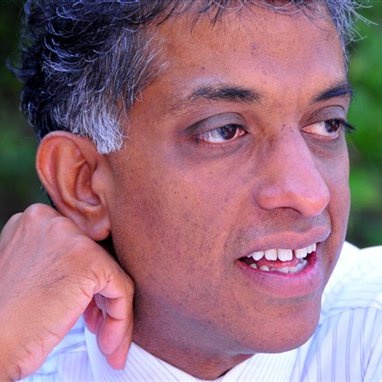
Responding to a popular request, we are now sharing transcripts of our investor podcast interviews in this new series. The following interview with T.M. Ravi was recorded in September 2016.
T.M. Ravi is Managing Director and Co-founder of The Hive, a venture studio. The discussion touches upon a couple of key issues: the prevalent incubator/accelerator model of 3-month classes, we agreed, is bogus; and Future of Work: Utopia or Dystopia?
Sramana Mitra: To set context, please introduce Hive to our audience. What kinds of companies do you incubate? What is the thesis around which you’re building this program? >>>
Roundtable Recap: February 8 – Niche is Beautiful Says Veteran Seed Investor Nitin Rai
During this week’s roundtable, we had as our guest Nitin Rai, Managing Director at Elevate Capital. Nitin made a compelling case for investing in niche businesses with the upfront goal of scoring early exits. Excellent discussion!
PM First
As for the entrepreneur pitch, Phillip Cornell from Washington, DC, pitched PM First, an extraordinarily creative idea of turning economy seats into luxury cabins in airlines. Quite fascinating!
1Mby1M Virtual Accelerator Investor Forum: With Shomit Ghose of Onset Ventures (Part 3)
Sramana Mitra: Elon Musk has talked a lot more along the lines of what you’re talking about – the unintended consequences of AI or even AI running amok in an evil way. I dealt with more of the economic question. Machine learning is really at the absolute beginning. We’re probably talking about a 50-year cycle but machine learning being machine learning has an incredibly-fast capacity to become very powerful.
In the next 50 years, I’m positive that we’re going to see machine learning penetrating every aspect of the human endeavor. If that really starts to take over professions or shrink professions in huge numbers, then
1Mby1M Virtual Accelerator Investor Forum: With Shomit Ghose of Onset Ventures (Part 2)
Sramana Mitra: Where do you think are the opportunities of building really interesting ventures right now? What’s your investment thesis?
Shomit Ghose: We can talk a long time about this. Hardware, software, and bandwidth are all commoditized. You can’t make money by selling any of those. For the past past 10 years, our investment thesis is all about the data. We continue to focus in areas that are based on extracting the semantics of the data and particularly in using data for business.
The future that lies before us is really vast. The companies that are most interesting to us are companies that are focused on Big >>>
