
categories
HOT TOPICS
- The Accelerator Conundrum
- The Startup Velocity Question
- Platform as a Service
- Man and Superman
- Web 3.0 = (4C + P + VS)
- The Future: End of Capitalism
- Capitalism 2.0

Seed Capital
1Mby1M Virtual Accelerator Investor Forum: With Naren Gupta of Nexus Venture Partners (Part 1)

Responding to a popular request, we are now sharing transcripts of our investor podcast interviews in this new series. If you haven’t already, please study our free Bootstrapping course and the Investor Introductions page. The following interview with Naren Gupts was recorded in October 2014.
Naren Gupta, co-founder of Nexus Venture Partners – a firm with an excellent track record of investing in the Silicon Valley – India corridor, but with a global market point of view – shares his insights, nuggets, and interesting wisdom. He is a veteran investor who is also strikingly polite and humble.
Sramana Mitra: I want to tell you one story before we start the discussion and ask you questions. One of your
1Mby1M Virtual Accelerator Investor Forum: With Scott Sandell of NEA (Part 4)
Sramana Mitra: The counterpoint to that is entrepreneurship is happening at a much larger scale. It has become cool to be entrepreneurs. When we were starting out in the mid-90’s, it wasn’t cool. It was cool to go work for somebody else. If you drop out of MIT or Stanford to start a company, that’s a badge of honor. That’s nothing to apologize for. If you choose to go back, fine. If you don’t choose to go back, no problem.
It has become standard fare in a career choice. As a result, the level of experimentation around the world has exploded, which brings us to our next question. NEA actually had a global agenda for a long time now. Of course, 1Mby1M is a global program. What is your view of entrepreneurship on a global scale? What are you thinking? What is NEA thinking in terms of leveraging that opportunity and working with entrepreneurs around the world? >>>
1Mby1M Virtual Accelerator Investor Forum: With Scott Sandell of NEA (Part 3)
Scott Sandell: Just to be clear, I have been fortunate enough to have invested in and been a part of a number of unicorn companies. Not all of them were bootstrapped companies. I don’t think of that as an essential ingredient at all. What’s interesting is to think about why bootstrapping is a valuable discipline and why some of the companies have chosen to bootstrap and what it did for them.
I think the first and most fundamental thing is that it establishes an entrepreneur’s commitment to what they’re doing. If you invest your own capital or you take a lower salary, you become much more committed to making that company successful than if you just start off by taking somebody else’s money which, to some people, seems like a casual activity. I don’t mean to make light >>>
1Mby1M Virtual Accelerator Investor Forum: With Scott Sandell of NEA (Part 2)
Sramana Mitra: For those of you who don’t know the history of WebEx, the company went public and was eventually acquired by Cisco. It was a very successful story. It was one of the first two cloud companies in the history of the business. I want to get to Salesforce, but let me actually first get to Tableau because it’s a more contemporary company.
I’ve written about Tableau quite a lot recently. My understanding of Tableau was by the time they came to NEA for their funding, the company not only had customers and revenues, but it also had done an interesting OEM deal with Hyperion. Tell us a bit about what you saw in Tableau. It seems like an incredibly capital efficient company that generated immense return on investment. >>>
1Mby1M Virtual Accelerator Investor Forum: With Venktesh Shukla of TiE Angels (Part 5)
Sramana Mitra: There is actually a pre-seed problem. There were 70,000 companies that received some sort of early-stage financing. In the last few years, these numbers have been very high but the number of companies that get venture financing remains at 1,200 or so.
In the middle where there are companies that have crossed over to being credible companies, that set of companies is actually much lower. A lot of companies are getting funding from, for a lack of better word, dumb investors who don’t know what they’re doing and just writing checks and creating a glut in the funnel. But it’s in the middle where you have good companies. >>>
7 Seed Investor Podcasts Discuss What They Look For In Startups

There is currently a lot of capital in seed investing, with somewhere between 500 and 700 micro VCs extremely active in what we call the pre-Series A ecosystem. Some are really small funds of $10-$15 million dollar funds, some are $30-$50 million dollar funds, some are $70-$100 million dollar funds, and in some cases they do small Series A investing. This is quite a recent phenomena that has emerged over the past few years, perhaps even just within the past 18 months. Huge numbers of people have raised small funds. As a result, a lot of seed deals are getting funded. Recently, over the past month, I’ve spoken with the following group of seed investors about this trend, as well as the types of startups that seed investors are looking for. Have a listen to our conversations, shared below as 30-minute podcast interviews, to learn if seed investors might be interested in financing your startup.
Daniel Cohen, General Partner, Viola Ventures, discusses the Israeli startup market and his firm’s focus within that segment.
1Mby1M Virtual Accelerator Investor Forum: With Scott Sandell of NEA (Part 1)
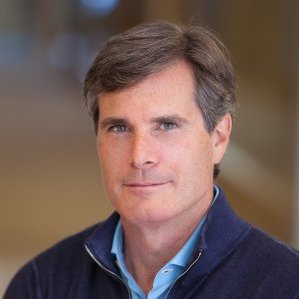
Responding to a popular request, we are now sharing transcripts of our investor podcast interviews in this new series. The following interview with Scott Sandell was recorded in February 2015.
Scott Sandell, General Partner at NEA, is one of NEA’s star investors. He has been named to the Forbes Midas list every year since 2007, and has been involved with eight Unicorn companies including Salesforce.com, Workday, Webex, Tableau, and others. Scott discusses, specifically, Webex and Tableau in quite a bit of depth. In both companies, the scrappy, capital-efficient management of those businesses were striking!
Among Silicon Valley’s venture firms, NEA holds a special place in my own entrepreneurial journey, being the first VC firm that I >>>
386th 1Mby1M Entrepreneurship Podcast With Daniel Cohen, Viola Ventures
Daniel Cohen, General Partner, Viola Ventures, discusses the Israeli startup market and his firm’s focus within that segment.
Podcast: Play in new window | Download
Subscribe: Apple Podcasts | TuneIn | RSS
