
categories
HOT TOPICS
- The Accelerator Conundrum
- The Startup Velocity Question
- Platform as a Service
- Man and Superman
- Web 3.0 = (4C + P + VS)
- The Future: End of Capitalism
- Capitalism 2.0

Venture Capital
1Mby1M Virtual Accelerator Investor Forum: With Shuly Galili of UpWest Labs (Part 2)
Sramana Mitra: Are they coming to you with just the concept? Are they coming to you with some idea about what customers are looking for? What tells you that you want to give $250,000 to these two guys?
Shuly Galili: Founders typically find us through our network. For many of them, they understand that UpWest is the destination for them in order to have this kind of process validation. What we look for are founders with domain expertise. When they build something that is related to networking ,or to healthcare, or to any kind of vertical, they have to have that domain expertise.
It’s important for us that they have some idea of the market, or which vertical they’re going after and maybe have an initial idea and >>>
1Mby1M Virtual Accelerator Investor Forum: With Shuly Galili of UpWest Labs (Part 1)
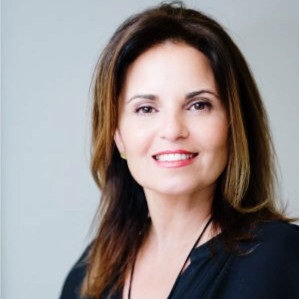
Responding to a popular request, we are now sharing transcripts of our investor podcast interviews in this new series. The following interview with Shuly Galili was recorded in October 2018.
Shuly Galili, Founding Partner, UpWest Labs, talks to us about pre-seed and seed investments in the Israel – Silicon Valley corridor.
Sramana Mitra: Tell us a little bit about yourself as well as UpWest Labs. Introduce our audience to your work.
Shuly Galili: I co-founded UpWest Labs in 2012. It’s been almost seven years. We’ve been building a platform and a fund to invest and support very early stage pre-seed and seed founders, primarily out of Israel. We are based in Palo Alto and are invested in over 70 companies. We’re on our third fund where we are heavily focused on several industries.
>>>
1Mby1M Virtual Accelerator Investor Forum: With Devdutt Yellurkar of CRV (Part 5)
Sramana Mitra: What happened? She left to go to Cisco?
Devdutt Yellurkar: She built the company and the company got acquired by Cisco. It was a massive exit. She is now part of Chuck Robin’s executive team.
Sramana Mitra: What is the name of the company?
Devdutt Yellurkar: It’s called Accompany.
Sramana Mitra: Tell us a little bit about what you see today in terms of trends that interest you where you think there’s going to be large companies. I ask this question to investors. The word that comes back inevitably is AI. I want something more sophisticated. >>>
1Mby1M Virtual Accelerator Investor Forum: With Miriam Rivera of Ulu Ventures (Part 5)
Sramana Mitra: What did they come to you with?
Miriam Rivera: This was three people. They had developed the prototypes of these devices. Part of that was that they had already spent several years in this non-profit version pursuing this goal of developing cheaper devices that could be used in contexts where technology wasn’t being used. They have shown tremendous commitment to what they were doing and in creating affordable and quick-to-produce devices. That was something that could reduce the cost of creating Internet of Things device by an order of magnitude, and also make it happen in months as opposed to a year.
Sramana Mitra: Are you chasing unicorns? >>>
1Mby1M Virtual Accelerator Investor Forum: With Devdutt Yellurkar of CRV (Part 4)
Devdutt Yellurkar: I came across this company in Copenhagen. At that time, Twitter had just launched. We were one of the first investors in Twitter. Twitter Search had just launched. I went and searched on Twitter for sentiment around Zendesk. All I found was just pure love. Everybody was saying very positive things about it. Then I googled for the founder of Zendesk. I came across his number. I cold-called. I think it was pretty late into the night. I said, “I’m from CRV. I found you on the net. Can I meet you tomorrow?”
I just found so much love and passion for the product that I felt like I should go there. In the meantime, I asked a couple of my friends to start using the product. It was so easy to use. I flew down the next day. I went up to their loft. The three founders were there. We spent the whole day talking about life and business. >>>
1Mby1M Virtual Accelerator Investor Forum: With Miriam Rivera of Ulu Ventures (Part 4)
Miriam Rivera: The other company was run by men and this was run by a mom. I think she really related to the issues. She related to the customers’ needs. She understood the importance of safety and reliability, and understood that for the parents, reliability was more important than the price.
They tend to have a more stable set of drivers. They tend to pay a bigger fraction than other transportation companies. They try to develop a set of >>>
1Mby1M Virtual Accelerator Investor Forum: With Devdutt Yellurkar of CRV (Part 3)
Sramana Mitra: Contrarian thinking is what builds the defensibility. Just to counter your point about what people are writing about, we have podcasts and roundtables. We’ve had hundreds of investors come and discuss their investment thesis the same way you are doing.
It’s actually interesting that some are willing to take the velocity risk as long as there is some validation. They’re willing to work with the entrepreneurs to figure out velocity. Some want all of that already proven. If everything is proven and you’re looking to just put in money into a proven investment thesis, that’s different.
Devdutt Yellurkar: In SaaS, it doesn’t require a lot of capital to get there. SaaS is such a huge category. Everything is dumped into that. We have >>>
1Mby1M Virtual Accelerator Investor Forum: With Miriam Rivera of Ulu Ventures (Part 3)
Sramana Mitra: What about sector? You said you only do enterprise software. Could you elaborate on what you like to invest? What trends are you following and are excited about?
Miriam Rivera: A lot of our companies are traditional SaaS companies, but many of them were also invested in Internet of Things and AI. Smart data is one of the big focus areas of our investing. Fintech and education technology are some other focus areas. What differentiate us is that we are selling into an enterprise customer. We do have some companies that are selling it to small enterprise, but that’s more unusual. We also consider enterprise to be a little different than the traditional Fortune or Global 2000 type of companies. >>>
