
categories
HOT TOPICS
- The Accelerator Conundrum
- The Startup Velocity Question
- Platform as a Service
- Man and Superman
- Web 3.0 = (4C + P + VS)
- The Future: End of Capitalism
- Capitalism 2.0

Venture Capital
1Mby1M Virtual Accelerator Investor Forum: With Eva Yazhari, General Partner at Beyond Capital Ventures (Part 3)
Sramana Mitra: My observation is that the higher end of the market is extremely active. I wouldn’t say crowded, but there’s a lot of competition. There is concept arbitrage. There have been successful companies built by copying models from elsewhere and then innovating on top of that. That’s happening in the global tech space.
Then there’s the higher-end B2C space where there is this large population of internet users who are quite affluent. The market that you’re talking about, is it as crowded? Is it as active?
>>>1Mby1M Virtual Accelerator Investor Forum: With Eva Yazhari, General Partner at Beyond Capital Ventures (Part 2)
Sramana Mitra: You are investing post-revenue. What benchmarks are you using to gauge whether you can build a venture-scale company?
Eva Yazhari: Because we’re a multi-sector fund, a lot of our metrics relate to specific sectors. Often, we’re looking at the growth of average order value. If it’s more of a services company, we’re looking at the growth of their contracts, the relationships that they have, and the booked contracts that they have. A lot of it is centered around the ability of the company to take what it is doing now and take that to scale.
>>>1Mby1M Virtual Accelerator Investor Forum: With Eva Yazhari, General Partner at Beyond Capital Ventures (Part 1)

Eva Yazhari, General Partner at Beyond Capital Ventures, discusses Impact Investing in Africa and India.
Sramana Mitra: Let’s start by introducing our audience to yourself and Beyond Capital Ventures. Tell us a bit about your background and what you’re trying to do with Beyond Capital.
>>>1Mby1M Virtual Accelerator Investor Forum: With Dr. Aniruddha Malpani, Founder of Malpani Ventures (Part 5)
Sramana Mitra: You said many times that the ecosystem is still immature. Can you underscore the points where you see the Indian ecosystem needing maturity?
Dr. Aniruddha Malpani: Sometimes, it’s the unrealistic expectation on the part of entrepreneurs partly because they don’t understand the grind that startups need to go through. A lot of the diet they’re fed on is the Silicon Valley success stories or the Indian success stories. They don’t understand the emotional angst they need to go through.
>>>1Mby1M Virtual Accelerator Investor Forum: With Dr. Aniruddha Malpani, Founder of Malpani Ventures (Part 4)
Sramana Mitra: It’s wonderful to exchange notes. There are a couple of things you’ve said that I want to underscore. One is the importance of failure. The Indian ecosystem didn’t accept failures for a long time. It’s a cultural change where it’s okay to fail. You’re not penalized.
A very long time ago when I was a young entrepreneur, I talked to a lot of investors all the time. They would say, “We love entrepreneurs who have failed once and are doing it again.” This is deeply underappreciated.
Somebody who has tried it once and failed has already done a lot of learning on somebody else’s dime. It’s a prized commodity for investors.
>>>Somebody who has tried it once and failed has already done a lot of learning on somebody else’s dime. It’s a prized commodity for investors.
Sramana Mitra
1Mby1M Virtual Accelerator Investor Forum: With Dr. Aniruddha Malpani, Founder of Malpani Ventures (Part 3)
Sramana Mitra: Let’s take those two sectors – SaaS and the fintech sectors. In SaaS, the metric is MRR. Do you have a particular metric that you measure by when you’re doing your SaaS investments?
Dr. Aniruddha Malpani: No, numbers can be easily gamed, and they are often not necessarily representative. As long as the entrepreneur has a plausible story and he can convince us, we’re more than happy to look at these investments.
>>>1Mby1M Virtual Accelerator Investor Forum: With Dr. Aniruddha Malpani, Founder of Malpani Ventures (Part 2)
Sramana Mitra: One of the observations I have about the global startup ecosystem is this position of looking for paying customers is not at all unusual. I would say the vast majority of investors are looking for paying customers at this point. It has become so much easier to bootstrap companies. There’s a lot of methodology and knowledge about how to bootstrap a company.
The point that you’re making of wanting to see validated companies that already have product-market fit and customers does not come to anybody as a surprise at this stage of the game.
>>>1Mby1M Virtual Accelerator Investor Forum: With Dr. Aniruddha Malpani, Founder of Malpani Ventures (Part 1)
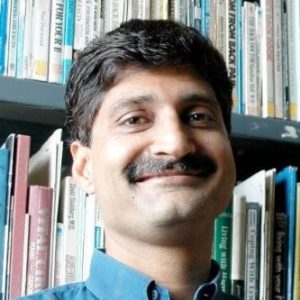
Dr. Aniruddha Malpani, Founder of Malpani Ventures, is an active angel investor in Indian startups for the past decade. Wonderful conversation.
Sramana Mitra: Let’s catch up a bit on what has been going on in our collective universe and how you see the world based on all these years of observing the ecosystem. How do you see the Indian startup ecosystem evolving?
>>>