
categories
HOT TOPICS
- The Accelerator Conundrum
- The Startup Velocity Question
- Platform as a Service
- Man and Superman
- Web 3.0 = (4C + P + VS)
- The Future: End of Capitalism
- Capitalism 2.0

Venture Capital
1Mby1M Virtual Accelerator Investor Forum: With Don Hutchison (Part 3)
Sramana Mitra: We see cap notes a lot in Silicon Valley, but if you go outside of Silicon Valley, people are still using equity vary aggressively. We, very often, see terribly diluted deals at very early stages.
Don Hutchison: That is the historic nature of equity investment. The issue you’re talking about is before notes became accepted here. It was a couple of years’ process. Earlier, it was all equity here as well. You didn’t go through as many rounds before jumping to an A. If you got seed, you went to an A. There might be some bridge but the bridge usually came from the incumbents. That usually was discounted notes to the A. The clearest way is to gain traction quickly.
Sramana Mitra: We’ve been saying this. Get traction before you raise money. >>>
1Mby1M Virtual Accelerator Investor Forum: With David Blumberg of Blumberg Capital (Part 3)
David Blumberg: I was speaking at a conference in Mexico recently. It was about transportation of the future. I’m not an expert in that, but I’ve got some theories. A lady from Ford Motors got up and said, “The future of transportation is green, recyclable, and sustainable.” Then a man from Delphi Auto Parts said, “The future of the automobile is connected.”
I got up and said, “I don’t know what the future of automobiles will be. I want to ask you. I have two choices. Is it a product that you buy, own, fill with gas, take to the garage to park and only comes in one shape and size during the lifetime of your ownership? Or is it a service? It comes to you when you call it? It comes as a motorcycle today, or Ferrari the next day? You don’t pay insurance. It’s all wrapped in a service.” >>>
1Mby1M Virtual Accelerator Investor Forum: With Don Hutchison (Part 2)
Sramana Mitra: There are 70,000 seed investments a year and only about 1,200 to 1,500 venture investments. There is a huge Series A gap that people have to deal with. How do you recommend the seed investors as well as the entrepreneurs who are raising seed money mitigate the gap?
Don Hutchison: You’re going to be in a very competitive process to gain that Series A. In all likelihood, a venture fund will be a normal part of your future if you’re the kind of company that you and I are talking about. You got to have the characteristics that will appeal to that audience, although there is still room for opportunities.
We’ve seen a great increase and interest in Blockchain, Bitcoin, and all types of cyber currency. That would be something where a >>>
1Mby1M Virtual Accelerator Investor Forum: With David Blumberg of Blumberg Capital (Part 2)
Sramana Mitra: The basic discipline that growth is important and so is profitability went away in the early part of this decade. It’s starting to correct itself again. What happens in the minds of venture capitalists so that what seems like basic arithmetic suddenly disappears?
David Blumberg: Over the last few years, we like to oversimplify by saying that venture capitalists have only two kinds of glands. We have a greed gland and a fear gland, and we oscillate between the two. We get into these cycles where greed overtakes. That was 1999 to 2000, and then coming into 2007, and then probably in 2013 to part of 2015. Sometime in 2015, it started switching to fear. We had stock market nervousness. We had geopolitical threats around the world. >>>
1Mby1M Virtual Accelerator Investor Forum: With Don Hutchison (Part 1)
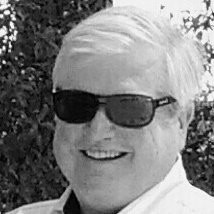
Responding to a popular request, we are now sharing transcripts of our investor podcast interviews in this new series. The following interview with Don Hutchison was recorded in October 2017.
Don Hutchison is one of the most experienced and long-term Angel investors in Silicon Valley. We discuss the trends of the industry and ways to mitigate the Series A gap that is a serious issue right now.
1Mby1M Virtual Accelerator Investor Forum: With David Blumberg of Blumberg Capital (Part 1)
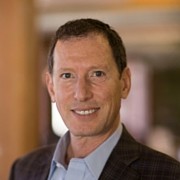
Responding to a popular request, we are now sharing transcripts of our investor podcast interviews in this new series. The following interview with David Blumberg, Blumberg Capital was recorded in September 2016.
David Blumberg, Founder and Managing Partner of Blumberg Capital, has been in the business for a long time, and we had a very interesting chat about the evolution of the venture business over the last 15 years. We also discussed some areas where there are opportunities to build new scalable businesses.
Sramana Mitra: Let’s start with your read of how the venture capital industry that we’ve been swimming in for
1Mby1M Virtual Accelerator Investor Forum: With Bryce Roberts of OATV, Indie.vc (Part 4)
Sramana Mitra: How are the entrepreneurs receiving this alternate thinking?
Bryce Roberts: There’re two trains of thought. In the predominant Silicon Valley culture, the response tends to be, “Why would we do that?” They’re very indoctrinated into the idea of selling equity and getting on that successive round of funding to ratchet up the valuation.
We peg a lot of our ambition to the dollars we raise, the frequency we raise them, and who we raise them from. In our world, it’s like speed dating when I speak English and everybody else speaks Russian. It’s totally lost in translation. But then there’s a large and growing audience of people who really don’t want outside investors, but they could move much more quickly if they had access to capital. >>>
1Mby1M Virtual Accelerator Investor Forum: With Bryce Roberts of OATV, Indie.vc (Part 3)
Sramana Mitra: What denomination do you invest in and what stage? What do you require to see to want to invest?
Bryce Roberts: For the first batch of companies we did, we had a pretty broad mandate. We were trying to figure out for whom this type of network and this type of resources made the most effect. We called that version one. In this version two, we’re looking for a minimum of $10,000 a month in revenue.
Companies that were coming from a standing start just didn’t make the same progress. They tended to fall back on the notion of fundraising early on. We want to find companies that have shown some real traction and that they’ve been able to attract >>>
