
categories
HOT TOPICS
- The Accelerator Conundrum
- The Startup Velocity Question
- Platform as a Service
- Man and Superman
- Web 3.0 = (4C + P + VS)
- The Future: End of Capitalism
- Capitalism 2.0

Venture Capital
1Mby1M Virtual Accelerator Investor Forum: With Andrew Cain McClary of KdT Ventures (Part 3)
Sramana Mitra: In your deal flow, what kind of trends are you seeing?
Andrew Cain McClary: On the tools side of things, I feel like everyone feels it’s a prerequisite to put AI or machine learning in whatever they’re doing even when sometimes the datasets are not there for them to include that in a pitch deck. It’s just trying to employ traditional data science techniques. There’s no need for those frontier computational technologies.
I’ve seen quite a bit of traditional tech entrepreneurs who have turned to, what they think, feel, or want to be, impact projects, at which point, you see them switching to biological topics or businesses. I think that’s a wonderful thing. However, they need to be >>>
1Mby1M Virtual Accelerator Investor Forum: With Andrew Cain McClary of KdT Ventures (Part 2)
Sramana Mitra: Just to double-click on what you said, would you fund a company that has a good level of technology and a good understanding of the business, but still needs another half a million to a million for product development?
Andrew Cain McClary: Absolutely. The earlier in the stack I go, the better I understand the company and its goals. In the end, my job is not only to support that entrepreneur but also to return money to my LPs. The larger the opportunity for ownership is, the earlier that you go.
As a true seed investor, I can’t be afraid of going early as long as certain conditions are met around what those real performance benchmarks are going to be to enable future funding as well as where those tailwinds are pushing that company forward. >>>
1Mby1M Virtual Accelerator Investor Forum: With Ira Weiss of Hyde Park Venture Partners (Part 4)
Sramana Mitra: Since 2013, there have been 50,000 to 70,000 seed investments. By seed, I mean the entire spectrum of pre-seed, seed, post-seed, and pre-Series A. That’s a lot of companies. The number of venture-funded companies is still very low. It’s 1,200 to 1,500 and it remains more or less constant.
At the other vector is that there are 500 to 700 micro-VCs of various sizes. There is a lot of capital, but it’s still very difficult to navigate for entrepreneurs. One of the reasons why I’m talking to all of you guys and trying to get some sense of this process is to help the entrepreneurs gain clarity on how to navigate this. >>>
1Mby1M Virtual Accelerator Investor Forum: With Andrew Cain McClary of KdT Ventures (Part 1)
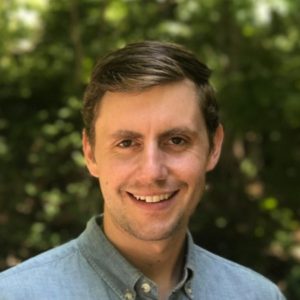
Responding to a popular request, we are now sharing transcripts of our investor podcast interviews in this new series. The following interview with Andrew Cain McClary of KdT Ventures was recorded in January 2018.
Andrew Cain McClary, Founder and Managing Partner at KdT Ventures, is a physician-turned VC. The focus of his investment is biology and related fields.
Sramana Mitra: Tell us about the fund. Tell us about what your investing focus. How big is the fund?
Andrew Cain McClary: It’s useful to start with a little bit of context on my background. I’m a physician by training. I was in the >>>
1Mby1M Virtual Accelerator Investor Forum: With Ira Weiss of Hyde Park Venture Partners (Part 3)
Sramana Mitra: Let me ask you the TAM question. We are in January 2018. Lots of stuff have already been built. Nowadays, there aren’t as many wide open opportunities to build these multi-billion dollar companies. It’s not like very corner of the enterprise software market is full of billion-dollar opportunities. There are lots of niche opportunities.
Some of these have lower TAMs. Some of these businesses need to be built for small amounts of capital – $2 million sold for $15 million. In some cases, $250,000 and sold for $5 million to $10 million. What is your perspective on these kinds of opportunities? Is this something you look at? >>>
1Mby1M Virtual Accelerator Investor Forum: With William Hsu of Mucker Capital (Part 4)
Sramana Mitra: Can you put some quantitative parameters around that $200 million exit? For a good, healthy $200 million exit where everybody makes money, what is the optimum amount of capital invested? What kind of revenue levels do you target?
William Hsu: Depends on the category. For a SaaS or an enterprise software solution, typically, anywhere from $20 million to $40 million will be good enough to get anywhere from $100 million to even $300 million in valuation. If it’s an e-commerce business, it probably has to get to closer to $100 million in revenue. Software businesses are a lot more capital efficient.
If you’re looking for an opportunity that is sub-unicorn in size, try to find businesses without an inventory or any cost of goods. To >>>
1Mby1M Virtual Accelerator Investor Forum: With Ira Weiss of Hyde Park Venture Partners (Part 2)
Sramana Mitra: It’s the same model as Gartner? The software companies are paying a subscription fee to G2 Crowd to be included in this review process.
Ira Weiss: It is free for the software companies. Some of the companies do choose to pay if they want to pay if they want to have an enhanced presence on the site. I actually encourage people who have early-stage software companies to use the site and have your customers go to the site. There’s no better way to sell software than to have your customers sing your praises. That was the reason G2 Crowd was started. >>>
1Mby1M Virtual Accelerator Investor Forum: With William Hsu of Mucker Capital (Part 3)
Sramana Mitra: Our philosophy in One Million by One Million is entrepreneurship equals customers, revenues, and profits. Financing and exit are optional. We make sure that customers are willing to pay for whatever it is that you’re selling. Whatever it is that you’re doing, that is the fundamental belief system of our program.
William Hsu: It’s the fundamental belief of any capitalist system.
Sramana Mitra: It should be. In Silicon Valley, it is not. Silicon Valley operates on venture welfare.
William Hsu: The funny thing is if you’re able to prove product-market fit and you’re raising money simply for distribution, we >>>
