
categories
HOT TOPICS
- The Accelerator Conundrum
- The Startup Velocity Question
- Platform as a Service
- Man and Superman
- Web 3.0 = (4C + P + VS)
- The Future: End of Capitalism
- Capitalism 2.0

Funding for a Business
1Mby1M Virtual Accelerator Investor Forum: With Susan Stone of Sierra Wasatch Capital (Part 2)
Sramana Mitra: Interesting and quite different from a lot of the perspective that we see because there is a huge question mark around the media industry’s evolution. I’m quite involved in a bunch of things. We have at least one partnership with a large media company.
All that aside, I’d like to understand how many investments you have made in this sector with this investment thesis. Could you walk us through what each of those ventures are? I normally would ask for just maybe one or two examples to get a sense or feeling for the thinking.
In the case of the media industry, it would be interesting to see where you see possibilities of sustainable businesses emerging. I’m very interested in working through that with you and bringing that to our audience. >>>
1Mby1M Virtual Accelerator Investor Forum: With Susan Stone of Sierra Wasatch Capital (Part 1)

Responding to a popular request, we are now sharing transcripts of our investor podcast interviews in this new series. The following interview with Susan Stone was recorded in January 2019.
Susan Stone, Founder and Managing Partner at Sierra Wasatch Capital, discusses their investment thesis around media technology.
Sramana Mitra: Let’s get acquainted. Tell us about you. Tell us about the fund. What’s your investing focus? Let’s get to know one another. >>>
1Mby1M Virtual Accelerator Investor Forum: With Jason Cahill of McCune Capital (Part 5)
Sramana Mitra: The stratification that’s happening in the industry right now is creating a different dynamic. Earlier, a small fund would not even exist. Right now, smaller funds exist. The smaller funds take the company for three to five years of its life, and then it exits into the larger funds, which would take it to the next 5 to 10 years of its life instead of the small funds growing from 0 to 10-year time frame. >>>
1Mby1M Virtual Accelerator Investor Forum: With Jason Cahill of McCune Capital (Part 4)
Sramana Mitra: So what is the best and easiest way for me to do this? I would like to acquire another product that is relatively cheap to acquire and be able to put it through my channel and just go from $1 million to 200 in million in revenue. That with the $700 million to $800 million is perfectly doable.
Jason Cahill: It’s funny because when you watch movies and they show the Wall Street banker, you’d think about the super cut-throat competition. When I think of a West Coast VC, I actually think people don’t collaborate on deals. By and large on the East Coast, especially in New York, there’s this very collegial environment where we share deal flow just because we tend to elevate things that we find interesting. The reason that I mention that is, if I’m only investing in unicorns and really chasing those, then I have to have a sharp elbow because there simply aren’t that many of them. >>>
1Mby1M Virtual Accelerator Investor Forum: With Jason Cahill of McCune Capital (Part 3)
Sramana Mitra: Are you chasing Unicorns?
Jason Cahill: Yes and no. I don’t get upset when my companies get marked up at billion dollars. If I invest in a company in $5 million, they get to acquire at $50 million, I can live that. That’s the tax. I have done very well at being efficient with capital. I love for all my companies to become unicorns but if they sell for $500 million, I think I’ll buy all. Everybody is happy.
Sramana Mitra: So what is the low threshold? Comment on what I said on the Bootstrapping to Exit article about the smaller opportunities. There is a class of investors emerging who are paying attention to the smaller opportunities that’s acknowledging the fact that most exits in the industry happen at the sub-$50 million price point. Are those of interest to you or are they too small? >>>
1Mby1M Virtual Accelerator Investor Forum: With Jason Cahill of McCune Capital (Part 2)
Sramana Mitra: What about types of companies? What in the segments do you like to invest in? B2B? B2C?
Jason Cahill: We invest in new technologies in older industries. So the flavor on that would be advanced data technologies like artificial intelligence, machine learning, and robotics. There are new type of opportunities in energy, agriculture, transportation, and supply chain. >>>
1Mby1M Virtual Accelerator Investor Forum: With Jason Cahill of McCune Capital (Part 1)

Responding to a popular request, we are now sharing transcripts of our investor podcast interviews in this new series. The following interview with Jason Cahill was recorded in January 2019.
Jason Cahill is Managing Partner at McCune Capital, a NY-based firm. He talks about the pros and cons of chasing Unicorns, as well as his firm’s investment philosophy. >>>
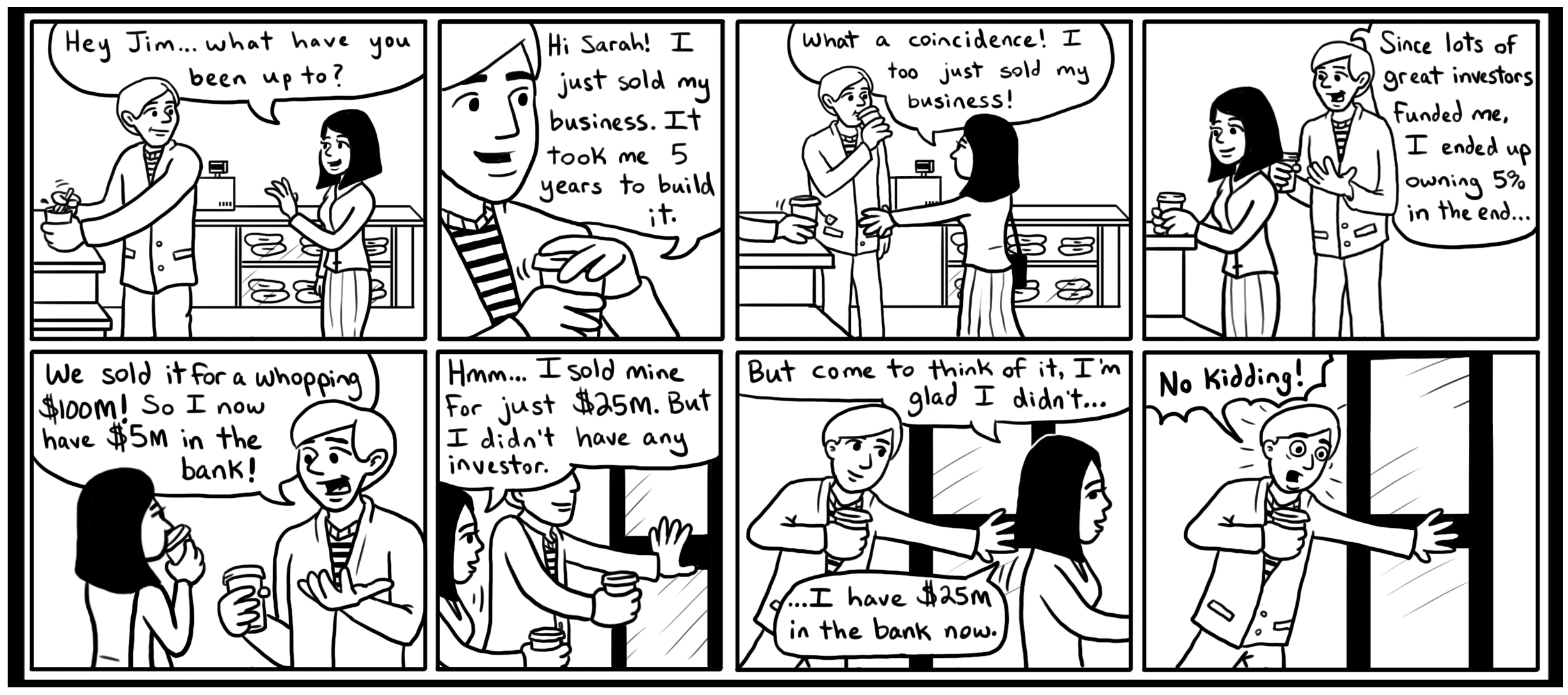
Best of Bootstrapping: How Can You Play this Low-Probability Game Intelligently?
Let me start with a quote from Marc Andreessen:
“At our venture capital firm we only invest in a sort of Silicon Valley–style tech. We see 3,000 inbound deals a year. And those are inbound and coming through our referral network, so those are sort of prequalified. We can do maybe 15 or 20 investments out of the 3,000 a year. So I like to say our day job is crushing entrepreneurs’ hopes and dreams. Our main skill is saying no, and getting people to not hate us.”
Source: Inside the mind of Marc Andreessen – Fortune Management
